Fresh sides and fading rides, clean new lines with an older roof still overhead. If you are ready to transform your Villa Ridge home with new siding but your roof has already seen its share of Missouri seasons, should you really move forward without checking what is happening above it first? When planning roof and siding Villa Ridge MO improvements, homeowners sometimes treat the two projects as completely separate. In reality, the roof, siding, flashing, gutters, fascia, soffits, and water-resistant barrier all meet in critical areas where one exterior upgrade can directly affect the other.
At RC Roofing & Contracting, we believe exterior improvements should work together rather than simply look good individually. New siding can dramatically improve curb appeal, but covering your walls without evaluating an aging roof may leave vulnerable transitions untouched. On the other hand, replacing a roof shortly after brand-new siding is installed can mean crews need to work around finishes you just paid to upgrade.
Why Your Roof and Siding Should Be Looked at Together
Your roof protects the top of your home while siding protects the vertical exterior walls, but those systems meet in more places than most homeowners realize.
Dormers, attached garages, porch roofs, additions, chimneys, gutters, fascia, roof edges, and wall intersections all create transitions between roofing and exterior cladding.
Those intersections are especially important because water naturally follows gravity.
A roof sheds rain downward. Gutters catch runoff. Flashing redirects water around walls and openings. Siding and the drainage layer beneath it then help continue moving moisture away from the structure.
When planning roof and siding Villa Ridge MO improvements, you want these materials to overlap in the correct order so water continually moves outward rather than finding a pathway behind new exterior finishes.
That is why the condition of the old roof deserves attention even when siding is the project currently at the top of your list.
New Siding Can Reveal Problems You Never Knew Were There
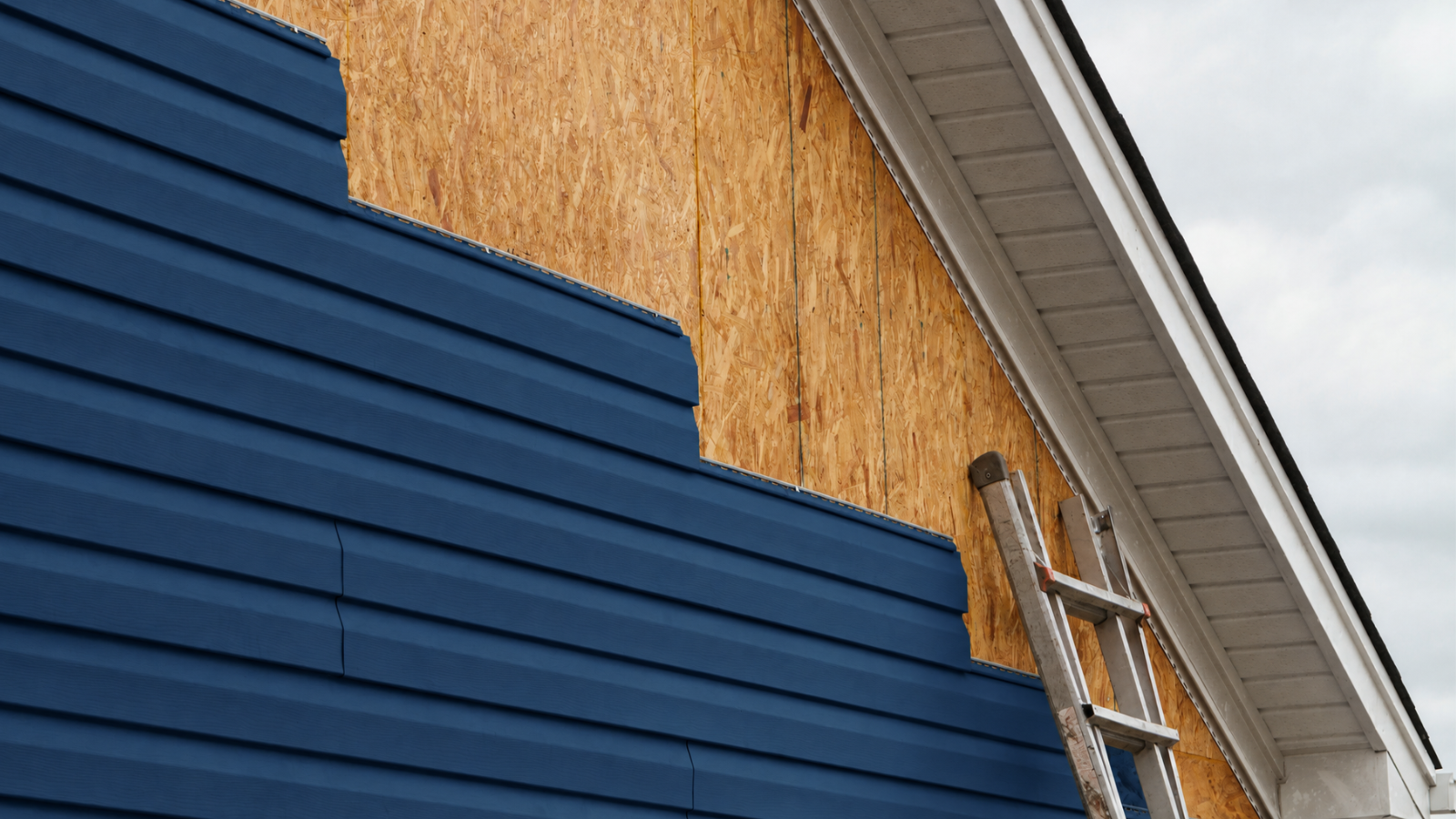
Removing old siding is often an eye-opening part of a remodeling project.
The exterior may have looked completely normal from the yard, but once panels come down, contractors can sometimes discover water staining, deteriorated sheathing, damaged house wrap, missing flashing, old repairs, or moisture near roof-to-wall transitions.
According to U.S. Department of Energy Building Science guidance on water-managed walls, exterior siding systems can allow some moisture through joints and small openings. A properly installed water-resistant drainage layer behind the cladding provides a path for that moisture to move safely down and away from wall cavities.
That becomes especially important when an aging roof meets the wall.
If water has been slipping behind flashing for years, the evidence may not become obvious until the old siding comes off.
A professional roof and siding Villa Ridge MO evaluation can help identify those issues before beautiful new materials cover them again.
First Check: How Old Is the Roof?
Start with the simplest question.
How old is your roof?
You do not necessarily need the exact installation date, but you should have a general idea whether the roof is relatively new, mid-life, or approaching replacement age.
If your roof was installed recently and remains in excellent condition, proceeding with siding may be straightforward.
If the roof is already showing significant aging, the decision becomes more complicated.
Installing siding today and replacing the roof shortly afterward may require roofing crews to work around new trim, flashing, gutters, and wall transitions.
That does not automatically mean the roof must be replaced first.
It means roof and siding Villa Ridge MO planning should consider both projects before either one begins.
If the roof appears likely to need replacement soon, coordinating the work may reduce duplicated labor and help preserve newly installed exterior materials.
Second Check: Roof-to-Wall Flashing
This is one of the most important areas on the entire home.
Whenever a roof slope meets a vertical wall, water must be redirected away from that intersection.
Step flashing is commonly used along these areas. At the lower end of certain roof-to-wall intersections, kick-out flashing helps direct roof runoff away from the wall and into the gutter.
According to Department of Energy guidance on roof-to-wall flashing, these intersections are particularly vulnerable to water intrusion, and flashing should be integrated correctly with roofing materials and the wall’s moisture barrier.
This is exactly where a siding project and roofing project overlap.
During a roof and siding Villa Ridge MO project, simply sliding new siding around old, questionable flashing can leave the original vulnerability in place.
The transition deserves evaluation while it is accessible.
Why Kick-Out Flashing Matters So Much
Kick-out flashing sounds like a tiny roofing detail.
Its job is anything but tiny.
At the bottom of a roof-to-wall intersection, concentrated rainwater needs to leave the roof without pouring directly behind siding or running continuously down the exterior wall.
The U.S. Department of Energy’s kick-out flashing guidance explains that kick-out flashing diverts roof runoff into gutters and helps protect exterior walls from water intrusion. The guidance also stresses proper integration with the water-resistant barrier behind siding.
If you are replacing siding around one of these areas, check the flashing before covering everything.
A brand-new siding panel cannot correct water that is being directed behind it.
Third Check: Fascia and Soffit Condition
Look just below the roof edge.
The vertical board behind your gutter is typically the fascia, while soffits cover the underside of the roof overhang.
These areas visually connect the roof and exterior walls, but they also provide useful clues about water problems.
Peeling paint, swollen wood, staining, softness, or deterioration near fascia may indicate overflowing gutters, roof-edge concerns, flashing problems, or past moisture exposure.
Soffit damage may also deserve investigation, particularly if there are signs of moisture or ventilation issues.
For homeowners considering roof and siding Villa Ridge MO improvements, replacing siding while ignoring deteriorated fascia can leave the finished exterior looking incomplete and may fail to address a nearby water-management problem.
Look at the entire roof edge before deciding the final project scope.
Fourth Check: Gutters and Downspouts
Gutters are sometimes treated as a decorative accessory.
They are really part of your home’s water-management system.
Rain comes off the roof, enters the gutters, moves through downspouts, and should be discharged away from vulnerable parts of the house.
If gutters are undersized, loose, clogged, pulling away from the fascia, or improperly positioned, water can overflow onto siding and trim.
That becomes especially frustrating when the siding is brand-new.
If gutters will need removal during siding replacement anyway, it may be a good opportunity to evaluate whether they should simply be reinstalled or upgraded.
Planning roof and siding Villa Ridge MO together helps prevent a situation where new siding is installed only to have deteriorated gutters repeatedly spill water over it.
Villa Ridge Weather Makes Exterior Coordination More Important
Local weather gives homeowners another reason to think about the entire exterior system.
The National Weather Service report on the March 14, 2025 Villa Ridge tornado documented an EF-2 tornado that developed on the east side of Villa Ridge and caused significant damage to homes, including roof-structure damage.
More recently, a National Weather Service severe thunderstorm warning for Villa Ridge and southern Franklin County warned of 60 mph wind gusts and specifically noted the possibility of damage to roofs, siding, and trees.
That local history makes one point especially clear.
Your roof and siding may be different materials, but the same storm hits both at the same time.
If one side of your exterior has recently sustained storm wear, it is smart to inspect the other before investing heavily in upgrades.
Fifth Check: Missing, Lifted, or Aging Shingles
If siding is your current priority, take a few minutes to look upward from a safe location.
Do you see missing shingles?
Are any tabs lifted?
Are sections curling or cracking?
Is there substantial discoloration or obvious wear?
Has the roof needed repeated repairs?
A visual check does not replace a professional inspection, but these clues can indicate whether the roof deserves closer attention before siding work begins.
The latest siding will not protect a wall from water entering several feet above through an aging roof.
That is why roof and siding Villa Ridge MO planning starts with identifying weak points across the entire exterior, not just the material you are currently replacing.
Sixth Check: Drip Edge and Roof Edges
The perimeter of your roof deserves more attention than it usually gets.
Drip edge is installed along roof edges to help guide water away from vulnerable decking and fascia.
Based on the FEMA Wind Retrofit Guide for Residential Buildings, properly installed drip edge help protect roof sheathing edges and direct water away from fascia. FEMA also emphasizes flashing and underlayment details as important components of improved roof water resistance.
If your siding project includes fascia, soffit, or trim work near the roof edge, evaluate the drip edge at the same time.
This can help avoid awkward situations where new exterior materials interfere with roofing components that need to be corrected later.
Seventh Check: The Water-Resistant Barrier Behind Your Siding
One of the most important parts of new siding will disappear once installation is complete.
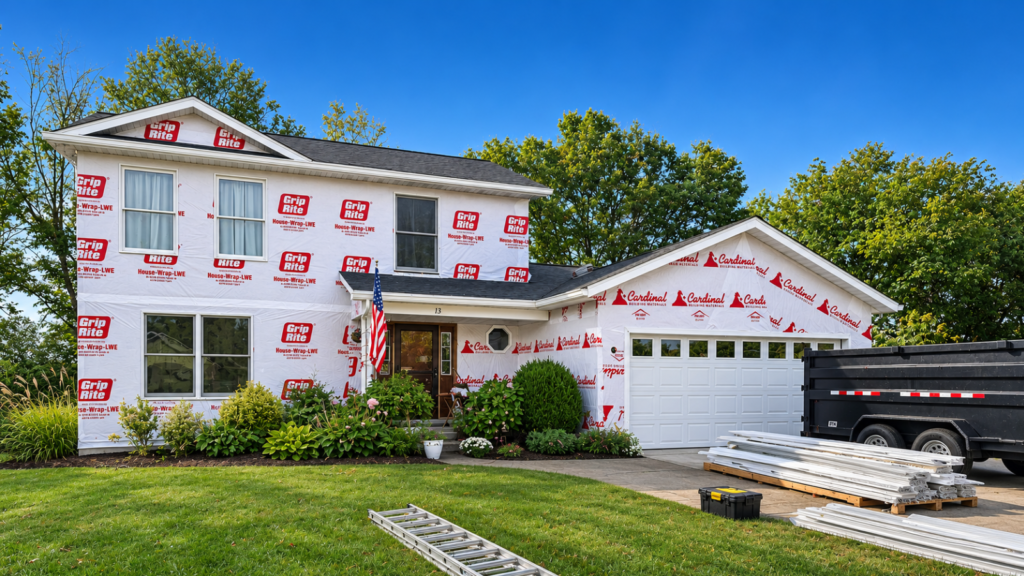
That is the water-resistant barrier, often house wrap or another approved drainage-plane material.
According to Department of Energy guidance on drainage planes behind exterior cladding, the barrier behind siding should provide a continuous path for water to drain away and should be carefully integrated at wall openings, penetrations, and roof intersections.
This is why roof and siding Villa Ridge MO projects should not be treated as separate layers thrown onto a house independently.
The roof flashing needs to integrate with the wall drainage system.
If those layers overlap incorrectly, water may be directed behind the barrier rather than outward.
Once the siding goes on, correcting that mistake becomes much harder.
Eighth Check: Previous Leak History
Has your home ever leaked near an exterior wall?
Think beyond obvious roof leaks.
Consider staining around windows, damp drywall near ceilings, recurring paint damage, musty smells, or water appearing around a dormer or attached garage.
Those clues may help identify areas that deserve extra attention when siding comes off.
Maybe the original problem was a window.
Maybe it was roof flashing.
Maybe it was a gutter overflowing.
Maybe water entered at a roof-to-wall transition.
The important thing is not to assume.
A coordinated roof and siding Villa Ridge MO inspection can help trace the path of moisture and address the actual source rather than simply covering the evidence with new siding.
Ninth Check: Chimneys, Dormers, and Additions
Complex homes create more intersections between roofs and walls.
A dormer adds sidewalls, corners, flashing, and sometimes valleys.
An attached garage may create a long roof-to-wall transition.
A chimney introduces another major interruption in the roof.
An addition built years after the original home may contain entirely different flashing details or materials.
These areas deserve close inspection before exterior remodeling.
New siding can make an older transition look beautiful again, but appearance alone does not determine whether water is being managed correctly.
If your Villa Ridge home has several additions or architectural features, your contractor should understand how the roof and walls connect at each one.
Roof First or Siding First?
This is the question homeowners usually want answered.
Unfortunately, there is no universal rule.
If both systems need replacement, doing the roof first often makes practical sense because roofing work can affect flashing, gutters, roof-to-wall transitions, and surrounding exterior materials.
Once the new roof is established, siding can often be integrated neatly with the finalized roofing details.
But every home is different.
If your roof is relatively new and healthy while your siding has failed, there may be no reason to replace the roof simply because you are installing siding.
Likewise, emergency siding damage may need attention even if roof work is being planned later.
The best roof and siding Villa Ridge MO sequence is the one based on actual condition rather than a blanket rule.
What If the Roof Has Only a Few Years Left?
This is where planning can save frustration.
Suppose your siding needs replacement today, but your roof is likely to need replacement in three years.
You could still install siding now.
But before doing so, talk with both contractors about how future roof replacement will interact with the new exterior.
Will certain flashing need to be disturbed?
Will gutters have to come down again?
Will roof-to-wall siding need to be removed?
Could parts of the current project be coordinated differently to make the future roof replacement easier?
A thoughtful conversation now may prevent damage or repeated labor later.
Should You Replace Both at the Same Time?
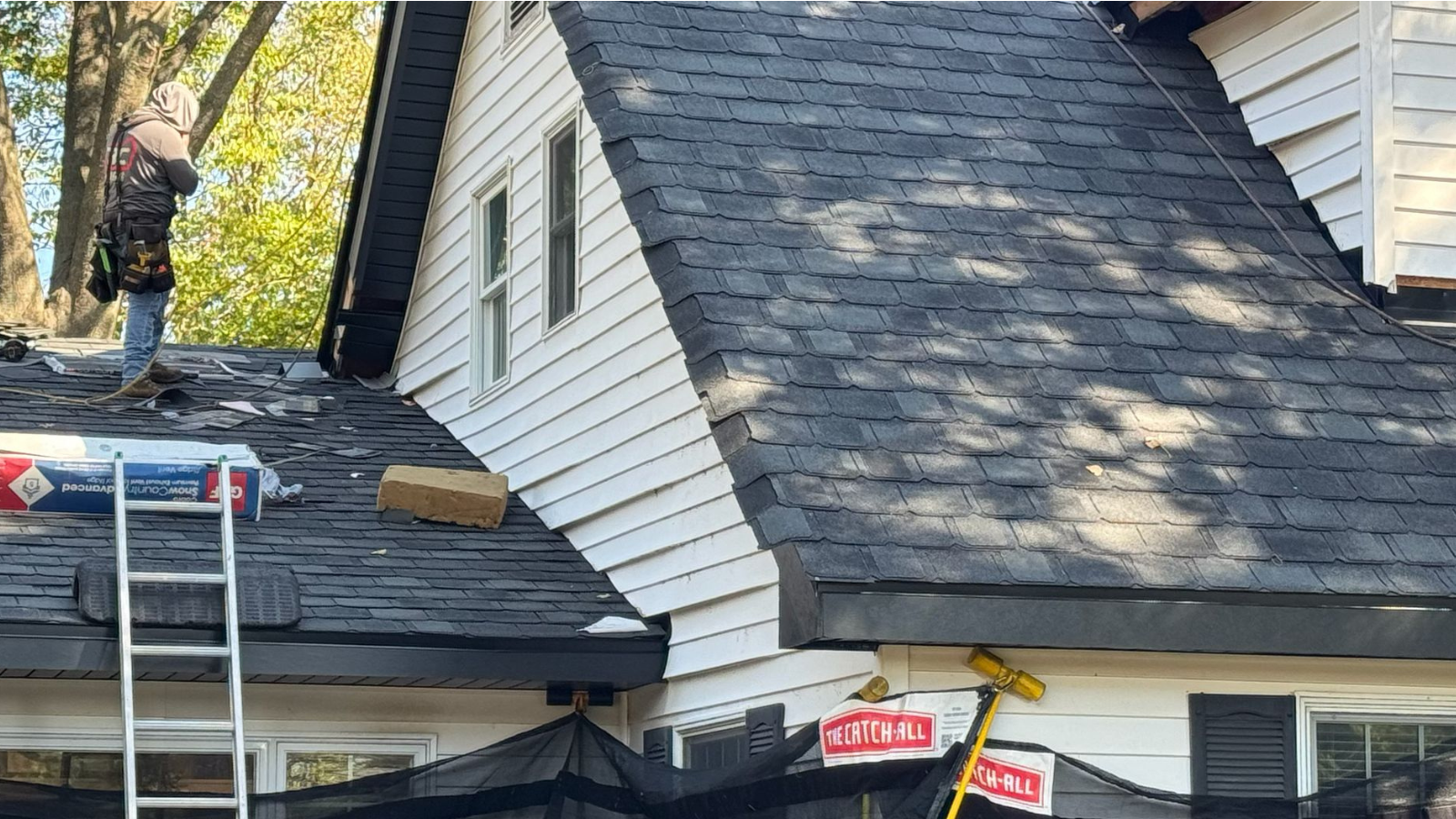
Sometimes it makes sense.
Sometimes it does not.
Replacing the roof and siding together may provide advantages when both are genuinely at the end of their service lives. The exterior can be coordinated as one system, colors and materials can be selected together, and overlapping components such as gutters, flashing, soffits, and fascia can be handled efficiently.
But replacing a perfectly healthy roof simply because you need siding is unnecessary.
Similarly, replacing good siding simply because the roof is old usually does not make financial sense.
A professional roof and siding Villa Ridge MO evaluation should help separate what needs attention now from what can safely wait.
What to Check Before New Siding Goes On
| Area | What to Look For | Why It Matters |
| Roof age | Advanced wear or approaching replacement | May change project order |
| Shingles | Missing, lifted, cracked, or storm-damaged sections | Water may enter above new siding |
| Roof-to-wall flashing | Loose, missing, poorly integrated materials | Major moisture-risk area |
| Kick-out flashing | Missing or undersized diverter | Helps keep roof runoff off walls |
| Gutters | Overflow, sagging, poor drainage | Can dump water onto new siding |
| Fascia | Softness, rot, staining | May indicate roof-edge moisture |
| Soffits | Damage or moisture clues | Can signal nearby exterior problems |
| House wrap / WRB | Tears, missing sections, poor overlaps | Protects wall cavity behind siding |
| Chimneys and dormers | Flashing and transition issues | Complex areas need careful detailing |
| Interior walls | Stains or recurring moisture | Can point to hidden exterior leaks |
The goal is not to turn every siding replacement into a huge remodeling project.
It is simply to avoid covering problems that could have been addressed while everything was accessible.
One of the Biggest Mistakes: Making the Exterior Look New Without Solving the Water Problem
This happens more often than homeowners expect.
Old siding comes off.
Staining is discovered.
No one investigates why.
New siding goes on.
The home looks beautiful.
Then the same moisture problem returns.
The Department of Energy’s water-managed wall guidance emphasizes that moisture getting past exterior cladding should encounter a properly integrated water-resistant surface that carries it down and out of the wall. Roof intersections and flashing need to connect correctly with that layer.
That principle should guide any roof and siding Villa Ridge MO renovation.
Fix the pathway, not just the appearance.
Ask Contractors Who Is Responsible for the Transition Areas
If separate roofing and siding companies are involved, do not assume each one believes the other is handling the flashing.
Ask directly.
Who is responsible for roof-to-wall flashing?
Who handles kick-out flashing?
Who removes and reinstalls gutters?
Who evaluates damaged fascia?
Who repairs wall sheathing?
Who integrates the house wrap with the flashing?
Who addresses roof damage discovered during siding removal?
These questions may feel overly detailed before work starts.
They will feel incredibly important if a leak develops afterward.
The best exterior projects have clear responsibility before installation begins.
RC Roofing’s Recommendation for Villa Ridge Homeowners
If you are excited about new siding, keep that excitement.
Fresh siding can completely transform an older home and create a huge improvement in curb appeal.
Just spend a little time looking upward before installation begins.
If your roof is older, has experienced recent storm exposure, shows visible wear, or has a history of leaks, have it inspected before siding covers the wall transitions.
Given Villa Ridge’s documented history of severe wind and tornado damage, it is especially reasonable to evaluate both roofing and siding after significant weather events rather than assuming one exterior surface took all the damage.
Our recommendation for roof and siding Villa Ridge MO homeowners is simple:
Do not automatically replace both, but always inspect both before committing to a major exterior upgrade.
That gives you the information needed to choose the right sequence without spending money where it is not necessary.
Final Thoughts: A Beautiful Exterior Works Best When the Layers Behind It Work Together
New siding can make your house look completely different from the street.
But your home does not stay dry because the siding looks new.
It stays protected because the roof sheds water, flashing directs it away from vulnerable transitions, gutters carry runoff away, and the drainage layer behind the siding gives stray moisture a safe route back outside.
Those systems have to work together.
That is why roof and siding Villa Ridge MO planning should begin before the first panel comes off or the first bundle of shingles arrives.
If the siding is ready for replacement but your roof is getting older, get the roof checked first.
If the roof is healthy, move forward with confidence.
If there are concerns, you now have the chance to plan the projects in the right order rather than discovering the problem after your new siding is already installed.
Because the best exterior upgrade is not the one that only makes your home look new. It is the one that makes every layer, from the roofline to the siding below, work better together.