Cracks and creaks, dips and leaks, your shingles may look strong while the wood underneath quietly grows weak. If the top of your roof looks perfectly normal from the driveway, how can you know what is really happening beneath it? That is where a professional roof deck inspection Washington MO homeowners can trust becomes valuable. Your shingles may be the part everyone sees, but the roof decking underneath them provides the structural surface that supports the roofing system. When that deck becomes wet, weakened, deteriorated, or damaged, replacing a few shingles may not solve the real problem.
For homeowners in Washington, Wildwood, Frontenac, Town & Country, Chesterfield, Eureka, Augusta, Union, and Pacific, understanding what lies beneath the shingles can help prevent expensive surprises. Missouri roofs face wind, hail, heavy rain, humidity, summer heat, freezing conditions, and repeated seasonal changes. Over time, even a roof that looks good from the street can develop problems underneath the surface.
First, What Is Roof Decking?
Roof decking, sometimes called roof sheathing, is the solid layer attached to your home’s rafters or trusses. On many houses, it is made from plywood or oriented strand board, commonly called OSB.
Your underlayment and roofing materials are installed over this surface.
Think of the roofing system in layers. Shingles protect the exterior. Underlayment adds another layer of water resistance. Beneath those materials sits the deck, which provides the surface that holds everything together.
That means the deck plays a much bigger role than homeowners often realize.
If the decking is solid, dry, and properly supported, the roof has a strong foundation. If portions are soft, rotten, swollen, or deteriorated, installing new shingles directly over the problem does not restore that foundation.
This is why a roof deck inspection Washington MO can reveal conditions that simply cannot be judged by looking at shingle color or curb appeal.
Why Problems Beneath the Shingles Are Easy to Miss
Roof damage does not always begin on the surface.
A homeowner may see straight shingle lines and assume everything underneath must be equally healthy. Unfortunately, roofing problems do not work that way.
Water entering through a tiny flashing gap can reach decking long before a shingle looks damaged. An old leak may have stopped temporarily but left weakened wood underneath. Poor attic conditions can expose the underside of the deck to excessive moisture. A previous roofing installation may even have covered questionable decking instead of replacing it.
During a roof deck inspection Washington MO homeowners may discover that the visible roofing material tells only part of the story.
That is exactly why professional roofers pay attention to both the roof covering and the structure supporting it.
What Does Healthy Roof Decking Look Like?
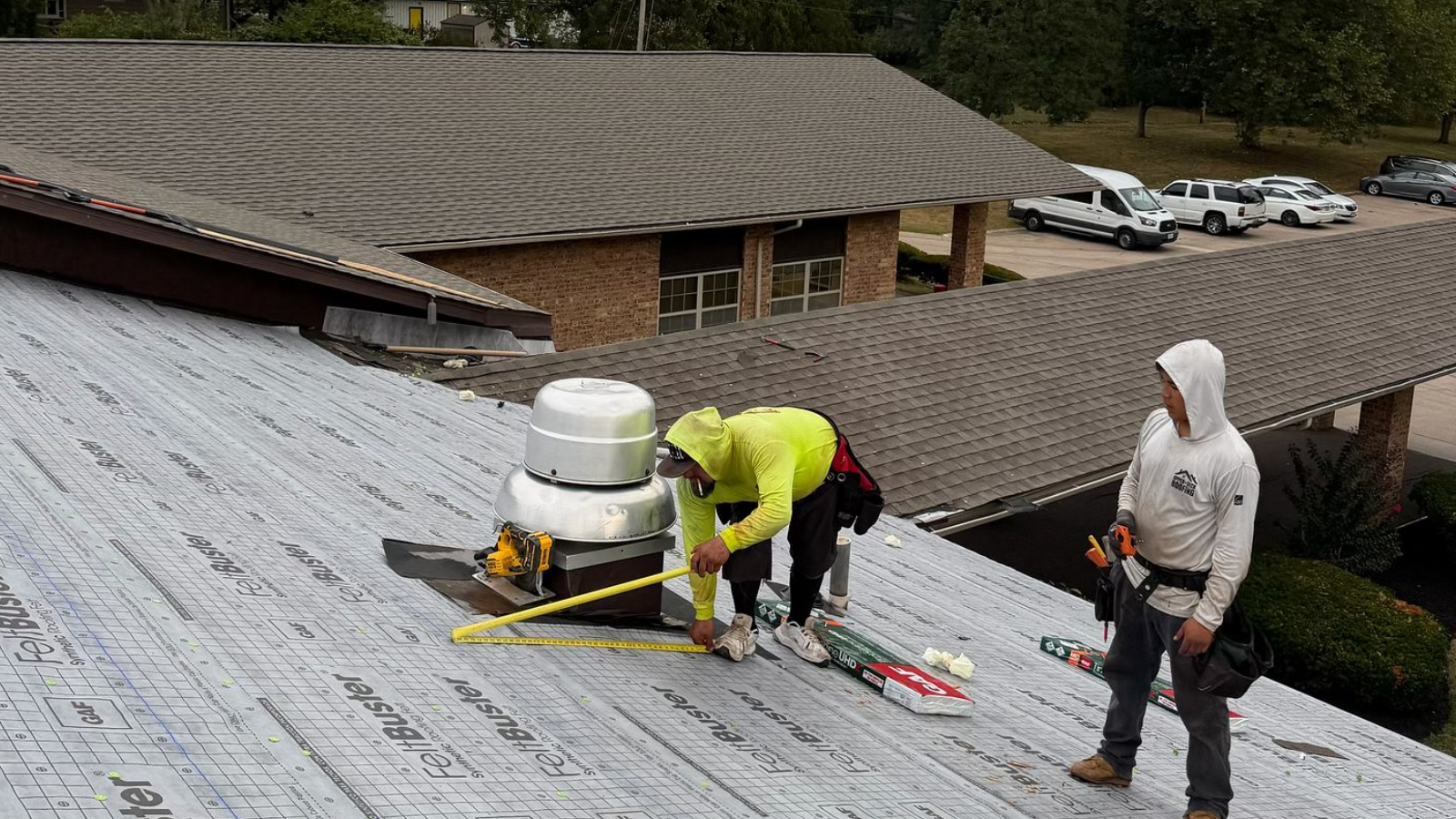
Healthy roof decking should generally feel solid and provide a stable, even surface for roofing materials.
There should not be obvious sagging, significant deterioration, widespread softness, or areas where moisture has caused the material to lose its integrity.
From inside an accessible attic, professionals may also look for clues on the underside of the decking. Dark stains, water marks, warped wood, visible deterioration, corrosion around fasteners, or mold-like growth may point toward past or ongoing moisture issues.
A good roof deck inspection Washington MO does not automatically mean tearing off shingles just to look underneath them. Contractors use a combination of exterior observations, attic clues when accessible, roof history, leak patterns, and conditions revealed during roofing work to understand what may be happening.
Sometimes the true condition of the decking cannot be fully confirmed until old roofing material is removed. That is especially common during a roof replacement.
What Can Cause Roof Deck Damage?
Moisture is one of the biggest enemies of roof decking.
A single brief exposure does not necessarily destroy the deck. The larger problem is repeated or prolonged moisture.
Water may reach the deck through damaged shingles, worn flashing, failed pipe boots, poorly sealed penetrations, aging roof valleys, or storm-created openings.
Moisture may also come from below.
Based on guidance from the U.S. Department of Energy, moisture entering an attic can warp and damage the roof and contribute to deterioration in the roof assembly. The agency specifically identifies roof leaks, improperly installed flashing, and moisture that cannot escape because of ventilation problems as potential sources of attic moisture.
This connection is important because a roof deck inspection Washington MO may reveal that the problem is not simply an old shingle. The real issue may involve ventilation, moisture management, flashing, or several conditions working together.
Hidden Warning Sign #1: Soft or Spongy Areas
One of the biggest warning signs of deck deterioration is a section that no longer feels structurally firm.
Homeowners should not climb onto the roof to test this themselves. Roofing surfaces can be steep, slippery, and unsafe, especially when underlying materials are compromised.
During a professional evaluation, however, unusual movement or softness may indicate that decking underneath has been weakened.
Soft roof decking can result from repeated leaks or prolonged moisture exposure. Depending on the severity and location, damaged sections may need to be replaced rather than covered over.
This is one reason a roof deck inspection Washington MO should focus on identifying the cause of deterioration, not simply finding the damaged board.
If moisture caused the damage, that moisture source also needs to be corrected.
Hidden Warning Sign #2: Sagging or Uneven Roof Areas
A roofline should generally appear consistent.
If you notice a dip, wave, or sagging section, something underneath may deserve closer attention.
Sagging does not automatically mean the deck is rotten. Framing, installation, structural movement, and other factors can affect the roofline. Still, visible unevenness should not be ignored.
A weakened roof deck may gradually lose its ability to maintain a flat, stable surface.
On large or complicated roofs, small dips can be particularly hard to notice because different slopes and architectural features disguise them.
An experienced roofer can determine whether the appearance is simply part of the home’s construction or whether additional evaluation is warranted.
Hidden Warning Sign #3: Old or Repeated Roof Leaks
That ceiling stain from two years ago may seem like ancient history, especially if someone repaired the leak and the stain never grew.
But what happened to the decking while the leak was active?
Water may have soaked into the roof deck before anyone noticed an interior symptom.
Sometimes it dries without creating significant long-term damage. Other times repeated exposure weakens the material.
A roof deck inspection Washington MO is especially worthwhile when the house has a history of leaks, multiple roof repairs, or unexplained staining in the attic.
Knowing that a leak was patched is useful.
Knowing whether the materials underneath remained sound is even better.
Hidden Warning Sign #4: Storm Damage Above the Deck
Missouri storms can affect more than the visible surface.
According to the National Weather Service, a severe thunderstorm can produce hail at least one inch in diameter or wind gusts exceeding 58 mph. The agency notes that hail of this size can damage roofs and that powerful winds can cause structural damage.
Shingles normally absorb the initial impact, but significant storm damage can compromise roofing materials enough to allow water underneath.
Once the protective layers are damaged, future rain may reach the deck.
That is why a roof deck inspection Washington MO after significant storms is not necessarily about expecting catastrophic damage. It is about identifying vulnerabilities before several months of rainfall turn a roofing problem into a decking problem.
A little recommendation from RC Roofing: if your neighborhood experienced hail, strong winds, or falling branches, do not rely solely on what you can see from your lawn. Have the roof evaluated safely and professionally.
Hidden Warning Sign #5: Fastener and Attachment Concerns
Roof decking must be properly attached to the framing underneath it.
Fasteners that are missing, improperly spaced, corroded, or otherwise compromised can affect how the roof assembly performs.
This becomes particularly important when an existing roof covering is removed.
FEMA’s Wind Retrofit Guide for Residential Buildings specifically recommends evaluating an existing roof deck when the roof covering is replaced, identifying damaged or deteriorated decking or framing, and repairing or replacing damaged components. FEMA also notes that strengthening roof sheathing connections can be a critical part of improving roof performance.
For homeowners planning a replacement, this is one of the most important reasons not to think only about shingle brands and colors.
A roof deck inspection Washington MO during tear-off provides an opportunity to see whether the foundation for those new shingles is actually ready to support them.
Why New Shingles Cannot Fix Bad Decking
Imagine installing expensive hardwood flooring over a soft, damaged subfloor.
The new surface may look beautiful temporarily, but the weakness underneath remains.
A roof works similarly.
New shingles need a suitable surface beneath them. If decking is badly deteriorated, loose, or structurally unsound, simply covering it can leave the underlying problem unresolved.
Depending on the situation, compromised decking may also make it more difficult for roofing fasteners to hold properly.
This is why reputable contractors inspect exposed decking during roof replacement rather than automatically installing new materials over everything they uncover.
Homeowners should want to know what is underneath before thousands of dollars of new roofing materials go over the top.
What Happens When the Old Shingles Come Off?
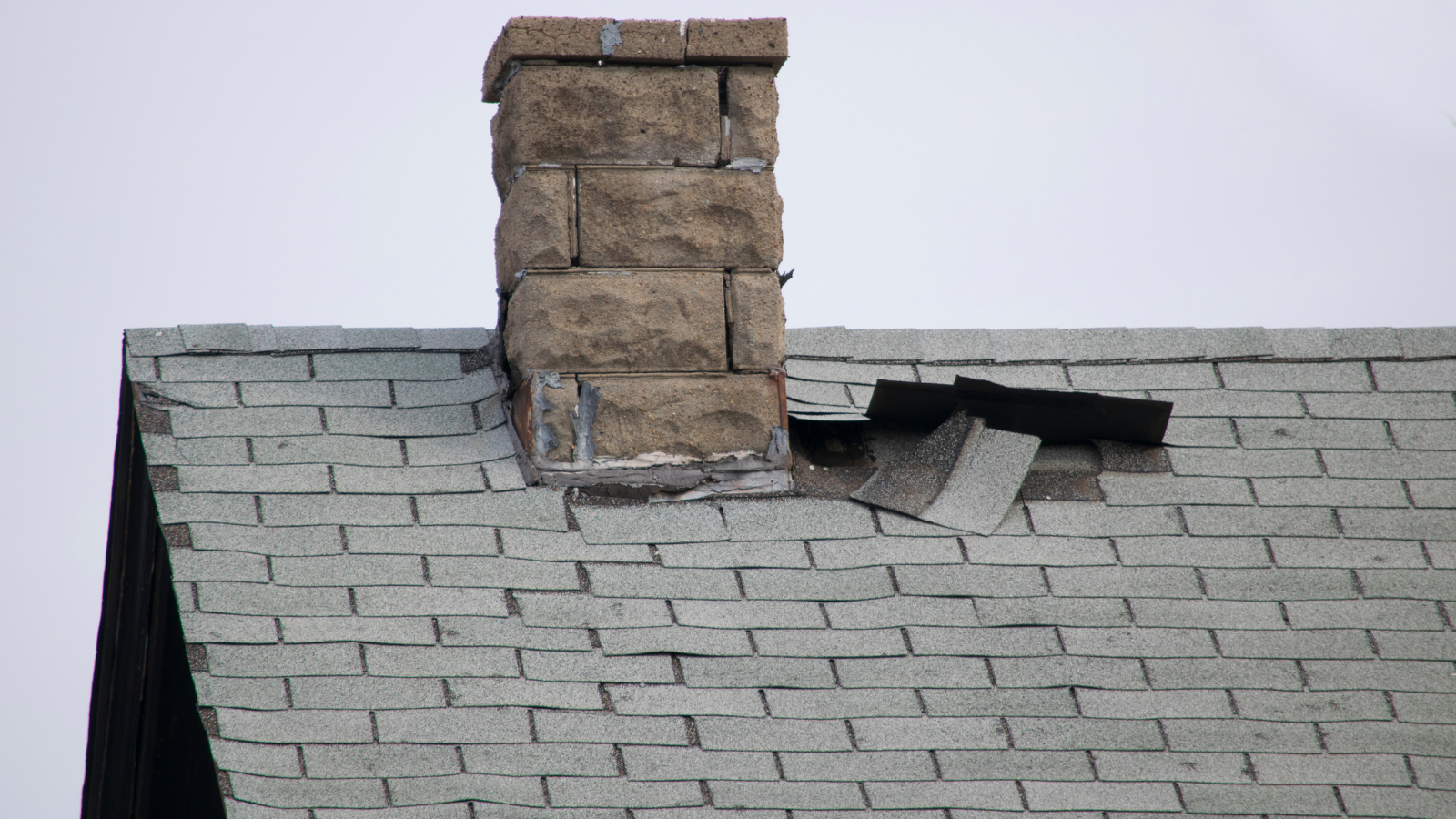
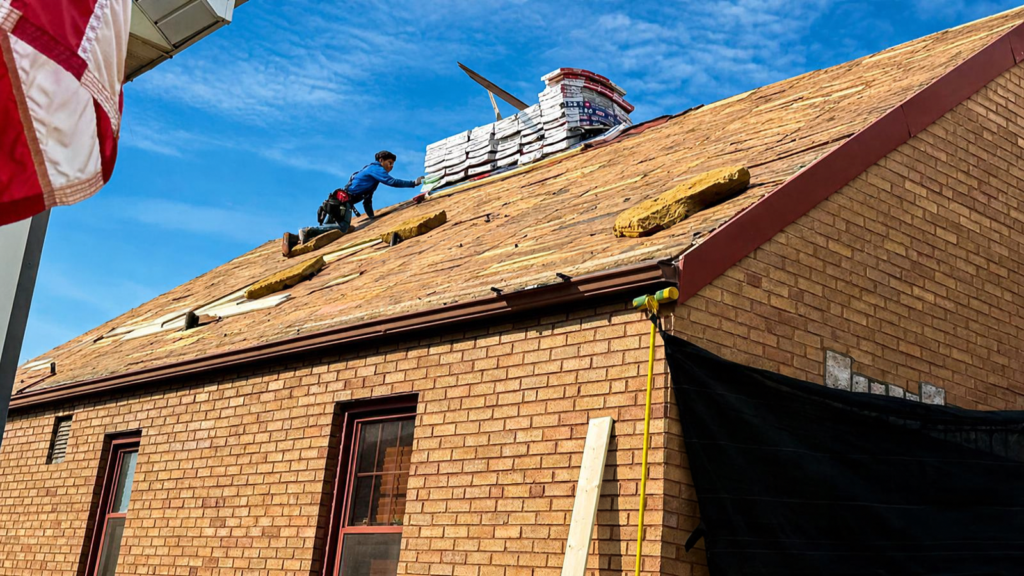
A roof replacement is one of the best opportunities to evaluate the deck thoroughly because large sections become visible during tear-off.
Once old shingles and underlayment are removed, contractors can identify areas that were impossible to confirm from above.
They may find:
- Moisture-damaged sheathing
• Rotten or deteriorated sections
• Previous patchwork
• Questionable fastener patterns
• Holes or openings
• Delamination or swelling
• Areas damaged around penetrations
• Sections requiring additional repair
Although homeowners understandably prefer not to discover unexpected decking repairs, finding them during replacement is far better than covering them and discovering the problem after the new roof is installed.
A roof deck inspection Washington MO during this stage helps ensure the new roofing materials are being installed over a dependable foundation.
Roof Decking and Attic Ventilation Are Connected
You cannot discuss roof decking without discussing what happens beneath it.
In a vented attic, airflow helps manage excess heat and moisture. The Department of Energy notes that baffles can help maintain an air gap between insulation and the roof deck while guiding ventilation from soffit vents toward higher exhaust vents.
Why does this matter?
Because decking has two sides.
Homeowners naturally focus on rain coming from above, but moisture problems can also develop on the underside of the roof deck. Warm, moisture-laden air from the home can enter the attic, and poor ventilation or air-sealing problems may allow condensation to develop under certain conditions.
During a roof deck inspection Washington MO, attic staining or moisture clues can therefore provide important information even when the exterior shingles look intact.
Roof health is rarely about one material acting alone. The shingles, underlayment, decking, insulation, ventilation, flashing, and drainage systems all influence one another.
How Inspectors Connect the Clues
Professional roofing inspection is partly about recognizing patterns.
Suppose there is a ceiling stain near a chimney. A contractor may inspect the shingles surrounding the chimney, flashing details, masonry transition, attic decking, and any visible water paths.
If a valley repeatedly collects debris, the inspector may look for shingle wear and moisture concerns underneath that area.
If one attic section shows darkened decking, the roofer may consider whether the cause is an exterior leak, poor ventilation, condensation, or another moisture source.
A roof deck inspection Washington MO becomes especially useful when the contractor does not jump to the first obvious explanation.
The goal should be to determine why damage happened.
Otherwise, repairing the damaged material without addressing the cause may only reset the clock until the same problem returns.
What Different Clues May Reveal
| What You Notice | What May Be Happening Beneath the Shingles | Why It Deserves Attention |
| Ceiling stain | Decking may have experienced water exposure | Water can travel before appearing indoors |
| Sagging roof section | Decking or framing may need evaluation | Structural support may be compromised |
| Repeated leak in one area | Underlying sheathing may have been repeatedly wet | Repairs above may not tell the whole story |
| Musty attic smell | Elevated moisture may be present | Moisture can affect decking and insulation |
| Hail or wind damage | Protective roofing layers may be compromised | Future rainfall may reach the deck |
| Soft roof area | Decking may have deteriorated | Fastener holding strength and stability can suffer |
| Dark attic staining | Past leakage or condensation may be involved | Source should be identified before repairs |
No one clue proves the deck needs replacement. That is why professional evaluation matters.
A roof deck inspection Washington MO combines visible evidence, roof history, attic observations when available, and conditions found during tear-off to build a clearer picture.
Does Every Damaged Area Mean the Entire Deck Must Be Replaced?
No.
Roof decking repairs depend on how much material is damaged, where the problem is located, why it occurred, and the condition of the surrounding structure.
Localized deterioration may sometimes involve replacing only affected sections. More extensive moisture damage could require broader work.
The key is not to assume either extreme.
Homeowners should be cautious of anyone who claims all decking needs replacement before properly evaluating it, but they should also be cautious of covering obviously compromised decking simply to reduce the immediate project cost.
Good roofing work is about solving the problem correctly.
Older Homes Deserve Extra Attention
Homes throughout Washington and surrounding communities vary widely in age.
An older roof may have been replaced multiple times. That means the deck underneath could contain evidence from decades of previous roofing work, including old leaks, repaired openings, changed ventilation systems, and past fastener patterns.
Older construction does not automatically mean bad decking.
In fact, many older homes have roof structures that remain remarkably solid.
The point is that homeowners should know what they have.
A roof deck inspection Washington MO is particularly valuable when the roof’s repair history is unclear or when you recently purchased a home and do not know what previous contractors encountered during past replacements.
Larger and More Complex Homes Have More Places to Check
Homes in communities such as Frontenac, Town & Country, Wildwood, and Chesterfield can include complicated rooflines with multiple valleys, dormers, chimneys, wall transitions, and different roof elevations.
Each transition creates another place where water must be managed correctly.
A large roof also means more decking area and more places where isolated problems can remain hidden.
The front of the house may look perfect while a rear valley or upper roof section has been dealing with repeated moisture.
That does not mean complex roofs are inherently problematic. It simply means they benefit from thorough evaluations rather than quick visual checks.
When Should You Consider a Roof Deck Inspection?
You do not need to wait until the roof is actively leaking.
Consider having the decking condition evaluated when you are replacing the roof, after significant storm damage, when a leak has occurred repeatedly, when sagging or unusual roof movement becomes visible, or when attic staining suggests previous moisture exposure.
A roof deck inspection Washington MO also makes sense when buying an older property with limited roof history.
Not every inspection will reveal serious problems.
Sometimes the best outcome is confirmation that the deck appears solid and the concerns are limited to roofing components above it.
That peace of mind has value too.
RC Roofing’s Recommendation for Washington, MO Homeowners
Do not judge the entire health of your roof by the shingles alone.
Shingles are important, but they are only the exterior layer of a larger system.
If your roof has recently experienced hail or strong wind, has a history of leaks, is approaching replacement age, or has never had the attic and roof structure evaluated together, consider scheduling a professional inspection.
Homeowners in Washington, Wildwood, Frontenac, Town & Country, Chesterfield, Eureka, Augusta, Union, and Pacific should be particularly mindful after severe weather.
The National Weather Service confirms that damaging hail and strong thunderstorm winds can affect roofing materials, while federal building guidance emphasizes the importance of identifying damaged or deteriorated decking when a roof is exposed during replacement.
Finding deterioration before new roofing materials cover it is simply good roofing practice.
What Should You Ask Your Roofer?
If you are preparing for roof replacement or investigating a recurring leak, ask what happens if damaged decking is discovered.
Will you be shown the affected areas?
How will the contractor determine which sections require replacement?
Will the cause of the damage be investigated?
Will attic ventilation and moisture clues be considered?
A trustworthy roofer should be able to explain what they found and why a particular repair is recommended.
Roofing decisions are easier when homeowners can see the problem and understand the reasoning behind the solution.
What Is Really Hiding Under Your Shingles?
Hopefully, nothing concerning.
But that is something worth knowing rather than guessing.
A roof can look attractive from the street while concealing old moisture damage, deteriorated sheathing, fastener concerns, or a small weak area created by years of leaks. Conversely, a roof that looks old may still have solid decking underneath and simply need new exterior materials.
That uncertainty is precisely why inspection matters.
A roof deck inspection Washington MO gives homeowners a better understanding of the structure supporting the visible roof and helps ensure repairs address the actual problem, not merely the symptom.
At RC Roofing, we believe homeowners deserve more than a new layer of shingles. They deserve confidence in what those shingles are protecting and what is supporting them underneath.
If your home in Washington, Wildwood, Frontenac, Town & Country, Chesterfield, Eureka, Augusta, Union, or Pacific has experienced storms, recurring leaks, unexplained attic moisture, or is approaching roof replacement, take the opportunity to look deeper.
Because what is hiding beneath your shingles matters just as much as what everyone can see from the street.
Final Thoughts: Your Shingles Are Only Half the Story
Your roof can look perfectly fine from the street while hidden moisture, weak decking, or old damage is developing underneath. That is what makes a professional roof deck inspection Washington MO so important. It gives you a clearer picture of what is really supporting your shingles before a small issue turns into a major repair.
Your shingles may be what you see, but your roof deck is what holds everything together. Make sure what is underneath is just as strong as what is on top.