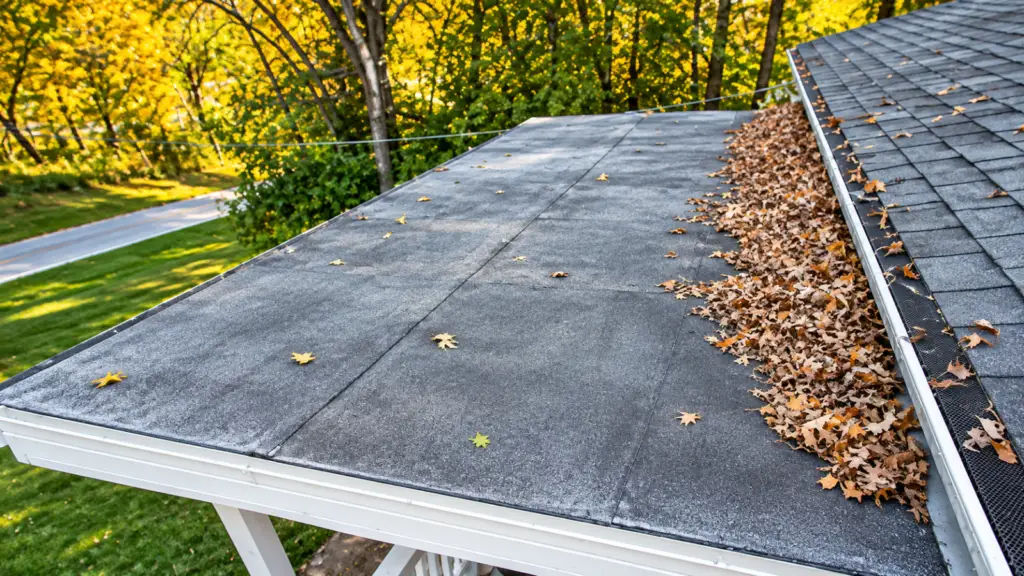
Leaves pile up and drains run slowly, and water has nowhere left to go. So when the trees finish dropping everything on your flat roof, do you know what that pile is quietly doing to the roof underneath?
It’s mid-November, which means every tree around Villa Ridge has just handed your roof a gift nobody wanted. If you have a flat or low-slope roof over a porch, an addition, a garage, a sunroom, or the whole house, leaves don’t blow off the way they do on a steep roof. They settle, they mat down, they get wet, and they find the drain.
At RC Roofing, we’re based in Washington and we work on roofs around Villa Ridge and across Franklin County. Fall is when we get the phone calls that start with “I didn’t think it was a big deal.” This article explains why a flat roof inspection Villa Ridge MO homeowners schedule before winter can save real money, what we look for, what you can safely check yourself, and what to do if you already see water where it shouldn’t be.
Why Flat Roofs Behave Differently
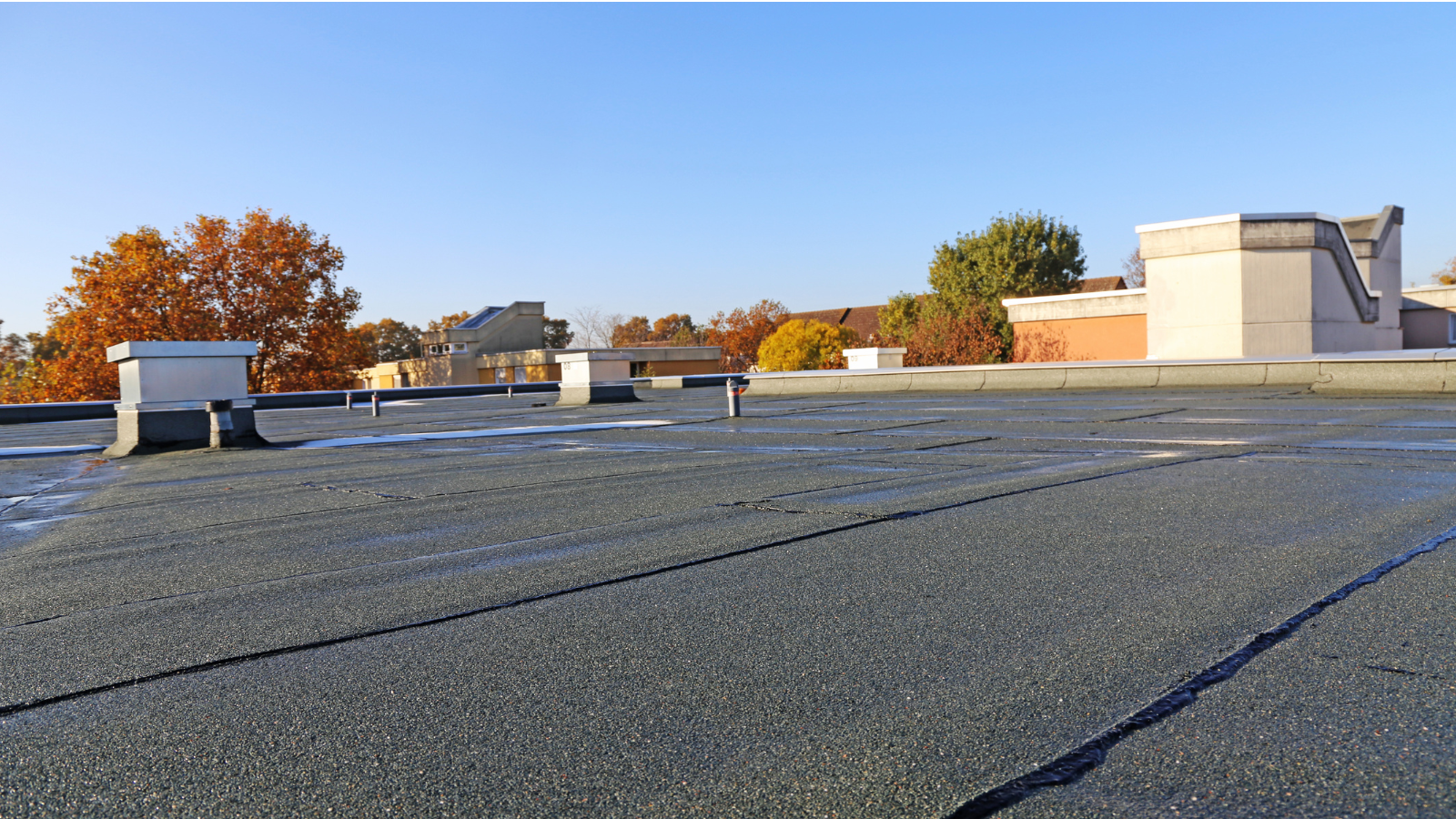
A sloped roof is built to shed water fast. Gravity does most of the work. A flat roof, which is almost always a low-slope roof with just enough pitch to move water toward a drain, scupper, or edge, works on a much slimmer margin. Water moves slowly, and anything that blocks its path matters a lot.
According to the Insurance Institute for Business & Home Safety (IBHS), low-slope roofs “require close monitoring because standing water, debris buildup, and membrane aging can lead to significant leaks and structural damage over time.” That one sentence covers the three things we worry about on almost every flat roof we visit: standing water, debris, and an aging membrane. They feed on each other, and leaves tie all three together.
What Leaves Do to a Flat Roof, and What a Flat Roof Inspection Villa Ridge MO Owners Rely On Catches
It’s easy to think of leaves as harmless, and a flat roof inspection Villa Ridge MO crews perform often proves otherwise. A few on the roof, what’s the harm? Here’s what we see when they pile up.
They Clog the Drains
Flat roofs depend on a short list of exit points: interior drains, scuppers cut through a parapet wall, or gutters along the edge. IBHS tells owners to clear debris from interior roof drains, gutters, scuppers, and downspouts to prevent blockages during storms, and to keep the roof surface and drainage clear year-round. Rimkus, an engineering and consulting firm, says it plainly: clogged drains, scuppers, and strainers are among the common drainage problems on commercial roofs, and the same physics applies to a residential flat roof.
When a drain clogs, water has nowhere to go. It sits.
They Create Ponding Water
Ponding means water that stays on the roof after the rain stops. Rimkus describes standing water more than 48 hours after rain as a sign of an active drainage problem. IBHS likewise tells owners to look for long-term standing water or ponding.
A little puddle that dries by morning isn’t a crisis. Water that lingers for days is. It softens the membrane, finds the weakest seam, and gives moss and algae a place to grow.
They Add Weight You Didn’t Plan For
Here’s a fact that surprises people. Rimkus notes that water weighs roughly 5.2 pounds per square foot for every inch of depth, citing the ASCE 7 loading standard. A few inches of water across a roof is a lot of extra load. The same article describes a cycle where the weight makes the roof deflect slightly, which makes a deeper basin, which holds more water. It calls this ponding instability and warns it may contribute to structural failure if left unchecked.
We’re not saying your porch roof is about to collapse because of some leaves. Most of the time, the real issue is a slow leak that damages the deck and insulation long before the structure is in any danger. But the weight is one more reason not to let water sit.
They Hold Moisture and Feed Growth
Wet leaves turn into a damp mat of mulch sitting directly on your roofing. Rimkus, citing roofing manufacturer research, describes vegetation as a feedback loop in which ponding promotes growth that then makes ponding worse. Seeds land in the debris, moisture keeps it going, and before long you have something growing on a surface that should be bare.
They Can Puncture the Membrane
Sticks, acorns, and branch fragments are hard, and they get ground into the roofing when anyone walks across them or when wind rolls them around. Red River Mutual, an insurer, advises removing leaves, branches, and dirt from the roof surface to prevent punctures, ponding, and clogged drains.
The Leak You Won’t See Right Away
This is the part that makes leaves a hidden risk. When a flat roof leaks, the water doesn’t always drip onto your ceiling the next day. It tends to travel between the membrane and the deck, soak into insulation, and spread sideways before it finds a way into your house.
Rimkus notes that wet insulation under the membrane loses thermal resistance, which raises energy costs, and that a manageable maintenance expense can turn into an unbudgeted emergency if ponding leads to membrane failure or structural damage. In plain terms, by the time you see a stain, the wet area is usually much bigger than the stain.
That’s why a flat roof inspection Villa Ridge MO residents book before a leak appears is worth so much more than one done after.
What a Flat Roof Inspection Actually Covers
A real inspection isn’t a quick glance. When we do a flat roof inspection Villa Ridge MO homes need, we’re checking the whole system.
Surface and membrane. We look for cracks, blisters, holes, soft spots, shrinkage, and punctures. Red River Mutual’s guidance lists pooling water, blisters, holes, soft areas, and cracks as the things to watch for, and that matches what we look for.
Seams and laps. Membranes are joined at seams, and seams are where many leaks start. We check for lifted, split, or separated edges.
Drains, scuppers, and gutters. We clear and test them. We check strainers, look for cracked drain bowls, and make sure water has a real path out.
Ponding. We look for areas where water lingers, check the roof’s slope, and note whether the ponding pattern suggests a drainage issue or a deck that’s settled.
Flashing and penetrations. Vents, pipes, skylights, chimneys, and wall edges all need properly sealed flashing. These are common leak points on every roof type.
Edges and parapets. We check the perimeter metal, coping, and wall flashing, where wind and water do their worst.
Interior signs. From inside, we look at ceilings, walls, and any attic or crawl space near the flat section for stains, dampness, and musty smells.
You get photos and a plain explanation of what we found, what needs attention now, and what can wait.
How Often Should You Have One Done?
Sources differ a little, which is worth being honest about. IBHS advises a professional inspection at least once annually and before storm season, plus checks after major storms. Red River Mutual goes further for flat roofs, advising inspections at least three times a year, and more often if there are trees nearby, along with a check for debris after severe weather. It also recommends having a roofing contractor clean the roof and drainage system about once a year.
Our recommendation, based on what we see in Missouri: schedule a professional flat roof inspection Villa Ridge MO homeowners can rely on at least once a year, ideally in late fall after the leaves are down or in early spring before storm season. If you have mature trees overhead, add a quick checkup after the leaves drop and after any major storm. Between professional visits, a simple look from the ground or a window can tell you whether water is lingering.
What You Can Safely Do Yourself
We want to be careful here, because roofs are slippery and falls are serious. Please don’t climb up there without proper safety equipment and experience. A wet, leaf-covered flat roof is especially treacherous. Here’s what you can do safely:
- Look from the ground or a window. Note any leaf buildup, standing water, or sagging.
- Watch it after rain. If water is still sitting on the roof 48 hours later, it’s worth a call.
- Check your gutters and downspouts from a stable ladder on solid ground, and clear what you can reach safely.
- Look inside. Check ceilings, walls, and attic space near the flat section for stains or musty smells.
- Take dated photos. A record of the roof’s condition helps if you ever need to talk to your roofer or insurance company.
- Trim overhanging branches when it’s safe to do so, or have a tree service do it.
For anything that involves walking on the roof, let a professional handle it.
Warning Signs That Call for a Flat Roof Inspection Villa Ridge MO Homeowners Shouldn’t Delay
Call someone sooner rather than later if you notice any of these:
- Water sitting on the roof more than a couple of days after rain
- Ceiling stains or discoloration near the flat section
- Blisters, cracks, or bubbling in the roofing surface
- Soft or spongy spots underfoot (reported by whoever’s on the roof)
- Debris or vegetation growing in a drain area
- A musty smell or damp insulation in the space below
- A noticeable jump in your heating or cooling bills
Rimkus and IBHS both stress catching these issues before they get worse, and our experience agrees. The earlier we find a clogged drain, a split seam, or a bad flashing, the smaller the repair tends to be.
Why This Matters Right Now
The timing is unusually good for a flat roof inspection Villa Ridge MO homeowners put on their list. The leaves are down, so we can see the roof and its drains clearly. Winter is coming, which means freeze-thaw cycles that turn any small crack into a bigger one. And standing water that freezes can stress the membrane further, so it’s better to deal with ponding before the temperature drops.
Fixing a clogged drain or a small seam problem in November is almost always cheaper and easier than dealing with a frozen, leaking roof in January.
Different Flat Roofs, Different Concerns
Not every flat roof is the same, and the right approach depends on what you have.
Porch and addition roofs are often smaller, lower-slope sections tied into a main roof. The junction where they meet the wall is a prime leak spot.
Garage and carport roofs are frequently under trees and see less attention, so debris builds up for years.
Whole-house low-slope roofs on modern or contemporary designs carry more risk because everything depends on the drainage design working perfectly.
Older homes with later additions can have flat sections that were never given proper slope or drainage.
A flat roof inspection Villa Ridge MO owners can trust takes your specific roof into account: its material, age, slope, drainage design, and what’s growing above it.
Questions to Ask Any Roofer
You don’t need to be an expert to hold a contractor accountable. Before you book a flat roof inspection Villa Ridge MO companies offer, ask:
- Will you inspect the drains, scuppers, and ponding areas, not just the surface?
- Do you check seams and flashing by hand?
- Will I get photos and a written explanation of what you find?
- What’s your recommendation, and can I see what’s wrong before approving work?
- How do you handle leaf and debris removal?
- If you find pondering, what’s the plan to fix the cause, not just the symptom?
A confident contractor answers these without hesitation. If someone offers a flat price over the phone without ever seeing the roof, be cautious. Every flat roof is different, and so is what it needs.
What It Costs
We won’t quote a number for a flat roof inspection Villa Ridge MO homes might need, because the real answer depends on the roof’s size, access, condition, and what’s found. What we can say is that an inspection and drain cleanout is a small expense compared with the cost of a wet deck, ruined insulation, and interior repairs. IBHS and Rimkus both make the same point from different angles: routine maintenance is cheaper than an emergency.
Working With RC Roofing
We’re a Washington, MO roofing company serving homeowners across Franklin County, including Villa Ridge, Pacific, Union, Eureka, and Augusta, plus Wildwood, Chesterfield, Frontenac, and Town & Country. When we inspect a flat roof, we give you a straight answer: what’s good, what needs attention, and what can wait. No pressure, no scare tactics, and no mystery charges. If your drains just need cleaning, we’ll tell you so, even after a full flat roof inspection Villa Ridge MO owners hire us to do. For a broader look at what a general inspection covers, see our guide to roof inspections in Villa Ridge. And if you’re dealing with a leak at a wall or window junction, our article on dormer roof leaks explains how flashing problems work, since the same principles apply at flat roof edges.
Don’t Let the Leaves Make the Call
Leaves are just leaves, until they’re the reason water spent a week sitting on your roof. A drain that’s clear, a membrane that’s sound, and a roof that’s been checked this fall can save you a very bad winter.