If your roof and your siding are both near the end of their life, replace them as one coordinated project. The two systems meet at the eaves, the gables, the chimney and every window and vent, so doing them together means the flashing, the water barrier and the trim are built to work as one. At RC Roofing and Contracting, a family-owned crew serving Villa Ridge and the rest of Franklin County, we offer roof replacement and siding replacement, and the inspection that tells you whether you need one, the other or both is free.
This guide is for homeowners, small business owners and property managers in Missouri who are deciding what to replace, in what order, and what a fair project looks like.
Key Takeaways
- Replace roof and siding together when both show age or storm damage. The roof edge, wall tops and flashing are the places where water gets in, and one crew can build them as a single weather-tight system.
- Start with an inspection of the roof, siding, trim, gutters, fascia, soffits and ventilation. A roofer’s report tells you what needs replacing and what only needs repair.
- Material ranges per square foot vary widely, so ask for a written estimate that lists underlayment, flashing, trim, tear-off and debris removal as separate lines.
- In Missouri, a contractor may not offer to pay or rebate your insurance deductible or negotiate your claim for you. Your insurer decides what is covered.
- Our lifetime workmanship warranty and free inspections are there so you can decide with full information.
Table of Contents
- Why roof and siding belong in the same conversation
- How to tell whether you need the roof, the siding or both
- What a thorough inspection covers
- The order of work in a combined project
- Choosing materials that work together
- What roof and siding replacement costs
- What a good estimate includes
- Missouri rules to know if insurance is involved
- Our approach in Villa Ridge and across Franklin County
- FAQ
- Sources
Why roof and siding belong in the same conversation
Water runs down. Rain lands on the roof, moves to the eaves and gutters, and then runs down the siding. Where roofing meets a wall, a dormer, a chimney or a gable, the roofing and the siding have to overlap in the right order so water is always directed outward. When two different contractors do the work in two different years, that overlap is easy to get wrong.
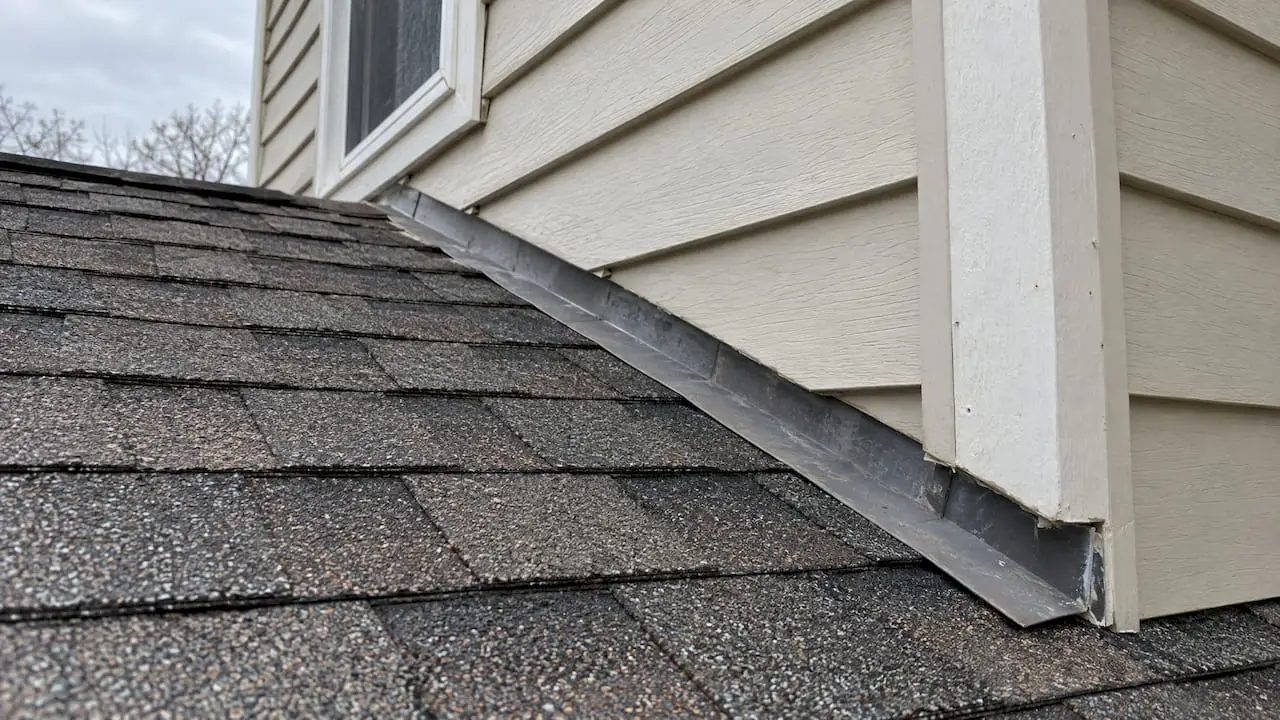
Doing both at once also means one set of scaffolding and access, one cleanup and one schedule. It also means one person is responsible for the joints between the two systems. Our lifetime workmanship warranty covers our installation work, which is easier to stand behind when we have built the whole exterior envelope.
That does not mean every house needs both. A roof that is 24 years old on a house with sound fiber cement siding is a roof job. Siding that has been hit by hail on a house with a ten-year-old roof may be a siding job. The point of an inspection is to sort which situation you are in.
How to tell whether you need the roof, the siding or both
You can learn a lot from the ground. University of Missouri Extension advises homeowners to look from the ground after a storm for loose siding and trim, leaky gutters, and buckled or loose shingles, using binoculars for the areas around chimneys, skylights and vents. The same guidance recommends probing exposed wood trim around windows and doors for rot and making sure downspouts carry water away from the foundation.
Signs the roof is ready for replacement
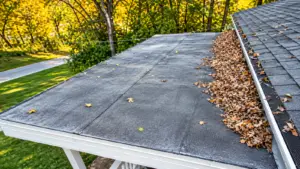
- Damaged, curled or loose shingles, or blisters in the shingle surface.
- Granules collecting in gutters or at downspout outlets. MU Extension lists missing shingle granules and dents in metal roof vents as possible indicators of hail damage.
- A spongy feel in the deck, or water stains and dampness on the underside of the roof in the attic.
- A roof approaching the age it was designed to last. Our page on roof lifespan explains what to expect from different materials in our climate.
MU Extension’s home repair guide recommends evaluating the roof for future replacement every year, so a roof near the end of its life should not surprise you. If you are not sure what you are looking at, our guide to professional roof repair signs shows what a trained eye notices first.
Signs the siding is ready for replacement
- Boards or panels that are cracked, warped, loose or missing.
- Soft or rotted trim around windows and doors.
- Open joints or failed caulking where siding meets trim.
- Stains or moisture on interior walls below the roofline, which can point to water getting behind the siding.
The same MU Extension guide says to inspect siding and trim for damage, decay, tight joints and caulking, and to treat suspected problems as a reason for a professional inspection.
When storms are the reason
Hail and wind often damage both surfaces in one event. MU Extension’s hail specialist notes that insurers may use different standards for judging hail damage, which is why an insurance adjuster is best placed to determine it for a claim. A contractor’s inspection tells you the condition of your roof and siding and what work would fix them. Your insurer makes the coverage decision. Our storm damage restoration team can document what we find on the roof and walls so you have a clear report to bring to your own conversation with your carrier.
What a thorough inspection covers
A good pre-project inspection looks at the whole exterior, not just the part you called about. Following the checklist in MU Extension’s home repair guide, it should cover:
- Roof covering: damaged or loose shingles, blisters, sponginess, and water stains or dampness visible from underneath.
- Siding and trim: damage, decay, tight joints and caulking.
- Water management: gutters, downspouts, fascia and soffits.
- Ventilation: attic and soffit airflow, which affects how long both the roof and the wall assemblies last.
These are the same items MU Extension lists for a home repair inspection, and they are the ones we look at. Our roof inspections are free and come with a detailed report, so you can see photos and findings before deciding anything. If you want to read how to interpret one, see our guide to roof inspection findings.
This also is where we give honest advice on repair versus replacement. A localized leak at a vent or a few damaged shingles may only need a roof repair. A rotted section of siding may be a siding repair. When the system is past repairing, we say so and show you why.
The order of work in a combined project
The sequence matters because each layer has to shed water over the layer below it. A typical roof-and-siding job runs like this.
- Roof tear-off and deck inspection. This Old House describes roof replacement as removal, deck inspection and repair, ice-and-water protection at the eaves, underlayment, drip edge, roofing, flashing at penetrations and ridge cap. Any rotted decking is found and fixed at this stage, before anything new covers it.
- Roof installation with flashing. MU Extension’s contracting specifications call for reflashing roof penetrations with metal, metal drip edging, installation to manufacturer instructions and removal of roofing debris. The same document says not to use caulk or tar as flashing at masonry penetrations such as chimneys.
- Siding preparation. The wall should be clean and dry, then covered with a weather-resistant barrier and flashing around openings, as This Old House’s installation guide describes.
- Siding installation. Starter strips, panels fastened so they can move with temperature changes, and trim come next, with the top course tucked under the roof-edge flashing the roofers installed.
- Gutters and final cleanup. New or repaired gutters go on last, so they are not damaged during siding work, followed by a magnet sweep and debris removal.
In this order, the roofing flashing laps over the wall barrier where it should, and the siding laps over the roof edge flashing where it should. Reversing the order, or using separate crews who do not talk to each other, is how leaks start at the junctions. Our guide to the roof replacement process walks through how we plan these hand-offs.
Choosing materials that work together
Most homeowners choose the siding first because it sets the look of the house, then pick roofing in a color that complements it.
Siding options. This Old House presents vinyl as low-maintenance and available in many styles and colors, fiber cement as durable and versatile, and wood as a traditional natural-finish option.
Roofing options. Asphalt shingles are the most common in our area. Metal is a longer-lasting alternative, and our page on metal roofing explains the benefits and installation.
Pairing them. A few practical rules help:
- Choose a roof color that has some contrast with the siding so the two do not blend into one flat mass.
- Match the style of the house. Historic homes often call for different details, and our notes on historic home roof inspections are worth reading first.
- Decide on trim and gutter color at the same time, since they bridge the two.
As a local, family-owned company, we know the architectural styles in Villa Ridge, Pacific, Eureka and Union-area neighborhoods, from older farmhouses to newer subdivisions, and we plan each project around the house in front of us and the Missouri weather it has to handle.
What roof and siding replacement costs
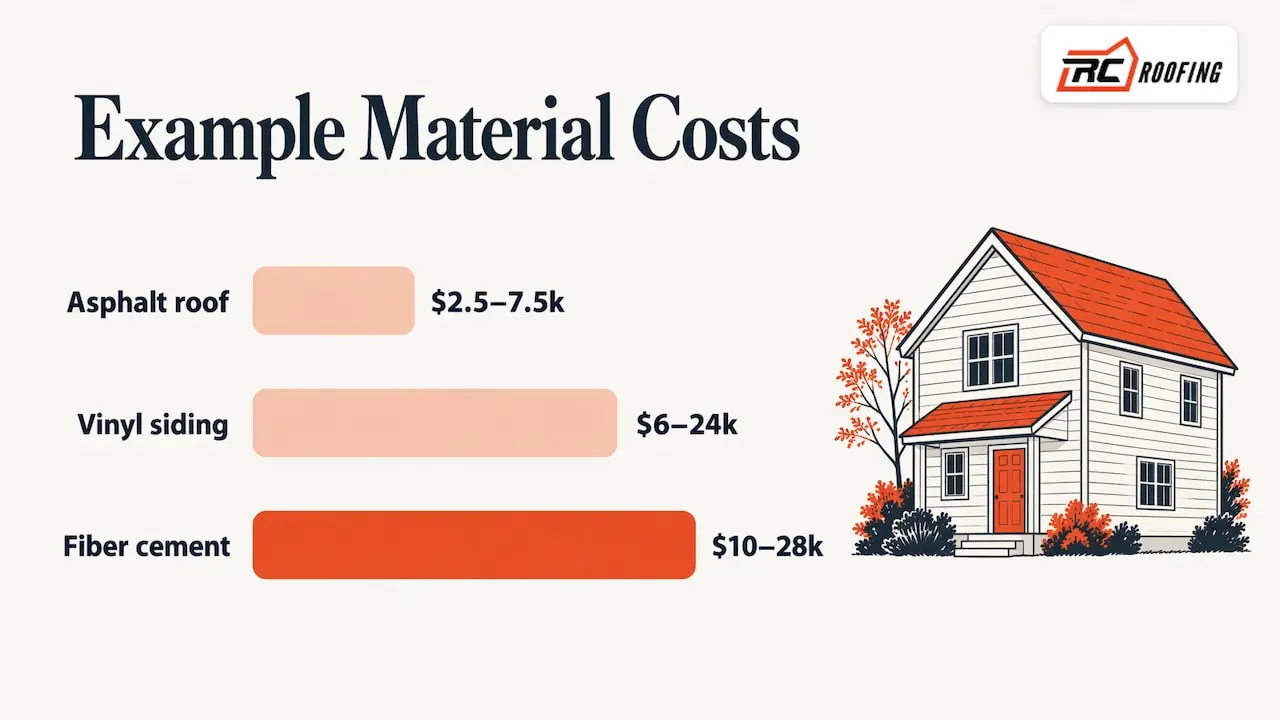
Material prices vary by region and by season, so use ranges only to size a budget, not to judge a quote. This Old House gives roofing ranges of $1 to $3 per square foot for asphalt shingles, $3 to $29 for metal and $8 to $18 for slate, and notes that underlayment, flashing and labor come on top. Its siding ranges are $3 to $12 per square foot for vinyl, $5 to $14 for fiber cement and $1 to $15 for wood, with possible added costs for insulation, trim and removal of existing siding.
Here is what that arithmetic looks like for an example house. These figures are an illustration using those published ranges, not a quote.
| Item | Example area | Published range | Material range for the example |
|---|---|---|---|
| Asphalt shingle roofing | 2,500 sq ft of roof surface | $1 to $3 per sq ft | $2,500 to $7,500 |
| Vinyl siding | 2,000 sq ft of wall | $3 to $12 per sq ft | $6,000 to $24,000 |
| Fiber cement siding | 2,000 sq ft of wall | $5 to $14 per sq ft | $10,000 to $28,000 |
Those are material-and-product ranges before the extra lines the source mentions. Add underlayment, flashing, labor, tear-off, trim and cleanup, and a combined project on a mid-size house can reach the tens of thousands of dollars. That is how people end up asking whether $30,000 is too much for a roof. The answer depends on the roof area, the material, how much decking needs repair, and whether siding and gutters are part of the same project. A number is reasonable when the estimate shows where each dollar goes.
We do not publish prices because every house is different. We give a written scope after the inspection so you can compare it line by line.
What a good estimate includes
Whatever contractor you hire, a combined estimate should name each of these items:
- Tear-off and disposal: whether old roofing and siding are removed, and who hauls away the debris.
- Decking: how rotted or damaged boards will be handled and charged if found.
- Underlayment and eave protection: the water-barrier layers under the roofing.
- Flashing: metal flashing at chimneys, vents, walls and valleys, plus drip edge.
- Siding system: the wall barrier, flashing at openings, siding product and trim.
- Gutters and downspouts: replaced, repaired or left alone.
- Manufacturer instructions and warranty terms: what is covered, for how long and by whom.
- Schedule and cleanup: start window, expected length and how the site will be left.
These match the points in MU Extension’s contracting specifications. We list them in our estimates because a transparent process and strong communication are part of how we work. Our roof replacement checklist for Missouri homeowners and our guide to preparing for roof replacement cover what to do before the crew arrives.
Missouri rules to know if insurance is involved
If a storm damaged your roof or siding and you are filing a claim, Missouri law sets limits on what roofing contractors can do. RSMo 407.725 prohibits deductible rebates, gives owners a cancellation right and requires a notice in contracts paid under an insurance policy, and bars contractors from negotiating an owner’s claim.
In plain terms:
- You are responsible for your deductible. A contractor cannot offer to cover, waive or rebate it.
- You, not the contractor, speak for yourself to your insurance company. We can inspect and document the condition of your roof and siding and give you a written scope of work. We do not negotiate your claim.
- Read the contract notice about your cancellation rights before you sign.
We follow these rules on every project. If you have questions about what your policy covers, your insurer or your insurance agent is the right person to ask.
Our approach in Villa Ridge and across Franklin County
We are a family-owned, licensed and insured roofing company serving residential and commercial properties in Villa Ridge and throughout Franklin County. Property managers and business owners can see our commercial roofing work, and homeowners can start from our residential roofing page.
Here is what you can expect from us:
- A free inspection of the roof and exterior, with a detailed report.
- Honest advice on whether repair or replacement makes sense for your house.
- A transparent process, with communication from the first visit through cleanup.
- Quality materials and a lifetime workmanship warranty on our installation.
Our customers have given us a 5.0 rating on Google across more than 275 reviews, and we work to earn that on every roof.
If you are weighing a project that covers both the roof and the walls, schedule a free roof inspection and we will go over what we find and what makes sense for your home and budget.

FAQ
Should I replace my roof and siding at the same time?
If both are aging or storm-damaged, yes, it is usually the better plan. The roof edge, wall tops and flashing are where the two systems meet, and building them together lets one crew make sure water is directed outward at every joint. If only one is worn out, replace that one and have the other inspected so you know its remaining life.
Which goes first, the roof or the siding?
The roof goes first. Roofing and its edge flashing are installed, then the wall barrier and siding are tucked under or lapped over them in the right order. Gutters usually go on last so they are not damaged during the siding work.
Is $30,000 too much for a roof?
It depends on the roof size, material, decking repairs and whether gutters or siding are included. Published material ranges run from about $1 to $3 per square foot for asphalt shingles to much higher for metal or slate, before labor and extras. What matters is that the estimate lists each line item, so you can see what the total covers.
Will my insurance pay for a roof and siding replacement?
That is up to your insurer, based on your policy and the damage. A contractor cannot rebate your deductible or negotiate the claim for you under Missouri law. We can inspect the roof and siding and give you a written report to share with your insurer.
Sources
- Call insurance adjuster to determine hail damage, MU Extension
- Home Repair Inspection and Specifications, MU Extension
- Check home inside and out after spring storms, MU Extension
- A Comprehensive Guide to Roofing and Siding Installation, This Old House
- RSMo Section 407.725, Missouri Revisor of Statutes