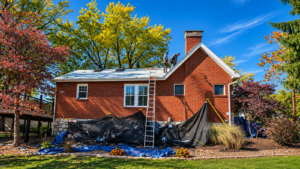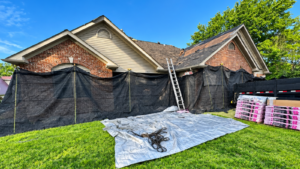
A ten-minute hailstorm can leave damage that doesn’t show up as a leak for months. Here in Franklin County, most of our large hail comes in spring and early summer. National Weather Service records for our region show the bulk of significant hail falls between March and June, usually in the afternoon or early evening. If a storm just rolled through Washington, Union or Villa Ridge, here’s what to look for, what Missouri law says about storm contractors, and how to get your home repaired the right way.
What Hail Actually Does to a Roof
Hail rarely punches holes in a shingle roof. The damage is usually quieter than that:
- Bruising. Hail cracks the shingle’s mat under the surface. It feels soft when pressed, like a bruise on an apple.
- Granule loss. The protective granules get knocked loose, leaving dark spots that age quickly in the sun.
- Cracked or split shingles. These are most common on older, brittle roofs and after wind-driven hail.
- Dented metal. Flashing, roof vents, drip edge and valleys show impacts first.
Even pea- to marble-sized hail can do damage when strong wind drives it into the roof at an angle. Once the mat is cracked, water works its way in over the next few freeze-thaw cycles. That’s why hail damage that looks minor in May can turn into a ceiling stain by February.
Signs You Can Check From the Ground
Please don’t climb onto a wet or damaged roof. You can learn a lot from the yard:
- Dents in gutters, downspouts and the soft metal around your roof vents
- Piles of shingle granules at the bottom of downspouts
- Dings or cracks in vinyl siding, especially on the side that faced the storm
- Torn window screens, chipped paint or dented window wraps
- Dented fins on your AC unit, mailbox or grill. If they took hits, your roof did too
If you see any of these, schedule a professional roof inspection before you assume the roof is fine.
Siding, Gutters and Windows Count Too
Hail damage doesn’t stop at the shingles. Cracked siding lets water behind the wall. Dented or pulled-away gutters stop draining properly, and that overflow can reach your fascia and foundation. A good storm inspection looks at the whole exterior, not just the roof.
Why You Shouldn’t Wait
- Small damage grows. Cracked shingles let in water a little at a time. That rots the decking and soaks insulation long before you see a drip.
- Missouri winters make it worse. Water that gets under shingles freezes, expands and widens every crack.
- Your policy has deadlines. Most homeowners policies limit how long you have to report storm damage. Check yours and don’t let the window close.
What to Do After a Hailstorm in Franklin County
- Stay safe. Stay off the roof, watch for downed lines and keep away from sagging ceilings.
- Document everything. Take dated photos of the roof from the ground, plus the siding, gutters, windows and any interior water spots. Note the date and time of the storm.
- Stop active leaks. If water is coming in, call for emergency storm damage repair. We can tarp the roof and protect your home until permanent repairs are made.
- Call your insurance company. Report the damage and ask how they want you to proceed.
- Get a local inspection. A written inspection report with photos gives you a clear record of what was damaged.
- Keep your receipts. Save receipts for tarping, temporary repairs and anything else you pay for after the storm.
Missouri Law and Storm Chasers
After big hail, out-of-town crews often go door to door. Missouri has a law, RSMo 407.725, written to protect homeowners from the worst of it. Under it:
- No paying your deductible. A roofing contractor can’t offer to pay, rebate or waive any part of your insurance deductible to win the job.
- You have a right to cancel. If your insurer tells you in writing that all or part of the claim isn’t covered, you can cancel the roofing contract. You have until midnight of the fifth business day after receiving that notice. The contractor has to give you this cancellation notice in writing when you sign.
- Contractors can’t negotiate your claim. A roofing contractor may not represent you or negotiate your insurance claim for you.
A few more ways to protect yourself:
- Hire a contractor with a real local address and local reviews.
- Don’t sign anything on your front porch the day after a storm.
- Be wary of anyone who asks for large payments up front.
- Questions about your policy or a claim? The Missouri Department of Commerce and Insurance has a consumer hotline.
How RC Roofing Handles Hail Damage Repair
RC Roofing is a family-owned roofing company based in Washington, MO. When you call us after a hailstorm, here’s what happens:
- A full exterior inspection. We check the roof, flashing, vents, gutters and siding. We photograph every sign of hail damage we find.
- A clear written report. You get photos and a plain-language summary of what we found, which you can share with your insurance company.
- Emergency protection if you need it. We tarp and seal active leaks to stop more water damage.
- An honest repair-or-replace answer. Some hail damage can be repaired. Some roofs need replacing. We’ll tell you which, and why. See shingle repair vs. replacement for how we decide.
- One crew for the whole job. We handle roof repairs, roof replacement, siding and gutters, so you’re not juggling three contractors.
- Options to fit your budget. Ask about financing if your out-of-pocket cost is more than you planned.
Hail Damage Repair Near You
We repair hail damage across Franklin County and the surrounding area. That includes Washington, Union, Villa Ridge, New Haven, Pacific, Gray Summit, St. Clair, Labadie and Augusta.
Think your home took hail damage? Call RC Roofing at (636) 390-7663 or schedule your inspection online.
Frequently Asked Questions
How do I know if hail damaged my roof?
Start with what you can see from the ground: dented gutters, downspouts and roof vents, granules piling up at downspouts, and cracked siding. Bruised shingles and lost granules are hard to spot without getting on the roof. A professional inspection is the only reliable way to know.
Can small hail damage a roof?
Yes. Hail under an inch can still crack shingles and knock off granules, especially when strong wind drives it in at an angle or the roof is already older. The damage often doesn’t leak until a few freeze-thaw cycles later.
Does homeowners insurance cover hail damage in Missouri?
Most Missouri homeowners policies cover sudden storm damage like hail, but coverage, deductibles and reporting deadlines vary by policy. Read your policy or call your agent. The Missouri Department of Commerce and Insurance can also answer general questions about claims.
Can a roofer pay my insurance deductible?
No. Under Missouri law (RSMo 407.725), a roofing contractor can’t offer to pay, rebate or waive any part of your deductible to get the job. A contractor who offers to is breaking the law.
How soon should I get hail damage repaired?
As soon as you can. Get an inspection within a few days of the storm, tarp any active leaks right away, and report the damage to your insurer within your policy’s time limit. Waiting lets water reach the decking and insulation, which makes the repair bigger.
Do you repair hail damage outside Washington, MO?
Yes. RC Roofing repairs hail damage across Franklin County and nearby towns, including Union, Villa Ridge, New Haven, Pacific, Gray Summit, St. Clair, Labadie and Augusta. Call (636) 390-7663 to schedule an inspection.