When most homeowners think about roof repairs, their first concerns are usually leaks, mold, or property damage. What many overlook, however, is how roof problems can directly affect the air they breathe indoors. In communities like Washington, Wildwood, Frontenac, Town & Country, Chesterfield, Eureka, Augusta, Union, and Pacific, where seasonal storms and temperature swings are common, understanding the link between roof repair air quality becomes essential to maintaining both a healthy home and a solid roofing system.
This article explains how neglected roof damage can impact your family’s health, the warning signs to watch for, and what local homeowners can do to improve indoor air by prioritizing timely roof repairs make sure to free inspection with follow us on Facebook to stay ahead of these issues.
Why Roof Damage Affects Indoor Air Quality
The roof acts as a barrier between the outside environment and your home’s interior. When this barrier is compromised—through missing shingles, cracks, poor ventilation, or improper insulation—it doesn’t just affect structural integrity. It also creates opportunities for moisture, mold spores, allergens, and even pollutants to enter your living space.
Roof repair quality issues go hand-in-hand because water damage and air leakage allow contaminants to circulate. These problems can reduce your air quality and contribute to chronic health symptoms like respiratory irritation, headaches, fatigue, and worsened allergies.
Common Roof Issues That Lead to Poor Air Quality
1. Leaks and Moisture Intrusion
A leaky roof introduces moisture into attics, walls, and insulation. This dampness promotes mold and mildew growth, which releases spores into your HVAC system and throughout the home.
Even a slow drip can result in hidden growth behind walls and ceilings. This makes roof damage health risks control an urgent matter for preventing respiratory problems.
2. Poor Attic Ventilation
In areas like Chesterfield and Town & Country, older homes often lack proper attic ventilation. Without airflow, heat and humidity build up—especially in summer—leading to condensation and increased mold risk.
When attics stay hot and moist, insulation can degrade, and pollutants can accumulate. Ensuring ventilation during roof repair is a key part of maintaining good roof leak mold growth.
3. Insulation Damage
Wet or compacted insulation due to roof issues loses its effectiveness and can harbor mold. Damaged insulation can also release fibers or chemicals into the air.
High-quality roof repairs in Washington, MO and surrounding towns must address insulation problems to support healthier air indoors.
4. Rodent and Pest Infestation
Roof gaps often let pests like birds, rodents, or insects enter attic spaces. These pests bring droppings, urine, bacteria, and allergens—leading to air quality degradation.
Proper sealing and repair work can eliminate these access points and improve roof repair allergy symptoms throughout the home.
Health Effects Linked to Poor Indoor Air From Roof Damage For Roof Repair Air Quality
Moisture and contamination caused by roof issues can lead to:
- Increased asthma and allergy flare-ups
- Sinus congestion and throat irritation
- Persistent coughing and sneezing
- Headaches and fatigue
- Mold-related illnesses like hypersensitivity pneumonitis
If your family in Eureka or Pacific is experiencing these symptoms, especially during rainy months, it may be time to check the roof. Investing in roof repair air improvements can reduce these health risks significantly.
How Roof Repairs Improve Indoor Air Quality
Roof repairs don’t just stop leaks—they create a cleaner, safer home environment.
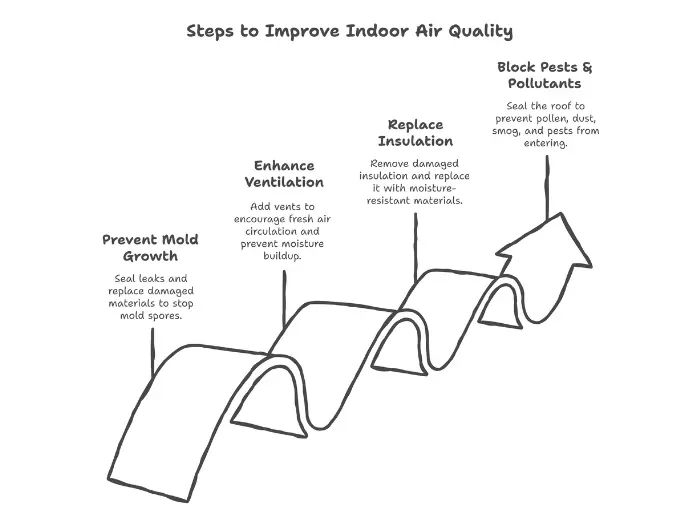
1. Preventing Mold and Mildew Growth
Sealing roof leaks and replacing water-damaged materials stops mold before it starts. Mold spores are among the most common indoor pollutants in Missouri homes, and roof repairs are one of the first lines of defense.
2. Enhancing Ventilation and Air Exchange
Many roof repair air quality upgrades include adding soffit or ridge vents to encourage fresh air circulation. Improved airflow prevents heat and moisture buildup in the attic and supports cleaner air throughout the home.
3. Replacing Compromised Insulation
Modern roof repairs often involve removing damaged or moldy insulation and replacing it with moisture-resistant materials. This helps regulate indoor temperatures and prevents the release of particles or contaminants into the air.
4. Blocking Out Pests and Pollutants
Proper roof sealing blocks pollen, dust, smog, and pests. In rural areas like Augusta or Union, where homes are exposed to open land and seasonal allergens, a sealed and repaired roof helps minimize exposure.
The HVAC and Roof Connection
Many homeowners overlook how their HVAC system pulls air through attic spaces. If the roof is damaged, mold, insulation fibers, and dust from the attic can circulate through the system and into every room.
During roof ventilation mold prevention work, RC Roofing recommends coordinating with HVAC professionals to clean ducts and replace filters—especially after any major leak or attic repair.
Signs That Your Roof May Be Harming Your Indoor Air
- Mildew smell or musty odors, especially after rain
- Increased allergy or asthma symptoms indoors
- Dark spots or stains on ceilings and walls
- Visible mold growth in the attic or along ventilation ducts
- Drafty or hot rooms indicating poor insulation or ventilation
If you live in Washington, MO or nearby towns and notice these symptoms, schedule a roof inspection. We’ll help determine if roof repair air quality upgrades are necessary for your home.
How Roof Damage Spreads Contaminants
Damaged roofing allows air and moisture from the outside to mix with indoor air. This airflow brings in outdoor pollutants such as:
- Mold spores from wet leaves and soil
- Pollen from nearby trees and grass
- Chemical pollutants from vehicle exhaust or nearby industry
- Animal droppings, fur, or bacteria
In homes without sealed roofing, these airborne contaminants can infiltrate walls and insulation—reducing indoor air quality long after the original damage is done.
Preventative Roof Maintenance and Air Quality
You don’t have to wait for a leak to experience the benefits of better than strategies. Preventative maintenance plays a major role in keeping air healthy year-round:
- Annual roof inspections to spot early issues
- Clearing debris from gutters and valleys
- Sealing flashing and roof joints
- Replacing broken or missing shingles
- Installing attic fans or passive vents
In homes across Frontenac, St. Louis County, and Wildwood, homeowners who follow seasonal maintenance schedules often report fewer indoor air complaints—and longer roof lifespans.
Local Weather and Air Quality Factors
In the Missouri climate, spring and summer storms bring heavy rainfall and humidity—creating ideal conditions for roof-related air problems. High moisture content in the air also makes it easier for pollutants to travel and stick to surfaces.
RC Roofing has helped many homeowners in Chesterfield and Town & Country identify how local weather worsens hidden roof damage—and how fast action can improve roof repair air quality for the entire household.
What to Expect During an Air Quality-Focused Roof Repair
When you call RC Roofing for an inspection, we look beyond the surface. Our roof repair process includes:
- Moisture readings of attic wood and insulation
- Thermal imaging to detect hidden leaks
- Ventilation assessment for airflow optimization
- Mold identification and remediation recommendations
- Insulation and underlayment review
We don’t just patch leaks—we solve the underlying issues that affect your indoor air quality. That’s why so many homeowners throughout Washington and neighboring cities trust us with their roofing health.
Real Stories from Local Homeowners
- Union, MO: A family experienced chronic sinus issues until our team replaced water-damaged underlayment and improved ventilation. Their symptoms cleared up within weeks.
- Chesterfield, MO: Mold growth was discovered during a roof replacement. By replacing insulation and sealing air gaps, the home’s musty odor disappeared entirely.
- Eureka, MO: A new ridge vent system and synthetic underlayment reduced attic humidity and helped the family breathe easier during pollen season.
These are just a few examples of how roof repair air quality upgrades changed our clients’ lives.
Roof Replacement vs. Roof Repair
Sometimes, roof repairs aren’t enough to correct long-term air quality problems. If your roof is over 20 years old or shows widespread damage, a full replacement may be the best investment.
Benefits of full replacement for air quality include:
- New moisture-resistant materials
- Code-compliant ventilation design
- Improved insulation performance
- Long-term reduction of indoor contaminants
RC Roofing can help homeowners in Pacific and Washington compare options based on budget, roof condition, and air quality goals.
Working With an Experienced Roofing Partner
Not all roofers understand how structural work affects the air you breathe. When choosing a contractor for roof air quality improvements, ask:
- Do you inspect attic spaces and insulation?
- Do you assess and update ventilation systems?
- Are you trained in mold prevention or remediation?
- Can you coordinate with HVAC professionals if needed?
At RC Roofing, we specialize in roofing systems that protect both the structure and your indoor environment. Our team works throughout Wildwood, Frontenac, and surrounding communities to keep families safe from leaks and airborne contaminants.
Final Thoughts: Roof Health Is Air Health
Homeowners in Missouri often invest in air purifiers, filters, and duct cleaning—but overlook the source of many indoor air problems: the roof.
If you’re concerned about mold, moisture, or breathing comfort, start by checking the top of your home. At RC Roofing contact us today, we make sure your roof isn’t just watertight—it supports a cleaner, healthier indoor space.
Let us help you take the first step toward better roof repair air quality for your family.
Frequently Asked Questions About Roof Repair Air Quality
Q: How does roof damage affect indoor air quality?
A: Leaks allow moisture in, causing mold/mildew. Poor ventilation traps humidity. Gaps let in allergens, pests, and pollutants, which circulate through the home.
Q: What are common health effects?
A: Increased asthma/allergy flare-ups, persistent coughing, sinus issues, headaches, and fatigue due to mold spores and indoor contaminants.
Q: What are the main warning signs?
A: Musty smells (especially after rain), visible mold in the attic, dark ceiling stains, and worsening allergy symptoms indoors.
Q: How do roof repairs help air quality?
A: Air quality improves by stopping leaks (preventing mold), enhancing ventilation (reducing humidity), and blocking pests/outdoor pollutants.
Q: Should I check my HVAC system after a roof leak is fixed?
A: Yes. Contaminants from the damaged attic can circulate through the HVAC ducts. Cleaning ducts and replacing filters is recommended.
Q: Is attic ventilation important for air quality?
A: Absolutely. Proper ventilation prevents heat and moisture buildup that leads to condensation and dangerous mold growth.