Hammers ring and shingles fly, so what’s it really like when a new roof goes up nearby? If you’ve ever watched a crew swarm a neighbor’s house and wondered who’s who up there, what they’re actually doing, or whether all that noise means something’s going wrong, you’re not alone. Most homeowners have never had a front-row seat to a real roofing project Missouri crews handle from start to finish, so it’s easy to imagine it as chaos when it’s actually a tightly run process.
Why It Helps to Understand What’s Happening on Your Roofing Project Missouri Crews Complete
There’s a difference between hiring a crew and trusting a crew. Trust comes from understanding, and most people simply haven’t had a reason to learn how a professional roofing operation works before their own roof needed attention.
When you understand the structure behind a roofing project Missouri contractors run, the noise stops feeling random, the schedule stops feeling like a mystery, and you’re able to spot the difference between a well-organized crew and one that’s cutting corners. That knowledge is worth more than most homeowners realize, especially when you’re trusting a team with the single largest exterior investment on your house.
Meet the Crew: Who’s Actually Working on Your Roof
A lot of people assume “the roofing crew” is one interchangeable group of guys with nail guns. In reality, a well-run roofing project Missouri team is made up of several distinct roles, each with a specific job.
The Project Manager or Estimator
This is usually the first person you meet. They walk your roof before work begins, measure your roofline, check your attic ventilation, and put together your quote. They’re also your main point of contact if questions come up once installation starts.
The Site Foreman
Think of the foreman as the on-site quarterback. They’re the one directing the crew, checking work quality throughout the day, and making sure everything lines up with the plan the project manager put together. If you have a question on installation day, the foreman is usually who you’ll talk to.
The Tear-Off Crew
These are the roofers responsible for stripping the old shingles, felt paper, and sometimes old flashing off your roof deck. It’s physically demanding, fast-paced work, and it’s usually the loudest part of the entire job.
The Installation Crew
Once the deck is clear and repaired, this team lays down underlayment, installs flashing, and sets the new shingles or roofing material in place, working section by section from the bottom edge up toward the ridge.
The Flashing and Detail Specialist
Valleys, chimneys, skylights, and vent pipes all need careful, precise flashing work to stay watertight. On a well-run crew, this detail work often falls to someone with extra experience, since it’s the piece most likely to cause leaks down the road if it’s rushed.
Cleanup Crew
The final step on any roofing project Missouri crews take seriously is cleanup, including a magnetic sweep of the yard and driveway to catch stray nails before they end up in a tire or bare foot.
A Day in the Life: How a Roofing Project Missouri Crew Actually Operates
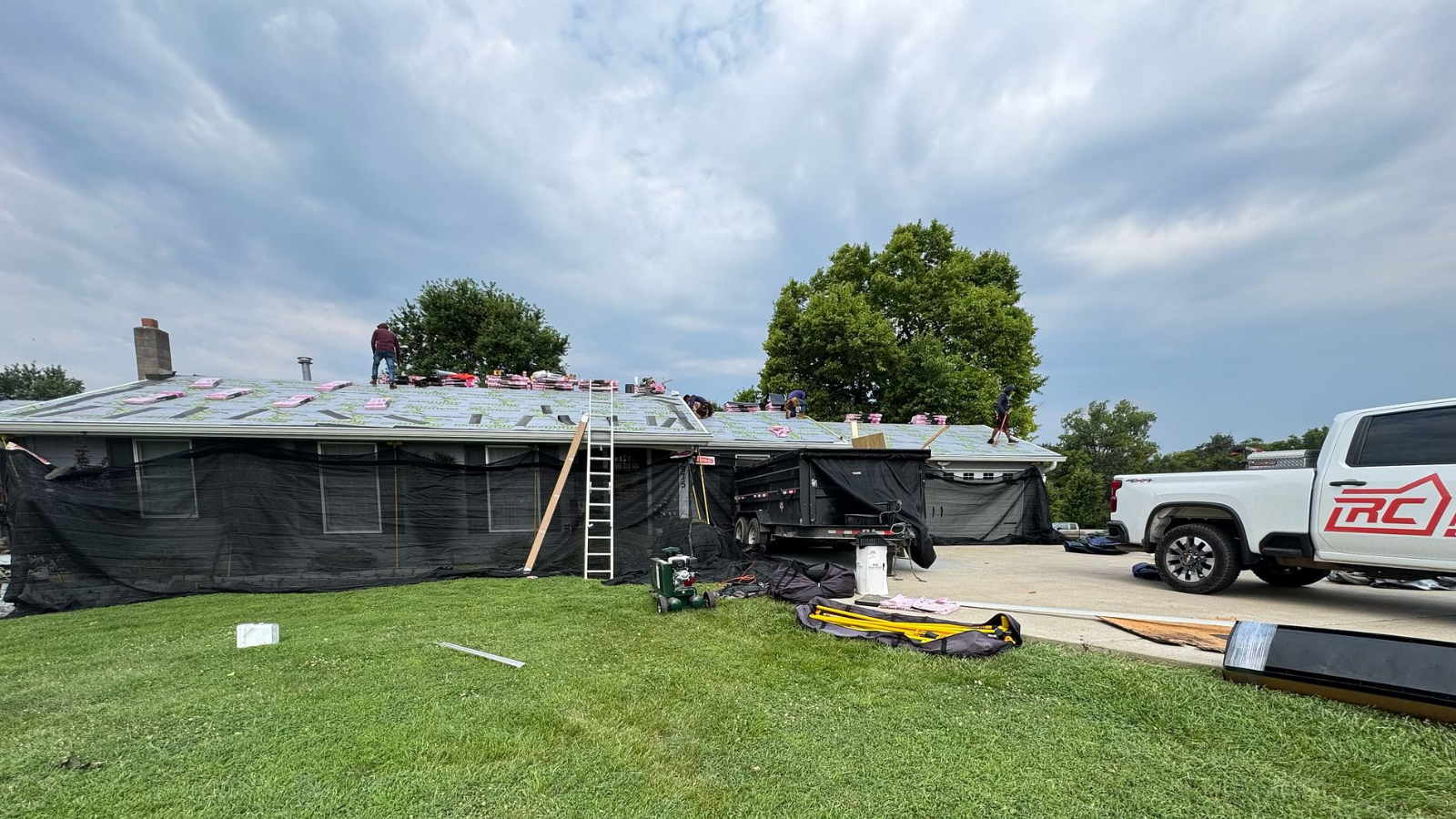
So what does this look like when it’s all happening in real time? Here’s a realistic walkthrough of a typical day on-site.
Early Morning: Setup
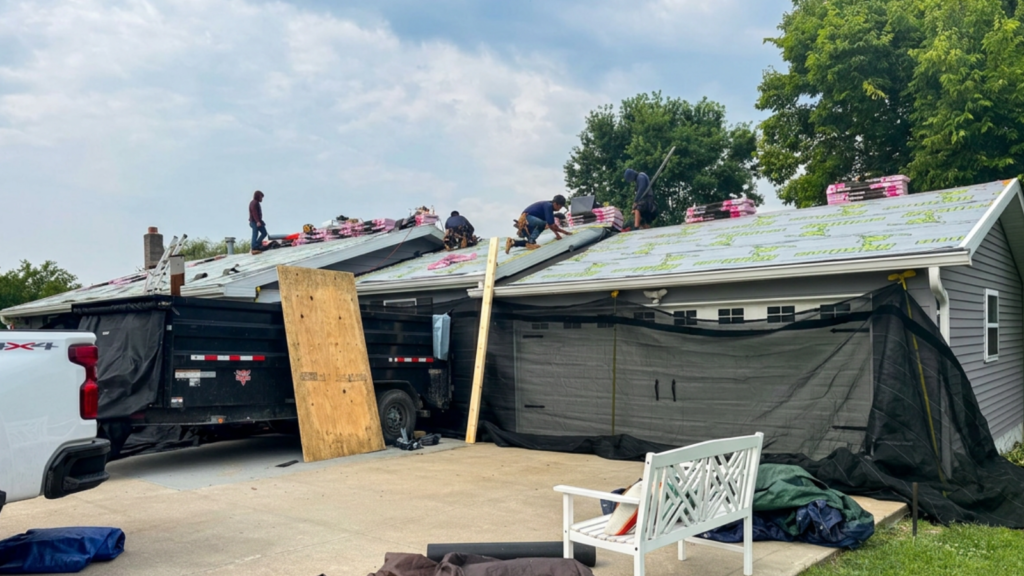
Crews typically arrive early, often before 7:30 a.m., to beat the heat during summer months and make the most of daylight in shorter winter days. The first thirty minutes usually go toward setting up safety equipment, laying tarps over landscaping and driveways, and staging materials for the day.
Morning: Tear-Off Begins
This is the loud part. Old shingles come off in sections, get tossed into a trailer or dumpster, and the deck underneath gets exposed and inspected. If there’s rot or water damage, this is when it gets flagged and addressed before moving forward.
Midday: Underlayment and Flashing
Once the deck is solid, underlayment goes down across the whole surface, followed by flashing around every penetration point. This stage requires more precision and less brute force than tear-off, so the pace naturally slows down a bit.
Afternoon: Shingle Installation
This is when your roof starts looking like a roof again. Courses of shingles go up methodically, row by row, with careful attention to nail placement and alignment. A well-organized crew moves efficiently here because the prep work earlier in the day was done right.
Late Afternoon: Ridge Caps, Vents, and Final Details
Ridge vents, cap shingles, and any remaining trim work get finished up. The foreman does a walk of the roof to check for consistency and catch anything that needs correcting before the crew packs up.
End of Day: Cleanup
Tarps come down, debris gets bagged or hauled off, and a magnetic roller sweeps the yard and driveway for nails. On multi-day jobs, the roof gets secured to withstand overnight weather before the crew heads out.
The Tools and Equipment Behind Every Roofing Project Missouri Crews Bring On-Site
Professional crews show up with more than ladders and hammers. A typical setup includes pneumatic nail guns for consistent, properly set fasteners, roofing shovels for tear-off, safety harnesses and anchor points for steep or high roofs, magnetic sweepers for nail cleanup, and often a material lift or conveyor to get shingles and underlayment onto the roof without hauling everything by hand up a ladder all day.
The equipment matters because it directly affects both speed and quality. A crew using proper pneumatic tools sets nails at a consistent depth, which matters far more for long-term roof performance than most homeowners realize. Hand-nailing or using poorly calibrated equipment can lead to overdriven or underdriven nails, both of which shorten the life of your shingles.
Safety Protocols on a Professional Roofing Project Missouri Crews Take Seriously
Roofing is consistently ranked among the more physically demanding trades, and a professional outfit treats safety as non-negotiable, not optional. On any legitimate roofing project Missouri homeowners should expect to see harnesses and anchor points on steep-pitch roofs, hard hats during tear-off when there’s overhead work, clearly marked or roped-off work zones to keep kids and pets away from falling debris, and a foreman who actually enforces these standards rather than just having them written in a handbook somewhere.
If you’re watching a crew work and you don’t see any of this, especially on a steep or high roof, that’s worth asking about. A company that cuts corners on crew safety is a company that’s more likely to cut corners on your roof, too.
Communication: What Homeowners Should Expect to Hear During the Process
One of the biggest differences between a good contractor and a mediocre one isn’t the work itself, it’s the communication around it. On a well-managed roofing project Missouri homeowners are kept in the loop at a few key points: before work begins, with a clear schedule and material delivery date; if weather forces a delay, with a heads-up rather than a no-show; if unexpected deck damage is found, with a conversation about cost and next steps before work continues; and at the end, with a walkthrough where the foreman or project manager reviews the finished roof with you directly.
If you’re not hearing from your contractor at these moments, it’s fair to ask why. Good communication isn’t a bonus feature, it’s part of what you’re paying for.
Materials You’ll See On the Job Site
Part of what makes a roofing crew’s work make sense is knowing what’s actually being installed, since the materials dictate a lot of the process. On a typical residential job, you’ll see bundles of asphalt shingles stacked near the roof access point, rolls of synthetic underlayment, rolls or strips of ice-and-water shield for valleys and eaves, aluminum or galvanized steel flashing cut to fit chimneys and vent pipes, and ridge vent material for attic airflow.
Higher-end jobs might include standing-seam metal panels, architectural shingles with a heavier profile, or synthetic slate and cedar-look products. Each material has its own installation quirks. Metal panels, for example, require different fastening techniques and expansion allowances than asphalt shingles, which is part of why crews installing metal roofing often move at a noticeably different pace than a standard shingle crew.
Knowing what these materials are, and roughly what they’re for, makes it much easier to follow along with what the crew is doing at any given point in the day, rather than just watching a blur of activity on your roofline.
Common Myths About Professional Roofing Crews, Debunked
A few misconceptions tend to follow roofing work around, and it’s worth clearing them up.
Myth: More noise means something’s wrong. In reality, tear-off and nailing are inherently loud processes. A quiet crew isn’t necessarily a careful one, and a loud crew isn’t necessarily a rough one. Noise level has almost nothing to do with quality.
Myth: Faster work means rushed, lower-quality work. An experienced crew that’s done hundreds of similar jobs will naturally move faster than a newer or understaffed team, without cutting a single corner. Speed often reflects experience and proper staffing, not carelessness.
Myth: Any handyman can install a roof correctly. Roofing looks straightforward from the ground, but proper flashing, ventilation, and nailing patterns take real training to get right. Mistakes in these areas often don’t show up as leaks until years later, which is exactly why hiring a licensed, experienced crew matters more than most homeowners realize upfront.
Myth: The cheapest quote is the best value. A significantly lower bid often means a smaller crew, lower-grade materials, or corners being cut somewhere in the process, whether that’s underlayment, flashing, or simply the number of nails per shingle. It’s worth asking what’s included before assuming a lower number is automatically the better deal.
Licensing, Insurance, and Why They Actually Matter
It’s easy to treat “licensed and insured” as a throwaway phrase you see on every roofing ad, but it’s worth understanding what it actually protects you from. General liability insurance covers damage to your property if something goes wrong during installation, like a dropped tool damaging siding or a landscaping mishap. Workers’ compensation coverage protects you as the homeowner if a worker is injured on your property, since without it, you could potentially be held liable.
A legitimate roofing company carries both, along with any local licensing required in Franklin County or the specific municipality you live in. Before signing a contract, it’s reasonable to ask for proof of both, and any established contractor will be able to provide it without hesitation or delay.
Seasonal Timing and What It Means for Your Crew’s Schedule
Roofing crews in our area stay busiest from late spring through early fall, when weather is most predictable and homeowners are most likely to notice storm damage from spring thunderstorms. Booking during this window often means a slightly longer wait to get on the schedule, though the installation itself tends to move smoothly once it starts.
Winter months are typically slower for roofing companies, which can mean faster scheduling, but cold temperatures affect how well asphalt shingles seal, so crews sometimes hand-seal tabs in colder weather to compensate. If your roof can wait, many homeowners find that early fall offers the best balance of contractor availability and stable weather.
Every region has its quirks, and ours is no exception. Missouri’s weather swings from humid summers to icy winters, which means crews here plan around narrower dry-weather windows than contractors in more predictable climates. Storm season in spring can mean sudden schedule shifts, and a professional crew builds flexibility into their calendar rather than pretending weather won’t be a factor.
Local permitting is another piece specific to our area. Washington, along with Union and Pacific, has its own permitting requirements for roofing work, and a legitimate contractor handles that paperwork as a standard part of any roofing project Missouri they take on, not as an afterthought.
Serving Washington and the Surrounding Communities
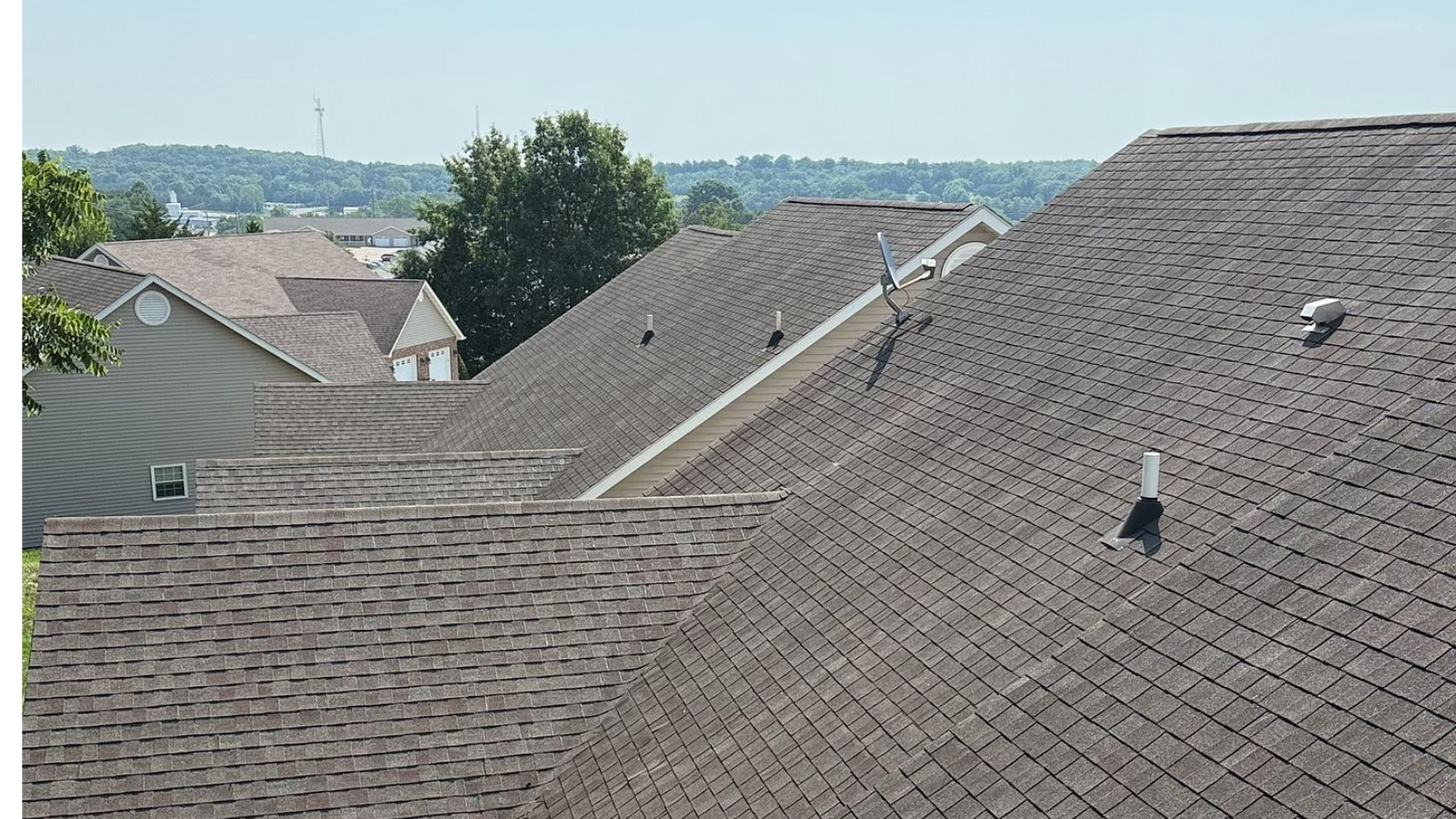
RC Roofing crews work throughout Washington, Union, and Pacific, along with Eureka and Augusta, where a mix of established neighborhoods and rural properties keeps our teams versatile. We also complete roofing projects further east in Wildwood, Frontenac, Town & Country, and Chesterfield, where larger homes with more architectural detail, steeper pitches, more valleys, and more intricate flashing work, mean our specialists spend extra time on precision detailing.
No matter which of these communities you call home, the structure behind a professional roofing project Missouri crews complete stays consistent: a clear plan, a skilled team, and communication you can actually count on.
What Homeowners Can Do to Help the Process Go Smoothly
You don’t need to do much, but a few small steps make a real difference. Move vehicles out of the driveway before the crew arrives, keep pets indoors during active work hours, clear breakable items from walls on upper floors where vibration might jostle them, and let your contractor know about any scheduling conflicts ahead of time. None of this changes the scope of the work, but it does help the crew move through the job without unnecessary interruptions.
Questions to Ask Before Hiring a Roofing Crew
Not every company runs their crews the same way, and asking a few direct questions upfront can save you a lot of frustration later. Ask whether the same crew stays on your job from start to finish, or whether subcontractors rotate in and out. Ask how the company handles unexpected weather delays. Ask who you’ll actually talk to if a question comes up mid-project. And ask to see proof of licensing and insurance, since a legitimate roofing company will have both readily available without hesitation.
The answers to these questions tell you a lot about how organized, and how honest, a contractor really is before a single shingle comes off your roof.
What Happens After the Crew Leaves
The work doesn’t technically end when the last shingle goes on. A professional company follows up with a written warranty covering both materials and workmanship, and a good contractor will walk you through exactly what that warranty covers before they consider the job finished. Manufacturer warranties on shingles typically run for decades, while workmanship warranties from the contractor itself tend to run anywhere from a few years to a lifetime, depending on the company.
It’s also normal for a reputable crew to do a final drive-by or follow-up call a few weeks after installation, just to confirm everything settled in properly after a rain or two. If you ever notice a granule buildup that seems unusual, a loose shingle edge, or a small leak after a big storm, that follow-up relationship is exactly what you’ll lean on. A company that disappears the moment the invoice is paid isn’t one you want handling something as important as your roof.
Frequently Asked Questions
How many people are typically on a roofing crew? Most residential jobs use a crew of five to eight people, split between tear-off, installation, and detail work, led by a site foreman.
Do I need to be home during the roofing work? No, but it helps to be reachable in case the crew has questions, particularly if unexpected repairs come up.
Is roofing work dangerous for my property? Reputable crews take precautions like tarping landscaping, protecting siding, and doing a full magnetic sweep for nails, so risk to your property is minimal.
What if my roof has damage the crew didn’t expect? A professional crew pauses, explains what they found, and discusses cost and next steps with you before continuing, rather than proceeding without your knowledge.
How do I know if a crew is cutting corners? Watch for missing safety equipment, rushed flashing work, and a lack of communication from the foreman or project manager, all signs worth addressing directly with the company.
Final Thoughts on What a Real Roofing Project Missouri Crew Looks Like
A professional roof replacement isn’t chaos on your rooftop, it’s a coordinated process built on defined roles, the right equipment, and clear communication from start to finish. Understanding what a genuine roofing project Missouri crew looks like gives you the confidence to know when you’re getting quality work, and the language to ask the right questions when you’re not.