Shingles shine and shingles show, but the layer beneath decides if water can go. So when you’re planning a new roof, do you know what’s being installed between the shingles and your house?
If you’re like most Villa Ridge homeowners, probably not. And honestly, why would you? Underlayment is the layer nobody sees, and roof underlayment Missouri homeowners choose rarely gets a second thought. It goes on right after the old roof comes off, it disappears under the shingles within hours, and it never shows up in the photos on a contractor’s website. Shingle color gets all the attention. Underlayment gets a line item on the estimate, if it gets mentioned at all.
That’s a shame, because the roof underlayment Missouri homeowners end up with is one of the main things standing between a hard rain and your attic. At RC Roofing, we’re just down the road in Washington, and we replace roofs in and around Villa Ridge all year. This is the conversation we wish every homeowner had before signing a contract: what underlayment is, what the different kinds do, and why this “invisible” layer deserves a real question or two.
What Roof Underlayment Actually Is
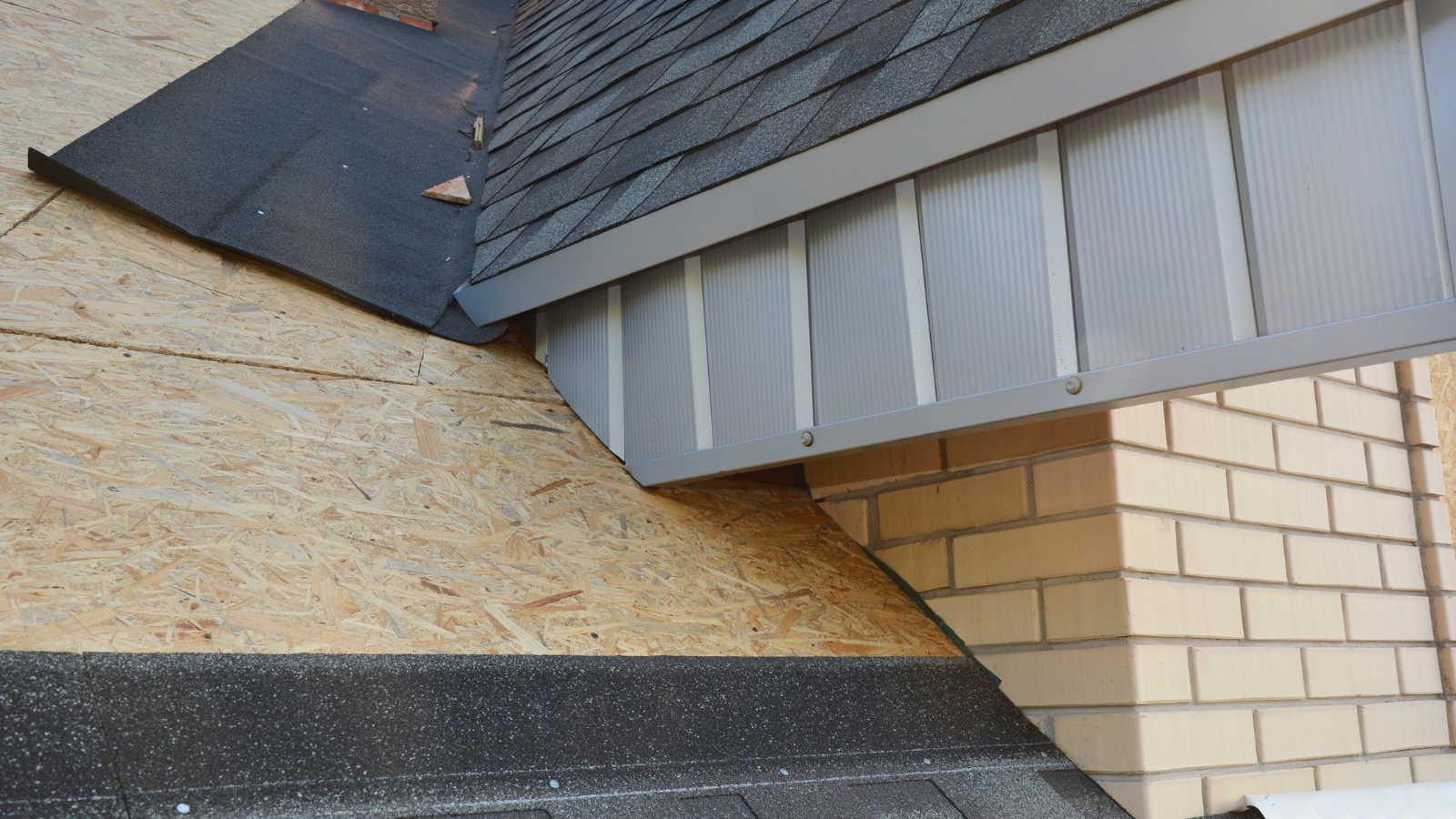
Think of your roof as a stack of layers, each with a different job. At the bottom is the wood deck, which is the structural surface. On top of it sit the shingles, which handle sun, wind, and most of the rain. Between them is the underlayment.
GAF, one of the largest shingle manufacturers in the country, describes underlayment as a layer typically made of asphalt-saturated felt or modern synthetic materials, and says it works as a secondary moisture barrier between the roof deck and the shingles. That phrase, secondary barrier, is worth sitting with. Shingles are the first line of defense. But shingles aren’t a sealed surface. Wind-driven rain can get under them, edges can lift, and nails can work loose. The underlayment is the backup that catches what the shingles miss.
Put simply, a good roof underlayment Missouri weather can’t easily get through gives your roof a second chance on every storm.
Why It Matters Here in Franklin County
Villa Ridge sits in a part of Missouri that gets real weather. According to National Weather Service alerts out of the St. Louis office, severe thunderstorm warnings covering this area aren’t unusual. One warning that listed Villa Ridge among the impacted locations flagged 60 mph wind gusts and quarter-size hail. A June 2026 warning for east central Franklin County again named damage to roofs, siding, and trees as the expected impact.
Wind-driven rain is exactly the kind of thing underlayment is built for. When gusts push water sideways and upward under shingle edges, the shingles alone can’t always stop it. The underlayment can.
Then there’s the rest of Missouri’s year. Summer heat bakes everything on your roof. Winter brings freeze-thaw cycles that open tiny gaps in places you’d never think to look. Ice dams can force meltwater back under shingles at the eaves. A roof underlayment Missouri homeowners can count on has to handle all of that, season after season, for the life of the roof.
Felt vs. Synthetic: The Honest Comparison
There are two main families of underlayment, and contractors have opinions about both. Here’s a fair look at each.
Asphalt-Saturated Felt
This is the old standby. It’s a heavy organic mat saturated with asphalt. Building Enclosure, a trade publication, describes felt as made of “heavy organic mats with high tear strength,” and calls it a low-cost, readily available option. It’s been used for decades, and roofers know it well.
The downsides are real, though. GAF notes that conventional asphalt felts can bubble or wrinkle when they come in contact with moisture. A wrinkled underlayment can telegraph through the shingles above it, and a rain delay during installation can turn a flat, tidy deck into a rippled one.
Synthetic Underlayment
Synthetics are typically made from polypropylene or similar materials. According to Journal of Light Construction, synthetic underlayments are more tear- and puncture-resistant than asphalt felts, and they wrinkle and buckle less severely when temperatures swing. The same article notes that, unlike felt, synthetics don’t absorb moisture, which helps them resist rot and mold. Building Enclosure adds that many synthetics carry a UV coating that lets them stay exposed on a deck for up to 180 days, while JLC says some can wait six to 12 months for finish roofing when properly fastened. Check the manufacturer’s stated limit for the specific product rather than relying on a general number.
There are trade-offs here too. Synthetics cost more than felt, and JLC’s author cautions that “they’re not less slippery; they’re just different,” so safety underfoot is still a concern for any crew. Felt is also semi-permeable, which some roofers prefer in certain assemblies.
Our Take
For most homes in Villa Ridge, we lean toward synthetic roof underlayment Missouri crews can count on for a full replacement. Missouri’s weather is hard on materials, installation schedules slip when it rains, and the extra tear resistance and moisture tolerance are worth the modest price difference. But that’s a recommendation, not a rule. A simple roof with a tight budget and a short installation window can do fine with quality felt, installed correctly. What matters most is that the product is installed carefully and matches what your shingle manufacturer requires.
Where Self-Adhered Membranes Come In
Beyond felt and synthetics, there’s a third category worth knowing about: self-adhered waterproofing membranes, often called ice and water barriers. These are sticky-backed sheets that bond directly to the deck and seal around nails as they’re driven through.
We use these in the places water is most likely to cause trouble: along the eaves where ice dams can form, in valleys where runoff concentrates, and around chimneys, skylights, and other penetrations. Because they seal around fasteners, they add protection where a standard underlayment would only overlap. If your roofing estimate doesn’t mention anything about eaves, valleys, or penetrations, it’s a fair question to ask what’s going there.
What Goes Wrong When Roof Underlayment Missouri Crews Install Is Treated as an Afterthought
We get called to roofs where the shingles are fine but the house is leaking. When we pull back the layers, the story is usually some version of the same few mistakes:
Wrinkled or bubbled felt. If felt gets rained on before the shingles go over it, it can buckle and never lie flat again. The surface above it ends up bumpy, and the moisture protection underneath is compromised.
Poor overlaps. Underlayment is installed in courses, and each course needs to overlap the one below it so water sheds downhill. Skip that, or get it backwards, and you’ve built a roof that funnels water into the seams.
Missing or minimal protection at the edges and valleys. The most vulnerable areas get the same thin treatment as the middle of the roof, and then the first ice dam of the winter finds the weak spot.
Torn or damaged sheets left in place. A tear from a dropped tool or a stray nail head gets covered over instead of replaced. It’s invisible once the shingles go on.
Underlayment left exposed too long. Every product has an exposure limit. Leave it uncovered past that, and the UV and weather start breaking it down before the roof is even finished.
None of these problems show up on the day the crew finishes. They show up two winters later as a ceiling stain, and by then the cause is buried under the shingles.
It Can Affect Your Warranty, Too
Here’s something that surprises people. Shingle warranties often depend on the whole roofing system being installed properly, not just the shingles. GAF, for example, states that its roof deck protection qualifies for a Lifetime limited warranty when installed with additional qualifying products, and that coverage terms depend on factors like ownership and the type of structure. The takeaway isn’t about any one brand. It’s that the underlayment you choose, and how it’s paired with the rest of the system, can influence what a manufacturer will stand behind.
Our recommendation on roof underlayment Missouri warranties: before you sign, ask your contractor which underlayment is going on and whether it’s compatible with the warranty on the shingles you’ve picked. Get the answer in writing. GAF’s own materials also advise consulting a design professional about code compliance for a specific structure, and that’s good advice. Building requirements can vary by jurisdiction, so confirm what applies to your property with your local permitting authority and your contractor.
What a Proper Underlayment Installation Looks Like
When we do a roof replacement in Villa Ridge, the underlayment stage isn’t rushed. Here’s the general sequence:
- Tear-off and deck inspection. The old roofing comes off completely, and we inspect the decking. Soft or damaged wood gets repaired or replaced before anything goes over it. (If you want to know why we insist on a full tear-off, our article on professional roof tear-off covers it.)
- Drip edge and edge prep. Metal edge flashing goes in first so water drains cleanly off the roof’s perimeter.
- Self-adhered membrane at vulnerable spots. Eaves, valleys, and penetrations get their extra layer first.
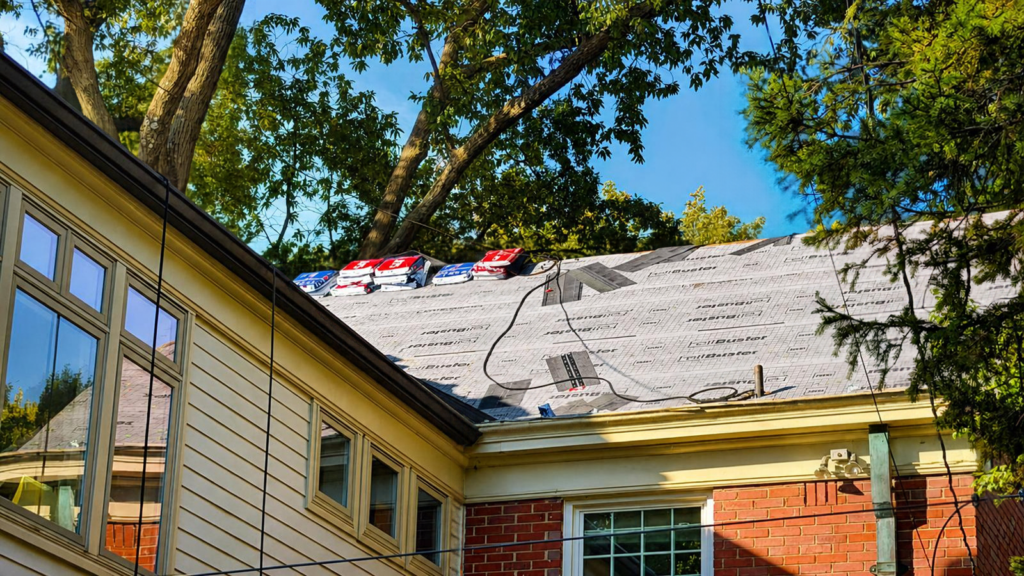
- Main underlayment, rolled out in overlapping courses. We work from the bottom up so each course sheds water over the one below it, keep it flat and taut, and fasten it according to the manufacturer’s instructions.
- Check for damage. Any tear, wrinkle, or puncture gets fixed before shingles go on.
- Cover it promptly. We plan the day so underlayment isn’t left exposed longer than it should be, and we keep an eye on the forecast. Missouri weather can change fast.
The shingles go on last. By then, the roof underlayment Missouri storms will test is already doing its most important job.
Questions to Ask Before You Sign
You don’t have to be a roofing expert to hold a contractor accountable. A few plain questions will tell you a lot:
- What type of roof underlayment Missouri weather calls for will you use on my roof, and why that one?
- Will there be a self-adhered membrane at the eaves, valleys, and around penetrations?
- How long can the underlayment be left exposed if the weather turns?
- Does this underlayment meet my shingle manufacturer’s requirements for warranty coverage?
- What do you do if you find damaged decking after the tear-off?
- Can I see the product name on the estimate?
A good contractor will answer these without hesitation. If you get vague answers or a shrug, that’s information, too. In a place like Villa Ridge, where reputation travels by word of mouth, you want a roofer who’s comfortable being specific.
What It Costs, and Why That’s the Wrong Question
Roof underlayment Missouri contractors install is a small slice of a total roofing budget. Upgrading from basic felt to a quality synthetic typically adds a modest amount to the project, and that’s reflected in the trade sources, which consistently describe synthetics as more costly than felt but not dramatically so. We’re not going to quote you a number here, because every roof’s size, pitch, and layout is different, and anyone who gives you a flat price without seeing your house is guessing.
But here’s the larger point. Underlayment is cheap compared with what it protects. Water that gets through a poorly protected roof damages decking, insulation, drywall, and framing. And because the roof is already installed on top of it, fixing the problem means tearing off the shingles to get back to the source. Spending a little more to get roof underlayment Missouri weather can’t easily defeat is one of the better returns on a roofing dollar.
Signs Your Current Roof’s Underlayment May Be Failing
You can’t see underlayment from the yard, but your house will often tell you when roof underlayment Missouri weather has worn down is failing:
- Water stains on ceilings or upper walls, especially after wind-driven rain
- Damp or discolored insulation in the attic
- Daylight or moisture visible at the roof deck from inside the attic
- Shingles that look wavy or bumpy, which can point to wrinkling beneath them
- Leaks that show up during storms but disappear when it’s dry
- A roof that’s 20-plus years old and has never had a close inspection
If any of these sound familiar, a professional look is worth scheduling. If you’re not sure whether you need a full replacement, a roof inspection is the right first step. Our Villa Ridge storm-preparation guide covers what that involves.
Different Villa Ridge Roofs, Different Needs
No two roofs call for exactly the same approach. Older homes around Villa Ridge may have decking that’s seen decades of seasonal wear and need extra attention during the tear-off. Properties on larger, wooded lots tend to hold moisture and debris in valleys and along the eaves, which makes that extra membrane protection especially worthwhile. Roofs with multiple valleys, dormers, or chimneys have more places for water to find a way in, and they benefit from a more careful underlayment plan.
That’s why we look at your actual roof instead of handing everyone the same package. A roof underlayment Missouri homeowners choose should match the house, the budget, and the weather it’ll face, not a template.
Working With RC Roofing
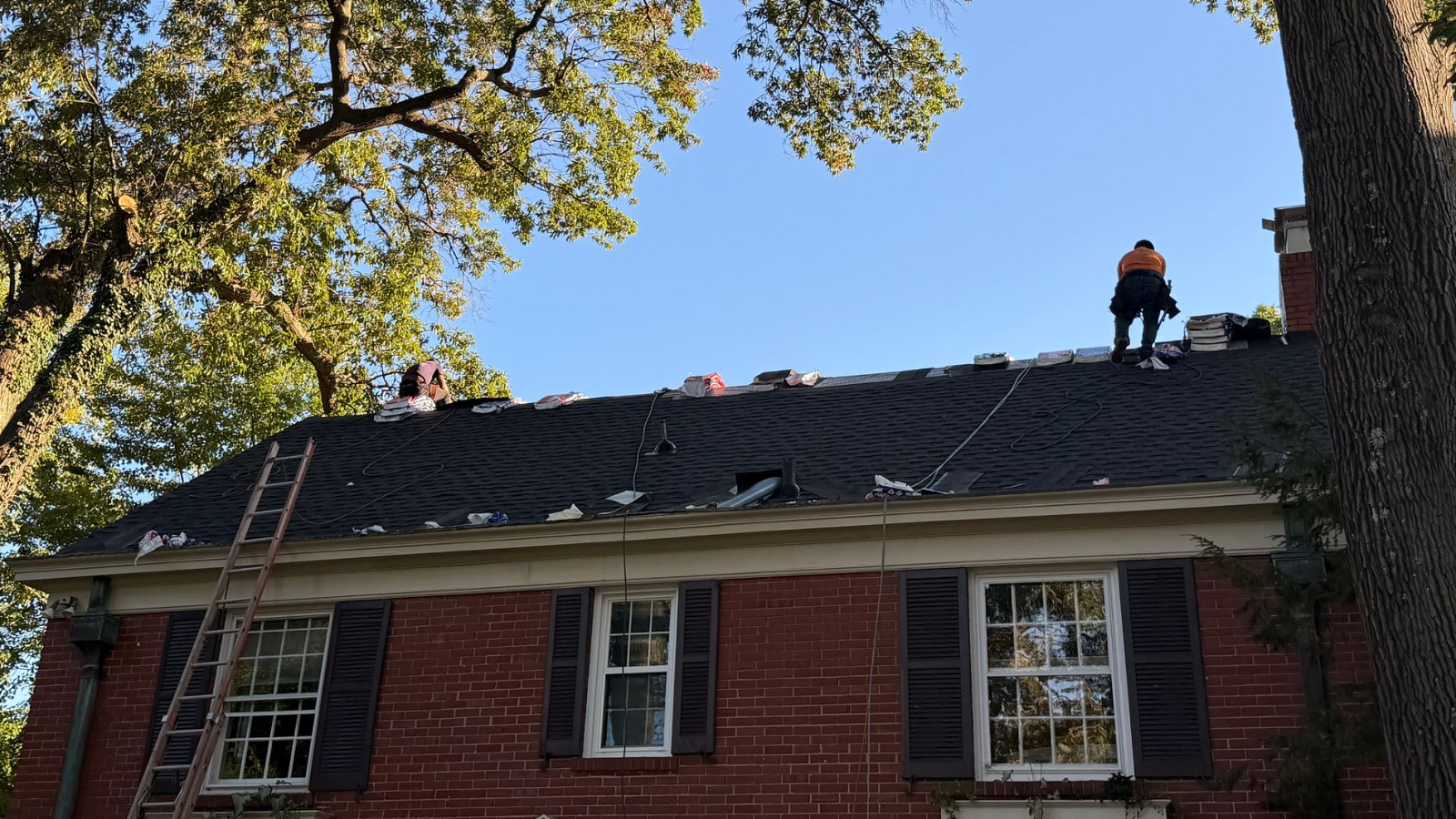
We’re a Washington, MO roofing company serving homeowners across Franklin County, including Villa Ridge, Pacific, Union, Eureka, and Augusta, and beyond that into Wildwood, Chesterfield, Frontenac, and Town & Country. When we replace a roof, you’ll know what’s going on every layer down. We’ll tell you which underlayment we recommend and why, show you the product on the estimate, photograph the deck before it’s covered, and answer your questions in plain language.
No pressure, no jargon, no mystery layers.
The Layer You’ll Never See, and Should Always Ask About
A new roof is a big investment, and most of what makes it last is hidden. Shingles get the compliments. Underlayment does the quiet work in the background, and when it’s done right, you’ll never think about it again, which is exactly the point.