Drips and slips, cracks and gaps, sometimes the biggest protection on your home is the layer nobody sees. When new siding goes up on your Villa Ridge home, have you ever wondered what should be protecting the walls underneath it? Beautiful siding gets all the attention, but what sits behind those panels can be just as important. A properly installed siding house wrap Missouri homeowners rely on creates a hidden drainage layer that helps keep wind-driven rain and unwanted moisture from reaching vulnerable wall materials. If that layer is missing, torn, poorly flashed, or incorrectly installed, a brand-new siding project can look fantastic while problems quietly develop underneath.
For homeowners in Villa Ridge, MO, siding replacement is more than a curb appeal upgrade. Your exterior walls deal with rain, humidity, wind, summer heat, freezing winter temperatures, and sudden Missouri weather changes. Siding provides the visible first line of defense, but it is not intended to function completely on its own.
What Exactly Is House Wrap?
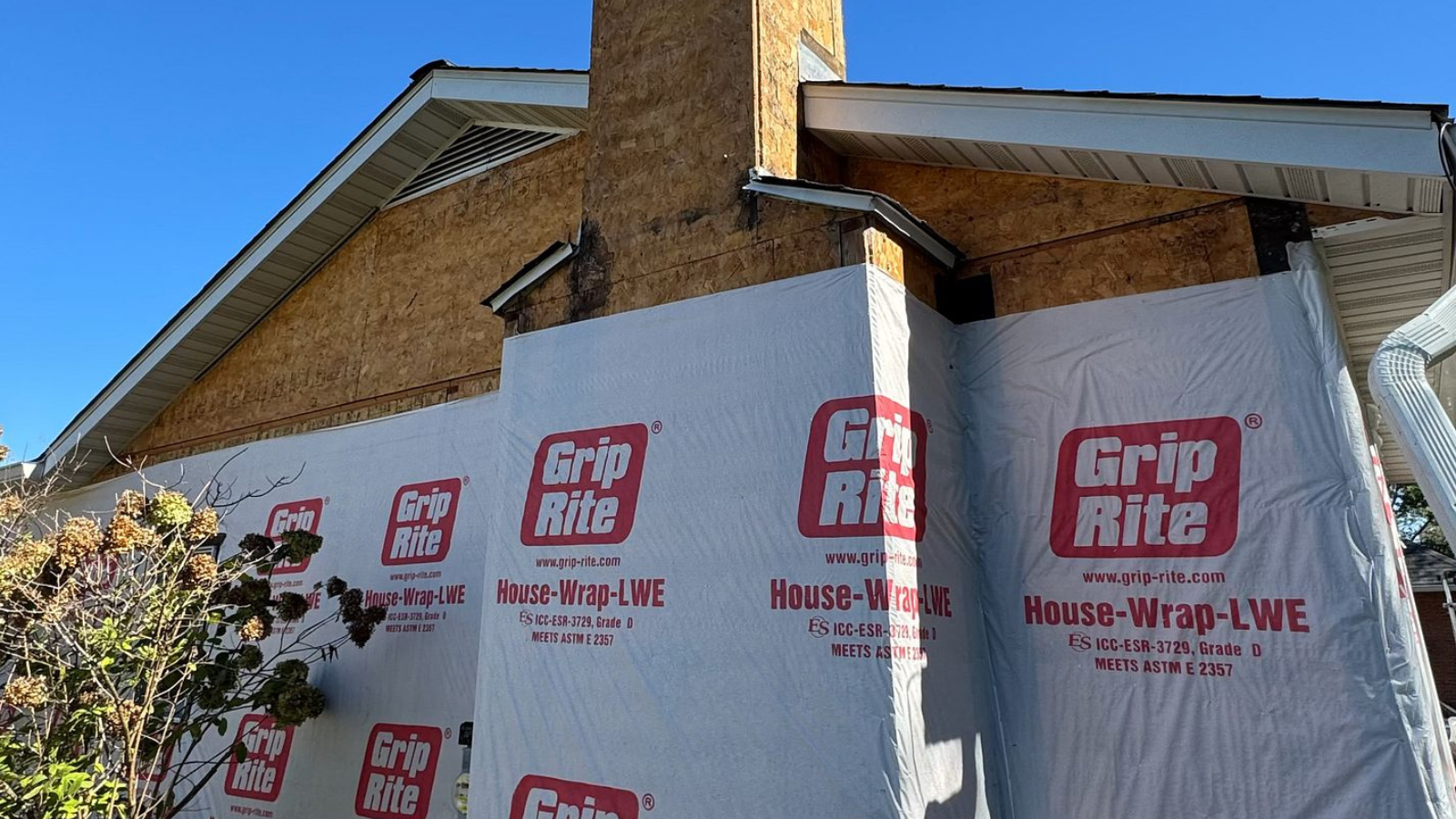
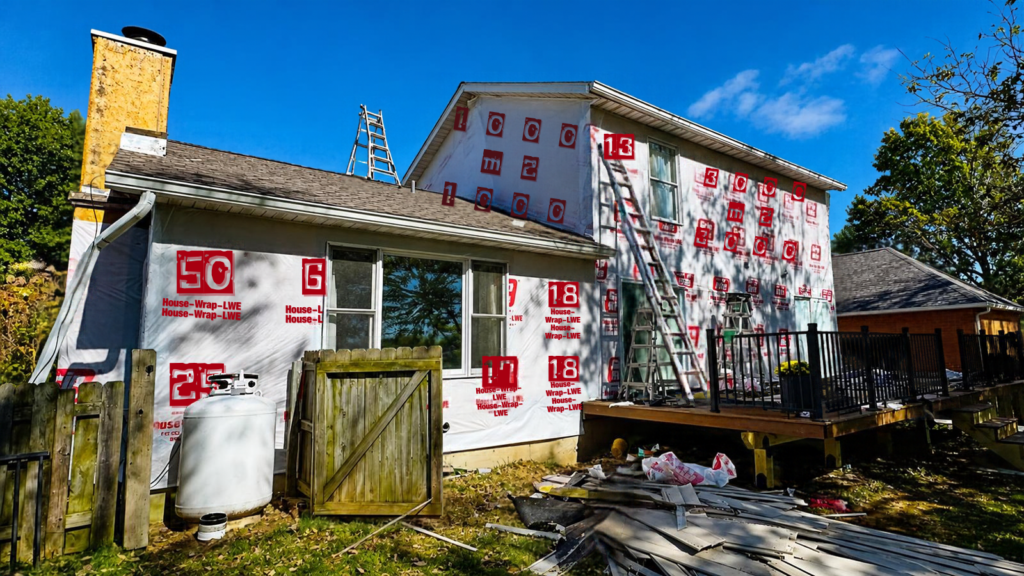
House wrap is a type of water-resistive barrier, often shortened to WRB, that is installed over exterior wall sheathing and underneath siding.
You normally do not see it once construction is complete.
That does not make it unimportant.
Its primary job is to help manage water that gets behind the exterior siding and direct that moisture downward and away from the wall assembly. Depending on the product and installation method, a WRB may also contribute to controlling unwanted air movement.
According to U.S. Department of Energy Building Science Education guidance, a water-resistant barrier should cover the home behind the exterior wall cladding, with seams properly treated so water that gets behind siding has a path to drain safely away.
That is the real purpose of siding house wrap Missouri homeowners should understand before siding replacement begins. It is not decorative. It is part of the home’s moisture-management system.
Wait, Isn’t Siding Supposed to Keep Water Out?
Siding absolutely helps protect your home from weather, but here is the part homeowners are rarely told:
Siding is not necessarily a perfectly waterproof wall.
Small amounts of water can get behind many exterior cladding systems through joints, seams, corners, penetrations, and areas around windows and doors. Wind-driven rain can make the challenge even greater.
Department of Energy building-science guidance explains that most exterior cladding systems can allow some water through because wind pressure and capillary action can move rain through small joints and openings. The recommended strategy is not to assume siding will stop everything. Instead, the wall should have a drainage layer behind it to safely manage the moisture that gets through.
That is why siding house wrap Missouri installation matters so much.
The siding handles most of the weather.
The hidden layer behind it provides backup protection.
Think of it like wearing a jacket in a storm. Your siding is the outer coat. The weather-resistant barrier is the extra protection underneath that helps keep unexpected moisture from soaking deeper into your home.
Why This Matters for Homes in Villa Ridge, MO
Missouri weather does not stay predictable for long.
Villa Ridge homeowners may experience heavy rain, thunderstorms, strong winds, humid summer conditions, freezing winter temperatures, and seasonal temperature swings. Those changing conditions continually test exterior materials.
Wind is particularly important.
Rain falling straight downward is one thing. Rain pushed against your home’s walls by strong wind can find small openings around siding panels, trim, windows, utility penetrations, and roof-to-wall transitions.
Building America guidance specifically recommends properly attached weather-resistant barriers to help manage wind-driven rain that gets behind siding.
A properly integrated siding house wrap Missouri system gives that water somewhere to go other than into your wall cavity.
That matters because once repeated moisture reaches wall sheathing, framing, or insulation, the resulting damage may stay hidden behind the siding for years.
What Happens When the Old Siding Comes Off?
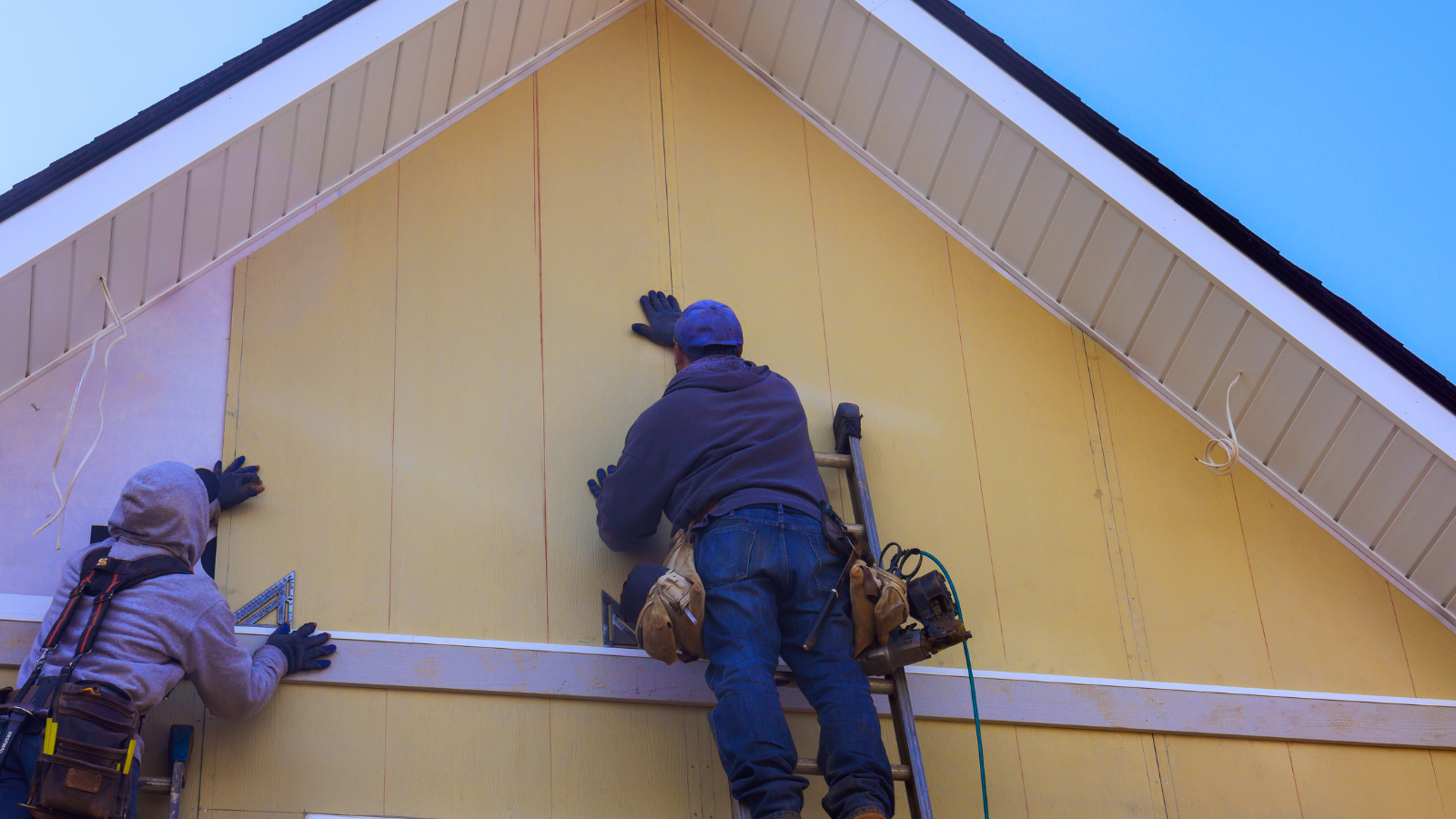
This can be one of the most revealing stages of a siding replacement project.
Your existing siding may have looked acceptable from the yard. Once it is removed, however, contractors can finally see what has been happening behind it.
They may uncover perfectly healthy sheathing and a properly installed moisture barrier.
That is the outcome everyone hopes for.
But they may also discover torn building wrap, missing sections, deteriorated sheathing, staining near windows, old water tracks, questionable flashing, pest damage, or repairs from previous siding work.
This is why the condition of siding house wrap Missouri homes have beneath older cladding should be evaluated before new siding covers everything again.
The siding replacement process creates an opportunity.
Instead of simply installing a prettier exterior over whatever happens to be underneath, a contractor can identify problems and correct vulnerable areas while they are accessible.
Hidden Problem #1: Missing or Damaged House Wrap
Not every older home has a modern water-resistive barrier installed the way today’s building practices would recommend.
Even when house wrap exists, it may be torn, punctured, loose, deteriorated, or poorly integrated with surrounding materials.
Small holes can occur around fasteners, electrical boxes, utility penetrations, windows, doors, and previous renovation work.
A few isolated fastener penetrations are expected as part of construction. The bigger concern is when large tears, poorly sealed seams, or missing areas interrupt the drainage layer.
If siding is already being replaced, that is the ideal time to evaluate the siding house wrap Missouri property owners currently have and determine whether corrections are needed before the new exterior goes on.
Hidden Problem #2: Improper Overlaps
Water management depends heavily on one basic principle:
Water should always be directed down and out.
House wrap and flashing therefore need to be layered correctly.
Building-science professionals often describe this as installing materials in a “shingle fashion.” Upper layers overlap lower layers so gravity naturally carries water toward the exterior rather than behind the protective barrier.
Imagine roof shingles installed backward.
Rain would immediately have an easier path underneath them.
The same principle applies to wall drainage layers.
If sections of siding house wrap Missouri installers encounter are overlapped incorrectly, water may be directed into the assembly instead of away from it.
Proper installation is not simply about covering the wall with material. The direction and integration of every overlap matters.
Hidden Problem #3: Poor Window and Door Flashing
Windows and doors are among the most important parts of any exterior wall moisture-management system because they interrupt the continuous drainage plane.
According to Department of Energy building guidance, windows and doors create vulnerable points for water leakage, and properly lapped flashing should be integrated with the home’s drainage layer to direct water out instead of into the wall cavity.
This means contractors should not simply run house wrap up to a window and call the job complete.
The flashing around that opening must work together with the WRB.
When evaluating siding house wrap Missouri homes during replacement, installers should pay particularly close attention to:
window sills, window heads, door openings, trim transitions, and any area where the wall drainage plane has been interrupted.
A perfectly installed siding panel cannot compensate for poor flashing hidden behind it.
Hidden Problem #4: Unsealed Penetrations
Exterior walls are full of openings.
Think about everything passing through the side of your home:
hose bibs, electrical outlets, exterior lights, HVAC lines, vents, cables, pipes, and other utilities.
Every penetration creates another location where water could potentially enter.
Good moisture management requires these openings to be integrated into the weather-resistant barrier rather than simply cut through it.
Department of Energy guidance specifically emphasizes sealing or gasketed treatment around wall penetrations as part of a complete water-managed wall system.
A careful siding house wrap Missouri installation pays attention to these small areas because a seemingly minor opening can become a recurring water entry point during wind-driven rain.
Hidden Problem #5: Roof-to-Wall Intersections
If part of your roof meets a vertical exterior wall, that transition deserves special attention during siding work.
These areas handle concentrated water runoff and rely heavily on flashing.
Step flashing and kick-out flashing help redirect roof water away from the wall and toward the gutter instead of allowing it to run behind siding.
Building Science Education guidance describes roof-to-wall intersections as vulnerable areas and emphasizes correctly integrating flashing with the house wrap so water moves safely away from the structure.
For Villa Ridge homeowners with attached garages, porch roofs, additions, or complicated rooflines, these details matter enormously.
A problem at one transition can send water behind several feet of siding.
This is another reason siding house wrap Missouri work should be viewed as part of a complete exterior system rather than simply a siding installation.
What Water Damage Behind Siding Can Look Like
Hidden moisture damage does not always announce itself immediately.
Sometimes years pass before homeowners notice anything indoors.
Warning signs may eventually include:
- warped or buckling siding
• recurring paint or drywall damage
• musty odors near exterior walls
• staining around windows
• soft exterior sheathing
• swollen trim
• mold-like growth
• deteriorated insulation
• unexplained drafts or comfort problems
The challenge is that these symptoms can have several causes.
That is why removing old siding can be so informative. Instead of guessing, contractors can inspect the actual condition underneath.
What If the Wall Sheathing Is Already Damaged?
Finding damaged sheathing during siding replacement is frustrating, but discovering it before new siding goes on is far better than covering it.
The wall sheathing provides structural support and creates the surface over which the weather-resistant barrier is typically installed.
If sections are badly deteriorated, soft, swollen, or compromised, those areas may need repair before the new exterior system is installed.
Simply wrapping severely damaged material with new siding house wrap Missouri products does not reverse deterioration that has already occurred.
The source of the moisture should also be identified.
Was the problem caused by a leaking window?
Missing flashing?
A roof-to-wall drainage issue?
Damaged siding?
Poorly integrated house wrap?
Fixing the symptom without correcting the source creates a real risk that the damage will return.
House Wrap Is Not the Same as a Vapor Barrier
This distinction confuses many homeowners.
A weather-resistive barrier and a vapor barrier are not automatically the same thing.
House wrap is commonly used as a drainage plane behind siding, helping manage liquid water that penetrates the exterior cladding. Depending on the specific product and wall assembly, it may also have different vapor-permeability characteristics.
A vapor-control strategy addresses the movement of water vapor through building assemblies.
Those functions should not be casually treated as interchangeable.
That is another reason siding installation should follow the requirements for the specific materials and wall assembly being used rather than relying on a one-size-fits-all approach.
Can House Wrap Help With Energy Efficiency?
House wrap is primarily discussed as a weather-resistive barrier, but properly installed products can also play a role in reducing uncontrolled air movement when designed and sealed as part of an air-barrier system.
DOE guidance notes that house wrap can function as an air barrier when seams, joints, edges, openings, and other connections are properly sealed and integrated.
That does not mean simply stapling siding house wrap Missouri material onto a home will suddenly slash energy bills.
Energy efficiency depends on the complete building envelope, including insulation, windows, doors, air sealing, HVAC performance, and many other factors.
However, paying attention to the wall assembly during siding replacement provides an opportunity to correct obvious gaps and improve the home’s overall exterior envelope.
Does Siding Type Change How the Wall Should Be Built?
Potentially, yes.
Vinyl siding, fiber cement, engineered wood, traditional wood siding, and other cladding materials have different installation requirements and moisture-management considerations.
Building America guidance notes that different cladding materials can require different preparation behind them and that drainage space can help improve drying behind certain types of siding.
This is another reason homeowners should avoid thinking of siding house wrap Missouri as a generic sheet installed exactly the same way behind every project.
The siding manufacturer, WRB manufacturer, existing wall design, local requirements, flashing details, and building conditions all need to work together.
Good exterior remodeling is about creating a system.
House Wrap vs. Siding: Which One Actually Stops the Water?
The answer is: they work together.
Siding handles most of the direct weather exposure and gives the home its finished appearance.
The WRB sits behind it as a secondary moisture-management layer.
Flashing handles vulnerable openings and transitions.
Sheathing supports the wall.
Insulation helps manage heat flow.
Interior air sealing and vapor-control strategies also influence how moisture behaves within the wall.
No single layer should be expected to do every job.
| Exterior Component | Primary Role | Why It Matters |
| Siding | First defense against weather | Sheds most rain and protects the exterior |
| House wrap / WRB | Drainage plane behind siding | Helps direct water that gets behind cladding away |
| Flashing | Protects openings and transitions | Guides water away from windows, doors, and roof intersections |
| Wall sheathing | Supports exterior wall assembly | Provides strength and a surface for outer layers |
| Insulation | Reduces heat transfer | Improves indoor comfort and energy performance |
| Sealants | Protect selected joints and transitions | Helps close specific gaps when correctly used |
Understanding this system helps explain why new siding alone cannot fix every exterior moisture problem.
Common House Wrap Mistakes Homeowners Should Know About
Homeowners do not need to become siding installers, but knowing a few common problem areas makes it easier to ask better questions.
The biggest concerns typically involve incomplete coverage, untaped or poorly sealed seams where sealing is required, reversed overlaps, improper window flashing, unsealed penetrations, tears left unrepaired, and poor integration at roof-to-wall transitions.
Another mistake is assuming caulk can fix everything.
Sealant has an important role, but it should not replace proper flashing and drainage design.
Water management works best when gravity is doing most of the work.
The goal is to provide a clear route for water to move outward and downward instead of relying on beads of sealant to permanently block every possible opening.
Should Existing House Wrap Always Be Replaced?
Not necessarily.
That depends on what is exposed when the old siding comes off and what condition the existing water-resistive barrier is in.
Some homes may have a suitable WRB that remains in serviceable condition. Others may have torn, improperly installed, incomplete, or outdated materials that should be addressed before new siding installation.
The contractor should evaluate what is actually there.
The important point is not “always replace it” or “always keep it.”
The important point is do not ignore it.
A siding replacement project is one of the few opportunities homeowners have to see and correct the layers normally hidden behind the finished exterior.
RC Roofing’s Recommendation for Villa Ridge Homeowners
Here is our simple recommendation:
Before you choose siding based only on color, profile, or curb appeal, ask what will be happening underneath it.
Ask whether the wall sheathing will be inspected when the existing siding is removed.
Ask how damaged areas will be handled.
Ask what water-resistive barrier will be used.
Ask how windows and doors will be flashed.
Ask how penetrations will be sealed.
Ask how roof-to-wall transitions will be protected.
Most importantly, ask how the entire system will direct water back outside if moisture gets behind the siding.
A quality siding house wrap Missouri installation should not be an afterthought hidden beneath beautiful panels. It should be part of the plan from the beginning.
For homeowners in Villa Ridge, this is particularly important because your exterior needs to handle Missouri’s rain, wind, humidity, heat, cold, and changing seasons year after year.
Before the New Siding Covers Everything, Take the Opportunity to Look Deeper
New siding can completely change the appearance of your home. Fresh lines, updated colors, and modern materials can make an older property look new again.
But the best siding project is not only about what your neighbors see.
It is about what they never see.
The sheathing should be sound. Vulnerable areas should be flashed properly. Penetrations should be addressed. Water should have a clear drainage path. And the hidden layer behind your siding should be ready to do its job long after installation day.
That is the real value of siding house wrap Missouri homeowners should think about before new siding goes on.
If you are considering siding replacement for your Villa Ridge home, use the project as an opportunity to understand what is behind your existing siding before covering it for another generation.
Because beautiful siding gets noticed from the street, but the hidden layer behind it is what quietly helps protect your home when the Missouri rain starts blowing sideways.