Many homeowners think of roof dam attic insulation home roof repair age as something that starts outside — with storms, wind, or falling branches. But in reality, some of the most serious roofing problems begin inside the home, right in the attic. At RC Roofing, we’ve seen this countless times: homes across Washington, Wildwood, Frontenac, and beyond dealing with costly roofing problems that stem from poor attic insulation. That’s why understanding the link between attic insulation roof repairs is so important.
If you’ve been spending more than you’d like on roofing maintenance or dealing with repeated leaks and shingle issues, your attic may be the hidden culprit. This guide breaks down how attic insulation affects your roof’s health and how the right upgrades can protect your home from future damage. For more information on Rc Roofing, follow us on Facebook Page.
How Attic Insulation Roof Repair
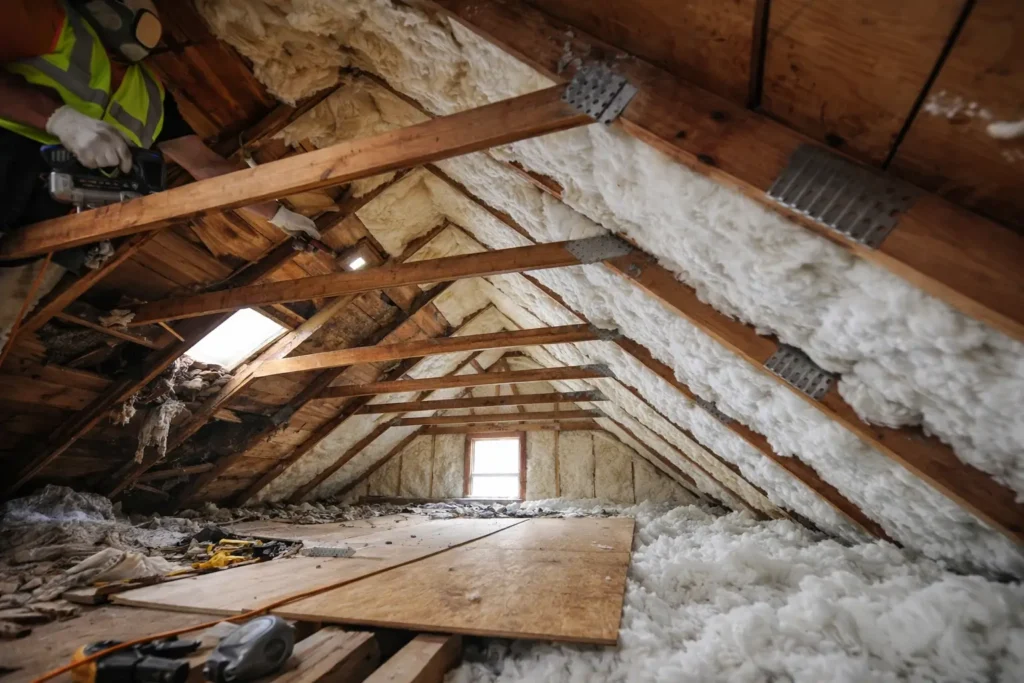
Proper attic insulation isn’t just about lowering energy bills — it’s one of the most critical ways to protect the roof above it. Your attic is the space between your living area and your roof deck. It’s where rising indoor heat accumulates and where moisture from cooking, bathing, or poor airflow can settle.
If your attic doesn’t have enough insulation, or if the airflow is blocked, here’s what can happen:
- The roof deck overheats in summer and causes shingles to blister or curl
- Condensation builds up in winter, leading to mold, mildew, and wood rot
- Ice dams form at the roof’s edge, pushing water under shingles
- Moisture compromises nails, decking, and structural supports
What Happens Without Proper Insulation
Let’s look at the real-world problems that develop when insulation is lacking or poorly installed — especially in homes across Town & Country, Chesterfield, Eureka, and Union.
Mold and Moisture Damage
If your attic has gaps in the insulation or a missing vapor barrier, warm indoor air rises and condenses on cool roof surfaces. This moisture feeds mold and eventually leads to soft spots in your decking. Once that structure weakens, you’ll be facing leaks — and often complete roof repairs.
Roof Deck Deterioration
Hot air trapped in the attic can literally bake your roof deck from underneath. This accelerates the aging of roofing materials and weakens the structural integrity of the plywood below. Over time, shingles become loose, and you start seeing sagging or even structural bowing.
Ice Dams and Winter Leaks
In places like Augusta and Pacific, winters can be brutal. Poor insulation allows heat to rise, melt snow on the roof, and refreeze at the edge, forming ice dams. These dams trap water and force it under shingles, damaging both the roof and attic insulation.
All these issues eventually show up as visible leaks, interior ceiling stains, and higher utility bills — and they almost always require attic insulation roof repairs to resolve the underlying cause.
Signs You Need an Attic Insulation Upgrade
So how do you know it’s time to fix or replace your attic insulation? Here are common warning signs:
- Uneven temperatures across rooms or floors
- High heating or cooling bills without explanation
- Frequent roof leaks or shingle damage
- Visible mold, frost, or wet insulation in the attic
- Ice dams every winter
- Excessive attic heat during summer
- Unusual humidity or musty odors
The Right Type of Insulation for Missouri Homes
In a climate like ours, attic insulation needs to work year-round — keeping heat out in the summer and warmth in during the winter. Here’s what we recommend at RC Roofing:
Fiberglass Insulation
- Affordable and widely available
- Comes in batts or rolls
- Easy to install but can leave gaps if done incorrectly
Blown-In Cellulose
- Better at sealing tight spaces
- Eco-friendly and mold-resistant
- Great for retrofitting existing attics
Spray Foam Insulation
- Superior air sealing and moisture resistance
- Highest energy efficiency
- More expensive but longer-lasting
Regardless of the type, the goal is always the same: eliminate air leaks, ensure proper R-value (usually R-49 or higher), and maintain proper ventilation. All of these reduce the chance of future attic insulation roof repairs and help you save money in the long run.
Ventilation: The Unsung Hero of Roof Longevity
Insulation alone won’t save your roof if your attic can’t breathe. That’s why attic ventilation plays such a huge role in roof health.
Balanced ventilation includes:
- Intake vents at soffits to draw in fresh air
- Exhaust vents at the ridge or gables to push hot, moist air out
- Baffles to keep airflow unobstructed
If these elements are missing or blocked, moisture and heat build up — creating the perfect environment for damage. Poor attic airflow is one of the most common causes of attic insulation home roof repairs, and often it goes undiagnosed until major roof damage appears.
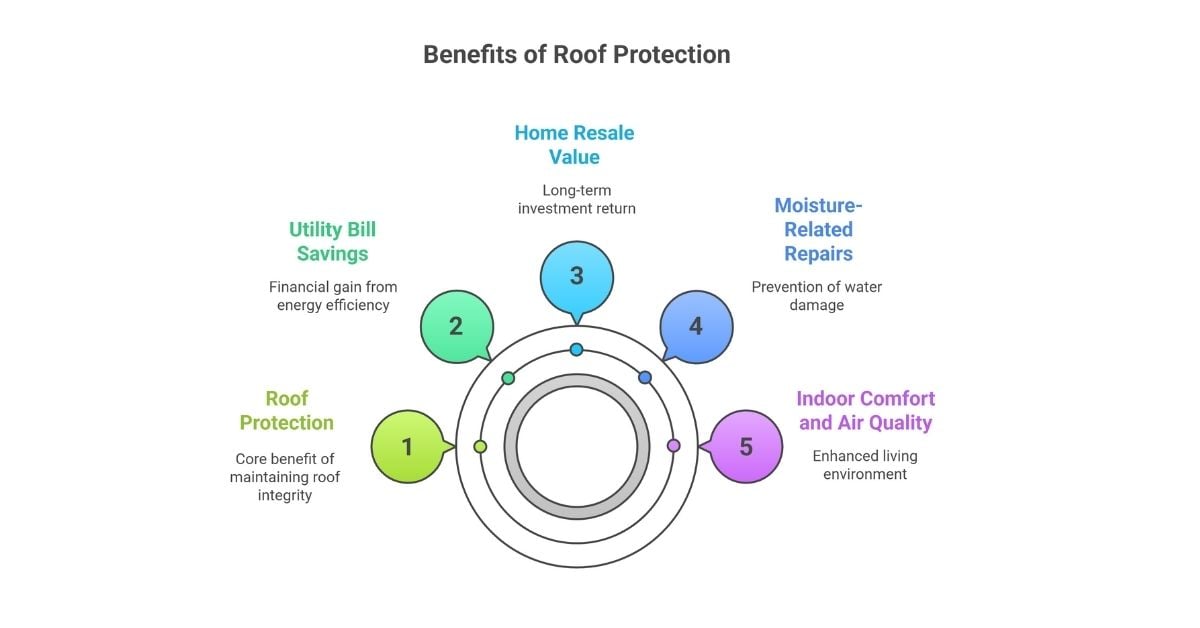
Energy Savings and Roof Protection Go Hand in Hand
How much does it cost to repair attic insulation?
The cost to repair attic insulation typically ranges from $500 to $2,000, depending on factors like the size of the attic, the type of insulation, and the extent of damage. Minor repairs such as sealing gaps or replacing small sections of insulation may cost less, while extensive damage from moisture, pests, or mold can increase the price. Additional costs may apply if old insulation needs to be removed or if air sealing is required to improve energy efficiency. Always get a professional inspection to get an accurate estimate based on your home’s specific needs.
Is roof insulation the same as attic insulation?
Roof insulation and attic insulation are related but not exactly the same. Attic insulation typically refers to insulating the attic floor, which helps prevent heat from escaping the living space below. Roof insulation, on the other hand, is installed directly under the roof deck, often used in homes with vaulted ceilings or conditioned attics. While both improve energy efficiency, the choice depends on your home’s design and whether the attic is used as a living space. In many cases, both types work together to provide maximum thermal protection.
How to check attic insulation?
To check attic insulation, start by safely entering your attic with proper lighting and protective gear. Look across the attic floor—if the insulation is level with or below the floor joists, it likely needs to be topped up. Use a ruler to measure the depth; for most areas, 10 to 14 inches of fiberglass or cellulose is recommended. Also inspect for gaps, moisture, mold, or signs of pests, which can reduce insulation effectiveness. If you’re unsure about the material type or R-value, consider having a professional energy audit or insulation inspection done for accurate results.
Why RC Roofing Looks at the Whole System
At RC Roofing, we don’t just look at the shingles — we inspect your attic, ventilation, decking, and insulation to understand the full picture. Our crews have repaired countless roofs across Frontenac, Eureka, and Washington that were failing from the inside out.
When you call us for a roof inspection or attic evaluation, we check:
- Existing R-value and insulation gaps
- Signs of moisture, frost, or mold
- Ventilation flow and soffit condition
- Roof deck integrity and underlayment condition
- Any history of recurring leaks
Final Thoughts
Your attic may be out of sight, but it should never be out of mind. The connection between attic insulation and roofing health is stronger than most homeowners realize. By addressing insulation and ventilation together, you can avoid many of the most common — and costly — roofing issues.
If you’ve been patching leaks, battling humidity, or replacing shingles far too often, it might be time to stop treating the symptoms and address the cause.
Let RC Roofing contact us today, help you take a smarter, whole-home approach to protecting your property. With the right insulation and a professionally evaluated attic, you’ll reduce the risk of attic insulation roof repairs, save money, and extend the life of your roof for years to come.
Frequently Asked Questions About Attic Insulation Roof Repair
Q1: Does attic insulation really prevent roof repairs?
Yes. By controlling heat and moisture, insulation helps prevent leaks, decking rot, and shingle damage — all common causes of roof repair.
Q2: How often should I replace attic insulation?
Every 15–20 years, or sooner if it’s damaged by pests, water, or mold. Replacing it on time reduces the need for attic insulation home roof repairs.
Q3: Is attic insulation worth the investment?
Absolutely. It pays off in energy savings, fewer roof repairs, and improved home comfort — especially in extreme weather.
Q4: Can I install insulation myself?
You can, but mistakes (like blocking vents or skipping air sealing) often lead to long-term issues. Professional installation ensures it supports both energy efficiency and roof health.
Q5:How much does attic insulation cost in Missouri?
Typical attic insulation upgrades range from $2,000–$4,000 depending on home size, insulation type, and accessibility. Compare that to $5,000+ for recurring attic insulation home roof repairs, and the savings are clear.