When your new roof has just been installed, it’s easy to assume the job is done. But the truth is, the final step — a post-construction roof inspection — might be the most important part of the entire process. At RC Roofing, we’ve inspected hundreds of newly built or re-roofed homes across Washington, Wildwood, and the surrounding areas. One thing we’ve learned? Even brand-new roofs can have flaws that go unnoticed without a proper inspection.
If you’re a homeowner in Missouri, particularly in places like Chesterfield, Frontenac, Town & Country, or Union, making sure your roof is inspected after construction could save you thousands of dollars in the long run. This guide explains why post-construction home roof inspection is a must, what it covers, and how RC Roofing ensures your roof is truly ready to protect your home from day one. Learn more information and follow us on our Facebook Page.
Why Post-Construction Roof Inspections Matter for Homeowners
Think of a post-construction home roof inspection as your final quality check. It confirms that the roof installation was done correctly and safely, and that everything meets building codes and manufacturer standards. A newly installed roof may look perfect from the ground — but even small mistakes can lead to big problems like leaks, shingle failure, or even voided warranties.
These inspections give you peace of mind. You’ll know the roof above your family is solid, weather-tight, and built to last.
What Is a Post-Construction Home Roof Inspection?
A post-construction home roof inspection is a detailed evaluation performed after a new roof is installed or after a major roof replacement. Unlike a general home inspection that only glances at roof components, this is a professional, roofing-specific examination that focuses entirely on workmanship, materials, and compliance.
At RC Roofing, our team checks structural integrity, material application, fastening techniques, drainage systems, flashing, ventilation, and more. We use both on-roof and in-attic evaluations — because great roofing doesn’t stop at shingles.
When Should It Be Scheduled?
Ideally, your post-commercial Roof Inspection should happen as soon as the contractor finishes the work, but before final payment or sign-off. This gives you a chance to address any issues right away while warranties and labor guarantees are still fresh.
For new construction homes, it should be part of your closing checklist. For roof replacements, schedule the inspection before weather conditions can impact a newly installed system.
Common Issues Found During Post-Commercial Roof Inspection
It’s surprising how often a brand-new roof reveals problems during inspection. Even reputable contractors can miss a step or rush a detail. Here are the most common issues we uncover in post-commercial Roof Inspection across Eureka, Augusta, and beyond:
1. Improper Flashing Installation
Flashing is a thin metal layer that seals edges, valleys, chimneys, vents, and skylights. If it’s installed incorrectly, water can seep in — especially during Missouri’s heavy rain or snowmelt.
We’ve seen homes in Wildwood and Town & Country with flashing that was too short, poorly sealed, or completely missing in key areas. A post-construction roof inspection ensures flashing is fully functional and water-tight.
2. Inadequate Ventilation
Roof ventilation is essential for preventing moisture buildup and heat damage in the attic. When it’s ignored or poorly designed, your roof can deteriorate from the inside out.
We check for balanced intake and exhaust ventilation — soffit vents, ridge vents, gable vents — depending on your roof style. A lack of airflow is one of the top causes of premature roof failure in Missouri homes.
3. Shingle Misalignment or Damage
Shingles that are crooked, unevenly spaced, or improperly overlapped can compromise water runoff. Sometimes, the problem isn’t visible until you’re up on the roof.
We’ve seen new roofs in Union and Chesterfield where nail heads were exposed, shingle seals were incomplete, or material batches didn’t match. These small errors can grow into costly repairs. That’s why every post-commercial Roof Inspection includes a full surface check.
4. Poor Gutter Placement or Slope
Gutters aren’t just add-ons — they’re critical to roof drainage. If they’re installed without the proper pitch or alignment, water backs up and can erode fascia, siding, or foundation.
We check downspout placement, slope direction, and seal integrity. Even a few degrees off can mean big drainage problems for homes in sloped areas like Pacific and Washington.
5. Subpar Nailing Patterns and Fastener Use
One of the most overlooked elements in roofing is how nails and fasteners are applied. Overdriven, underdrive, or incorrectly placed nails can void your roof’s warranty and compromise wind resistance.
We inspect nailing patterns against manufacturer specs — especially for homes in wind-prone areas like Frontenac and Eureka. If something’s wrong, we document it with photos and recommend corrective action.
Benefits of Scheduling a Post-Commercial Roof Inspection Early
There’s more than one reason to book your inspection as soon as your roof is done. Here’s what you gain:
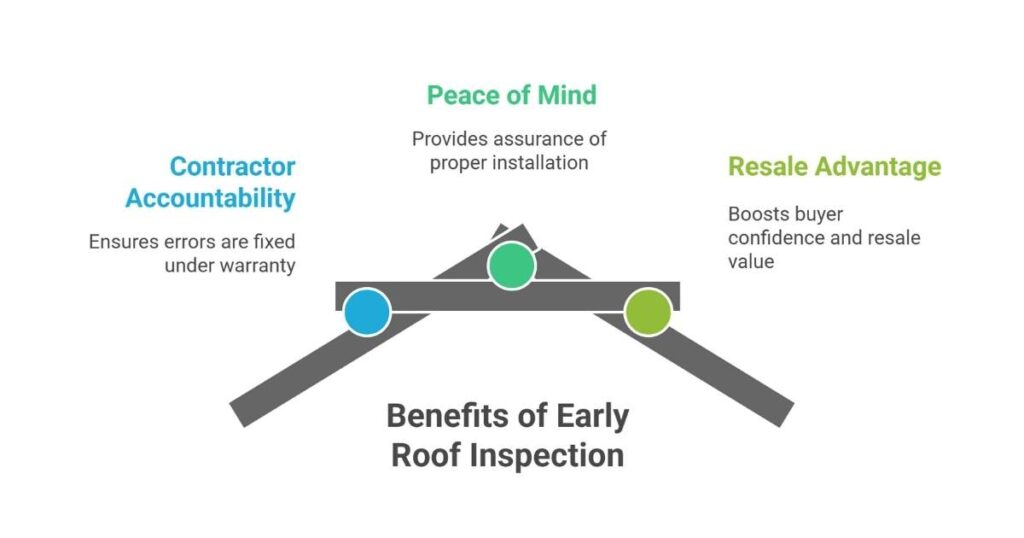
What to Expect from an RC Roofing Post-Commercial Roof Inspection
When you call RC Roofing for a post-construction roof inspection, here’s what we provide:
- Exterior visual inspection of shingles, flashing, fascia, drip edge, gutters, and penetrations
- On-roof inspection to check nail placement, shingle integrity, seals, and underlayment
- Interior attic inspection to assess ventilation, insulation, and moisture presence
- Photo documentation of any issues, with clear explanations
- Final report detailing overall condition, compliance status, and recommendations
Post-Commercial Roof Inspection Checklist
Here’s a quick look at what we check during each post-commercial Roof Inspection:
- Flashing at chimneys, walls, valleys, and skylights
- Shingle alignment and sealing
- Nail patterns, fastener penetration, and coverage
- Underlayment and ice barrier integrity
- Gutter slope, spacing, and downspout positioning
- Ridge cap condition
- Ventilation systems: ridge, soffit, gable
- Attic insulation and airflow
- Roof penetrations (vents, pipes, exhausts)
- General code compliance
This list isn’t just about checking boxes — it’s about ensuring every component functions together as a system.
Why It’s Especially Important in Missouri Communities Like Washington, Wildwood, and Chesterfield
Missouri’s climate is tough on roofs. Hot summers, freezing winters, windstorms, and hail can all take a toll. That’s why homes in places like Wildwood, Chesterfield, and Augusta need roofs that aren’t just new — they’re truly well-built.
New construction isn’t immune to oversight. In fact, fast build timelines and subcontractor turnover can increase the chances of something being missed. A post-construction roof inspection ensures your home is ready to handle our state’s intense seasons from the very start.
In sloped areas like Pacific or more open rural zones like Union, wind resistance and drainage are especially critical. We adapt our inspection approach based on your location and home style to make sure nothing’s overlooked.
How to Address Issues Found During Your Inspection
If we find problems, don’t panic — it’s better to catch them now than after a leak or mold issue sets in. Depending on the scope, we’ll recommend:
- Minor repairs like re-nailing shingles or resealing flashing
- Follow-up with the original roofer if work was under warranty
- RC Roofing repair or remediation services for issues not covered
We’ll give you a clear report, photos, and expert advice on next steps. Our goal is never to scare — only to help you protect your home with facts and options.
Preventing Warranty Voids and Future Damage
Many roofing warranties — especially from top brands like GAF or Owens Corning — require proper installation and inspection for coverage to remain valid. A missed flashing detail or improper nailing pattern could void it without you knowing.
A post-construction roof inspection not only verifies the quality of your roof — it protects your right to use your warranty if you ever need it. It also gives you early insight into issues that could otherwise stay hidden for years.
Final Thoughts: Peace of Mind Starts at the Top
You’ve invested in a new roof. You’ve paid the contractors. Everything looks great from the driveway. But the only way to be sure your home is protected is through a post-commercial Roof Inspection.
At RC Roofing contact us today, we don’t believe in cutting corners or taking chances — especially when it comes to your safety, comfort, and investment. From Washington to Wildwood, Frontenac to Union, we’ve helped homeowners catch issues early, avoid costly repairs, and get the most from their roofs from day one.
If your new roof is finished — or almost finished — don’t wait. Let our team give you the confidence that everything was done right. Because peace of mind? It starts at the top.
Frequently Asked Questions About Post-Construction Roof Inspection
Q1: What exactly is a post-construction home roof inspection?
A professional, detailed evaluation of a newly installed or replaced roof, focusing solely on workmanship, materials, and code compliance.
Q2: Why is this inspection considered the most important final step?
It serves as a final quality check to find small flaws (like improper flashing or nailing) that could cause major leaks, premature failure, or void the manufacturer’s warranty later on.
Q3: When is the ideal time to schedule a post-construction roof inspection?
Immediately after the contractor finishes, but before you make the final payment. This ensures any issues can be fixed promptly under the original labor guarantee.
Q4: What are the most common flaws found in a brand-new roof?
Improper flashing, inadequate attic ventilation, subpar nailing patterns, and shingle misalignment or damage.
Q5: What key areas does a professional inspection cover?
Shingles/materials, flashing, ventilation (intake/exhaust), gutters/drainage, and attic interior for moisture/leaks.
Q6: Can a post-construction inspection help prevent a voided roof warranty?
Yes. It provides documented, objective proof that the roof was installed correctly according to manufacturer requirements, thus protecting your warranty coverage.