At first glance, that green tint on your roof might seem harmless—even charming in a woodsy, aged-home kind of way. But moss and algae growth can wreak havoc on your roof if left untreated. What looks like surface discoloration could be a sign of deep, moisture-trapping damage beneath your shingles.
At RC Roofing, we’ve helped homeowners across Washington, Wildwood, Frontenac, and beyond deal with these silent roof destroyers. This guide walks you through how moss and algae impact your roof, how to know when it’s time for moss-damaged roof repair, and what steps to take to prevent further deterioration. To learn more information and tips, follow us on our Facebook Page.
Why Moss and Algae Are More Than Just an Eyesore
Moss doesn’t just sit on your shingles—it grows into them. The tiny root-like structures cling to granules on asphalt shingles, lifting and separating them. Algae, often appearing as dark streaks, feeds on limestone in shingles and spreads rapidly in humid conditions.
The result? Trapped moisture, shingle decay, and in time, roof leaks or even structural damage. That’s why damaged roof repair is more than cosmetic—it’s about protecting your home’s first line of defense.
How Moss and Algae Form on Roofs
Missouri’s climate makes the region especially susceptible. Our humid summers and wet springs create the perfect breeding ground for moss and algae.
Moss tends to form in shady, moist areas—especially on north-facing slopes or under overhanging trees. Algae, on the other hand, spreads through airborne spores and thrives in similar environments.
Here’s what makes moss and algae more likely:
- Infrequent roof cleaning
- Trees that block sunlight
- Poor attic ventilation
- Clogged gutters
- Neglected roof maintenance
In towns like Union and Eureka, where tree coverage is high and older homes are common, these factors combine to accelerate growth and the need for damaged roof repair.
Signs of Moss-Related Roof Damage
You don’t need to climb on the roof to spot a problem. Here are signs it’s time to act:
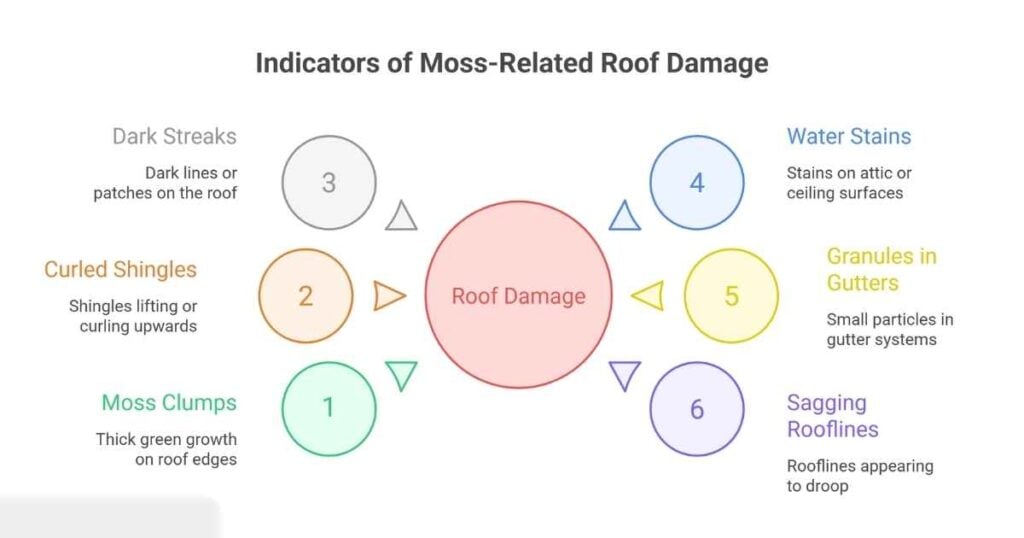
If you notice even one of these, don’t wait—early moss roof repair is always less expensive than structural roof repair down the road.
Common Areas Affected by Moss Growth
We’ve seen moss cause severe damage in these typical trouble spots:
- Roof valleys: where two slopes meet and collect moisture
- Edges and overhangs: less sunlight reaches these spots
- Under trees: constant shade keeps shingles damp
- Above bathrooms or kitchens: poor venting adds indoor humidity
In areas like Chesterfield and Town & Country, where homes are often larger with complex rooflines, moss finds even more surfaces to grow on.
Risks of Ignoring Moss and Algae on Your Roof
Waiting too long to address moss can lead to:
- Shingle degradation and premature failure
- Water leaks due to lifted materials
- Wood rot in decking or underlayment
- Increased energy bills from poor insulation and ventilation
- Home insurance complications due to “neglected maintenance”
Moss may seem slow-moving, but the damage it causes compounds quickly—making moss roof repair urgent once the first signs appear.
The Moss Damage Roof Repair Process Explained
Let’s break down what goes into a professional moss roof repair from RC Roofing.
1. Inspection and Damage Assessment
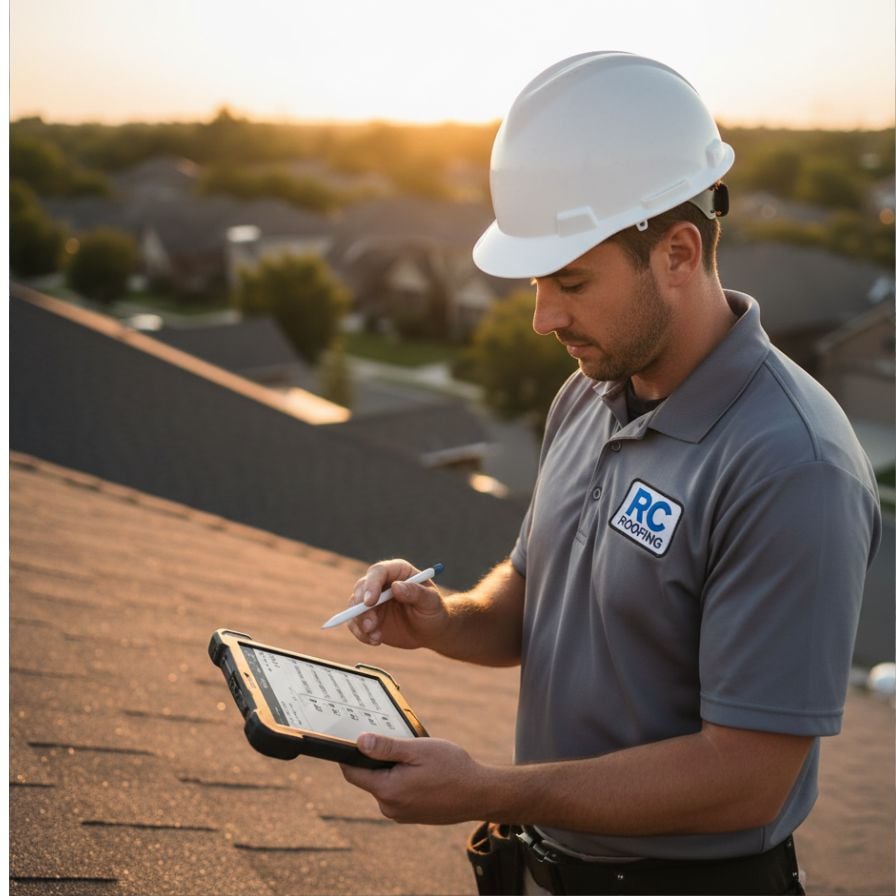
First, we inspect your entire roofing system—shingles, flashing, valleys, underlayment, and even your attic. We look for moisture, wood rot, mold, and early structural weakening. Understanding the full scope of moss and algae damage allows us to create a targeted repair plan based on how far the growth has spread.
2. Safe Moss and Algae Removal Techniques
We don’t power-wash your shingles. That can do more harm than good. Instead, we use gentle, industry-approved soft wash solutions that kill moss and algae without damaging your roof surface. As a trusted provider of roof moss removal in Washington, MO, we know that depending on the extent, removal may take several visits to ensure the growth is fully neutralized.
3. Shingle Repair or Replacement
If moss has loosened or damaged shingles, we replace them with matching materials and proper sealing. Addressing moss damage to roof surfaces early is critical—repairing the surface ensures your roof can repel water again. In neighborhoods like Augusta and Pacific, where many homes use architectural shingles, we ensure any replacement keeps your home looking seamless and uniform.
4. Treating the Roof to Prevent Regrowth
Once cleaned and repaired, we apply a moss- and algae-resistant treatment. These treatments help prevent future growth for several years and reduce the need for constant maintenance. For long-term protection, we may recommend installing zinc or copper strips along the ridge—these release ions that naturally deter moss as rainwater runs over them.
5. Restoring Ventilation and Drainage
Finally, we check for the root causes that allowed moss to thrive in the first place. That means inspecting your gutters to ensure proper drainage, ventilation systems so attic air doesn’t add humidity, tree coverage while offering trimming recommendations, and roof repairs to mossy edge areas, roof pitch, and sun exposure to improve dry times after rain.
Why DIY Isn’t Recommended for Moss Roof Repair
It’s tempting to grab a broom or pressure washer, but DIY moss removal almost always creates more problems than it solves. Scrubbing strips away shingle granules, harsh chemicals void manufacturer warranties, and walking on a mossy roof puts you at serious risk of injury. Even when the surface looks clean, missed spots allow regrowth to return faster than before.
Without proper safety gear, training, and roof knowledge, you could end up with leaks, accelerated damage, and costly repairs that far exceed the original problem. If you’re in Wildwood, Frontenac, or any of our Missouri service areas, let trained professionals handle your damaged roof repair safely and thoroughly.
How Missouri’s Climate Contributes to Roof Moss
Local weather plays a significant role in how quickly moss takes hold. Missouri’s high humidity, frequent rainfall, extended shade during fall and winter, and occasional snow cover create lingering dampness that moss thrives on—especially on older, more porous roofs that retain moisture longer.
If you live in Washington, Eureka, or other tree-dense communities, your roof likely needs more frequent inspections to stay ahead of moss damage before it becomes a structural concern.
Why Homeowners in Washington, Wildwood, and Chesterfield Should Act Early
Homes in these areas face a unique combination of risk factors—heavily shaded lots, multi-level roofs with moisture-trapping valleys, aging shingle systems, and seasonal debris from oaks, maples, and pines. Together, these conditions give moss more opportunities to take hold and spread.
Once moss works its way under shingles or into the decking, it compromises the entire roof structure. Early moss damage roof repair prevents costly full replacements and keeps your roof performing well for 15 or more years, rather than the 5 to 10 you’d get without intervention.
Preventative Measures for Moss and Algae Control
If your roof has already been treated or you want to avoid issues altogether, consistent prevention makes a real difference. Trim trees back to allow sunlight to reach the roof surface, clean gutters every spring and fall, and install zinc or copper strips at the ridge to naturally inhibit regrowth. Keeping attic ventilation in good condition and scheduling annual inspections to catch early moss or algae activity will go a long way toward protecting your investment.
Final Thoughts: Don’t Let Green Growth Ruin Your Roof
Moss and algae don’t need much time to compromise your home’s most important shield. And they don’t go away on their own. What starts as a few patches can end in costly repairs—or even a full roof replacement — if you wait too long.
With RC Roofing contact us today, you get more than just surface cleaning. You get experienced pros who know how to remove, repair, and prevent roof moss damage the right way.
If you live in Washington, Wildwood, Frontenac, or nearby communities and your roof is showing signs of moss or algae growth, give us a call. Let’s keep your home dry, healthy, and protected—for years to come.