Severe storms can happen without warning. When they do, homeowners often face sudden roof damage and tough choices. High winds, hail, falling debris, and heavy rain can rip shingles away, punch holes in your roof, or damage weak areas of your home. When this happens, you need to act fast. Emergency roof tarping is often the first and most important step to protect your home from more damage after a storm.
At RC Roofing in Washington MO, we provide emergency roof tarp services to homeowners in Washington, Wildwood, Frontenac, Town & Country, Chesterfield, Eureka, Augusta, Union, and Pacific. Emergency roof tarping is not a permanent fix, but it is a vital temporary solution. It helps keep your home stable, stops water from getting in, and gives you time until full repairs can be done safely.
This guide explains what emergency roof Covering is, when you need it, how it works, and why a fast professional response makes a big difference after storm damage.
What Is Roof Tarping And Why It Matters
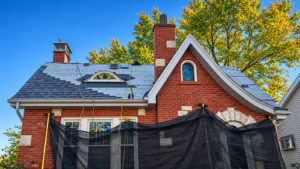
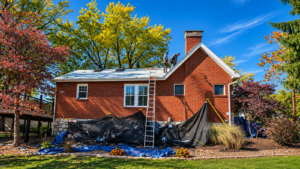
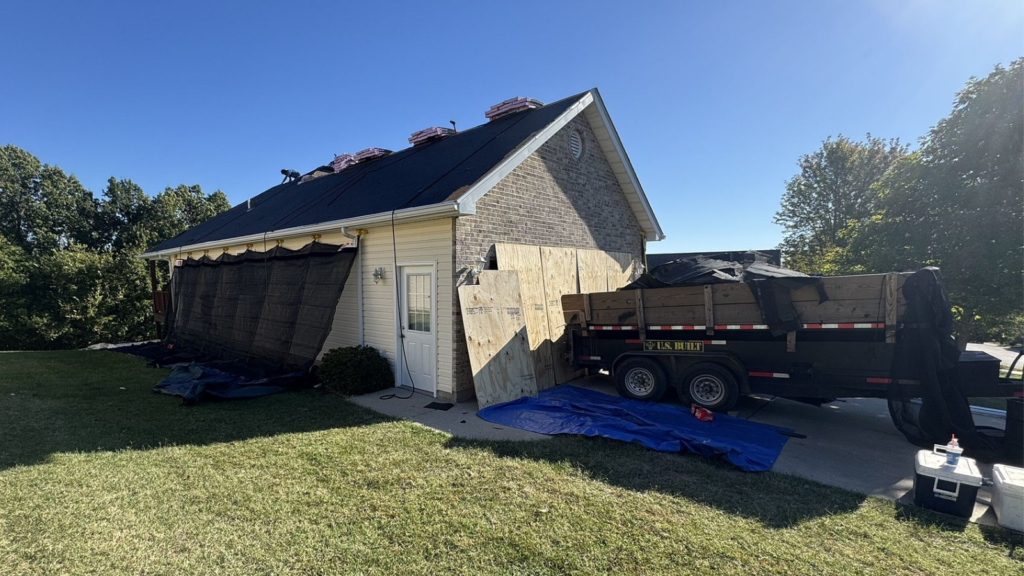
roof tarping means putting heavy-duty waterproof emergency roof tarps over damaged parts of a roof to stop water from getting into your home. These tarps are attached securely and set up to push rain away from open areas.
When your roof is damaged, even a small hole can let in lots of water during the next storm. Emergency roof Covering gives you quick protection and lowers the risk of damage inside like:
- Ceiling collapse
- Wet insulation
- Mold growth
- Electrical dangers
- Water damage to your things
For homeowners, putting up an emergency roof tarp gives peace of mind during a stressful time by fixing the problem quickly.
Common Causes Of Storm-Related Roof Damage
Knowing how storm damage happens helps explain why emergency roof tarping is often needed:
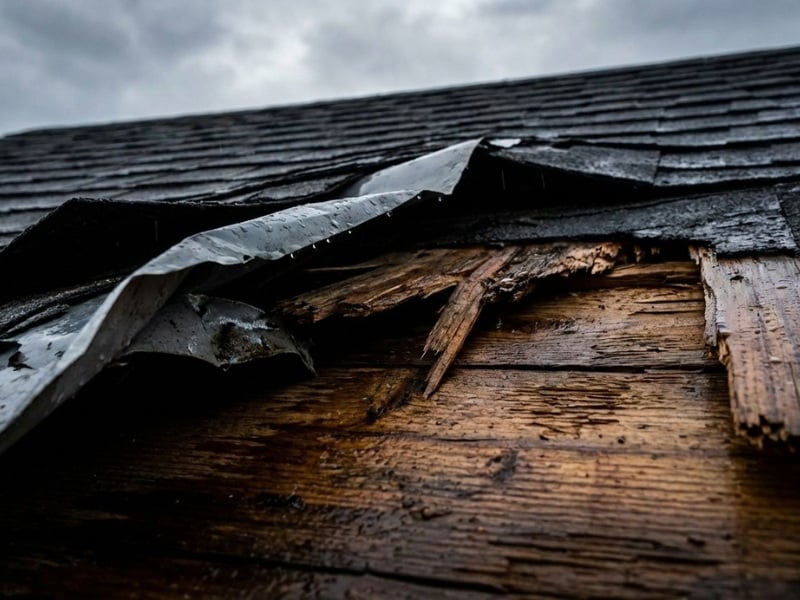
High Winds: Can lift shingles, tear off flashing, or expose underlayment
Hail Damage: Can crack shingles, dent metal parts, or punch holes in roofing materials
Falling Debris: Tree branches and flying objects can cause sudden holes or damage to your roof structure
Heavy Rain: Coming after these events can make things worse fast
Emergency roof tarp setup stops this by sealing off open areas before more storms arrive.
When Roof Tarping Is Needed
Emergency roof Covering is usually needed when a roof has open holes or bad damage that can’t be fixed right away.
Signs You Need An Emergency Roof Tarp:
- Missing or torn shingles
- Visible holes in the roof
- Damaged or missing flashing
- Collapsed roof sections
- Active leaks inside after storms
- Daylight showing through the roof
- Water coming into the home
If you see any of these signs, emergency roof Covering should be done as soon as possible to stop more damage.
Why Timing Is Critical After Storm Damage
Storm damage rarely gets better on its own. Waiting to protect your roof lets water spread into insulation, framing, and inside finishes. Emergency roof tarping limits how much damage happens by blocking moisture and wind-driven rain. Acting quickly often reduces the total cost of repairs and makes recovery faster. Homeowners in Missouri know that storms can come in groups. Putting up emergency roof tarps helps protect your home while the weather stays unpredictable.
How Roof Tarping Protects Your Home
roof tarping works as a temporary shield against bad weather. Properly installed emergency roof tarps are secured beyond the damaged area to make sure water flows over the tarp instead of under it.
Protection Benefits:
Inside Preservation: Protects drywall, flooring, furniture, and personal belongings
Mold Prevention: Reduces risk of mold growth from too much moisture
Structure Strength: Keeps structure stable until permanent repairs can be done
Cost Savings: Stops secondary damage that often costs more than the original roof damage
An emergency roof tarp creates a critical barrier between your home’s inside and the weather.
The Roof Tarping Process Explained
At RC Roofing, emergency roof tarping starts with a safety-focused check. Storm-damaged roofs can be unstable, so careful review is important.
Our Emergency Roof Tarp Installation Process:
- Safety Check: Look at roof stability and access points
- Find Damage: Locate all damaged areas
- Clear Debris: Remove loose materials from damaged sections
- Position Tarp: Cover open areas with industrial-grade emergency roof tarps
- Secure Fastening: Anchor tarps using the right methods to stop movement
- Quality Check: Make sure there’s a watertight seal and proper water flow
The goal is to create a watertight barrier without causing more roof damage.
Why Professional Roof Tarping Matters
While some homeowners try to put up an emergency roof tarp themselves, storm-damaged roofs are dangerous. Slippery surfaces, unstable decking, and hidden dangers increase the risk of serious injury.
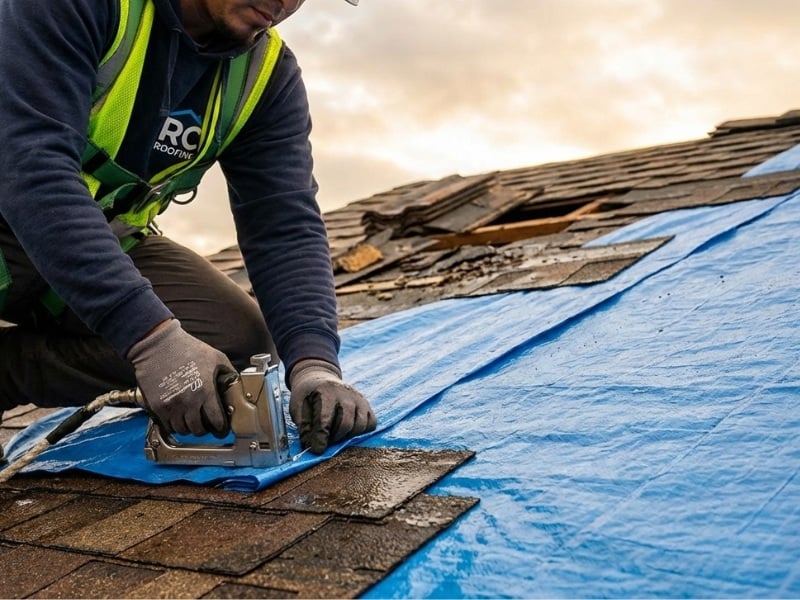
Professional Advantages:
Safety First: Trained crews with proper equipment and safety methods
Proper Installation: Emergency roof tarps installed securely and effectively to stop water from getting in
Quality Materials: Industrial-grade tarps made for weather resistance
Experience: Knowledge of proper fastening techniques and water flow management
Liability Protection: Professional insurance coverage during installation
RC Roofing uses proven techniques and materials to make sure your emergency roof tarp works as intended and protects your home effectively.
Roof Tarping And Insurance Claims
Emergency roof tarping often plays an important role in insurance claims. Many insurance policies expect homeowners to take reasonable steps to stop more damage after a storm—this is called “duty to mitigate.”
Insurance Benefits:
- Shows you took action to prevent damage
- Provides proof of your efforts
- Helps avoid coverage disputes
- May be paid back under your policy
- Shows timeline of damage and response
Documentation of emergency roof tarp services can support insurance claims and speed up the claims process. RC Roofing can provide detailed documentation that shows when roof tarping was done and why it was needed.
Temporary Protection, Not A Permanent Fix
It is important for homeowners to understand that roof tarping is a temporary solution. Emergency roof tarps are made to protect the home until permanent repairs or replacement can be done. Weather, UV rays, and wind can break down tarps over time. roof tarping should be followed by professional repairs as soon as possible. Temporary protection buys critical time but does not replace the need for a full roofing solution.
How Long Can Emergency Roof Tarping Last?
How long roof tarping lasts depends on several things:
- Weather conditions and how bad they are
- Tarp quality and material grade
- Installation technique and security
- UV exposure levels
- Wind conditions
In many cases, emergency roof tarps can give effective protection for several weeks to a few months. However, long exposure to sun and storms can weaken materials. Regular checking is important to make sure the emergency roof tarp stays secure and working. RC Roofing advises homeowners on the right timelines for moving from roof tarping to permanent repairs.
Roof Tarping During Bad Weather Seasons
Missouri weather can be unpredictable, with storms happening across multiple seasons. roof tarping is especially important during spring and summer storm seasons when severe weather is most common. Homes in areas like Washington, Eureka, and Pacific may see repeated storms within a short period. Putting up emergency roof tarps helps bridge the gap between damage and repair scheduling. This added protection reduces stress and risk during unstable weather conditions, making sure your home stays protected through multiple weather events.
Protecting Inside Spaces After Storm Damage
Inside protection is a major benefit of roof tarping. Water getting in can cause big damage to:
- Ceilings and walls
- Flooring and carpeting
- Furniture and personal belongings
- Electrical systems
- HVAC parts
- Insulation
Emergency roof tarping reduces the chance of secondary inside damage that often costs more to repair than the roof itself. Protecting inside spaces also reduces disruption to daily life and helps keep a safe, comfortable living space.
Preventing Mold And Moisture Problems
Moisture trapped inside a home creates perfect conditions for mold growth. Mold can grow quickly—sometimes within 24-48 hours after water gets in—and cause serious health risks.
roof tarping limits moisture entry and helps keep inside areas dry. This reduces the risk of:
- Toxic mold growth
- Breathing health problems
- Wood rot in structure
- Poor indoor air quality
- Costly mold cleanup
Early protection with an emergency roof tarp is key to stopping long-term moisture problems and keeping a healthy home.
Roof Tarping And Structure Safety
Water damage can weaken critical structure parts including roof decking, framing, and load-bearing elements. Continued exposure increases the risk of structure failure and more damage.
roof tarping helps preserve structure elements by keeping water out of damaged areas. This protection supports safer repair conditions later and prevents:
- Roof deck breaking down
- Rafter and truss damage
- Ceiling joist weakening
- Foundation water getting in
- Wall structure damage
Stabilizing the structure early with emergency roof tarps often results in better repair outcomes and lower total costs.
What Homeowners Should Do After Roof Tarping
After roof tarping is in place, homeowners should take these important steps:
After Tarping Steps:
- Check Regularly: Look at the emergency roof tarp for movement, tears, or shifting
- Document Everything: Take photos of damage and tarp installation for insurance
- Schedule Inspection: Arrange professional roof inspection to assess full damage
- Plan Repairs: Work with your roofing contractor to develop permanent repair timeline
- Contact Insurance: File claims quickly and provide all documentation
- Stay Alert: Watch for signs of water getting in or tarp failure
roof tarping creates the breathing room needed to make smart decisions about permanent repairs without panic or pressure.
Planning Permanent Repairs After Emergency Tarping
Once conditions are safe and you’ve finished your damage assessment, permanent repairs or replacement should be scheduled. roof tarping makes sure the home stays protected during this planning phase.
Repair Planning Process:
Complete Inspection: Professional assessment finds all damaged materials, underlayment problems, and structure concerns
Repair Estimates: Detailed cost breakdown for permanent solutions
Material Selection: Choose right roofing materials for long-term protection
Timeline Development: Set realistic completion schedule
Insurance Coordination: Work with adjusters to finalize coverage
RC Roofing helps homeowners move smoothly from emergency roof tarp protection to long-term roofing solutions that restore full protection and value.
Roof Tarping For Commercial Properties
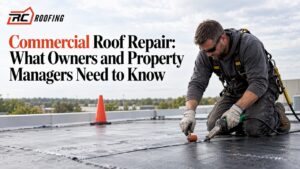
While homes commonly need roof tarping, emergency roof tarping for commercial properties is just as critical. Commercial buildings often have larger roof areas and more complex roofing systems that need specialized emergency roof tarp solutions.
Commercial Roof Tarping Challenges:
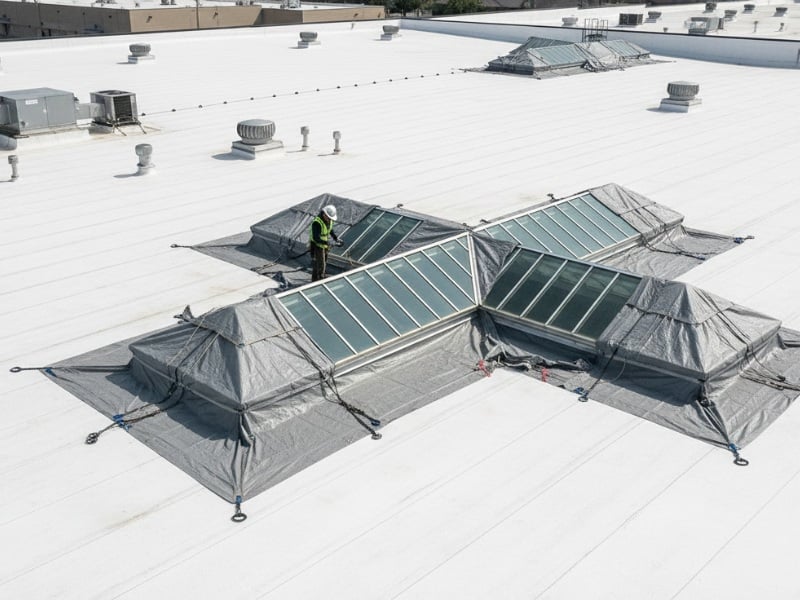
Larger Scale: Commercial roofs need more extensive tarp coverage and materials
Business Continuity: Reducing downtime and keeping business running is essential
Inventory Protection: Keeping valuable business assets and equipment safe
Employee Safety: Keeping safe working conditions during repairs
Liability Concerns: Stopping customer or employee injury from water damage
Complex Systems: Dealing with HVAC units, skylights, and roof-mounted equipment
Business owners face unique challenges when storm damage happens. roof tarping for commercial properties helps reduce downtime, protects valuable assets, and keeps business operations going until permanent commercial roofing repairs can be done. RC Roofing has lots of experience providing roof tarping for commercial properties throughout the Washington MO area, understanding the urgency and scale needed for commercial emergency roof tarp installations. We work efficiently to protect your business investment and reduce operational disruption.
Why Local Experience Matters In Emergencies
Local roofing experience is especially important during emergencies. RC Roofing understands regional weather patterns and common storm damage scenarios specific to Missouri.
Local Expertise Advantages:
- Familiarity with local building codes and requirements
- Understanding of regional roofing systems and materials
- Knowledge of Missouri storm patterns and damage types
- Strong relationships with local suppliers for quick materials access
- Faster response times within service area
- Community reputation and accountability
This local knowledge lets us respond efficiently and provide right emergency roof tarping solutions for both home and commercial clients throughout the region.
Serving Washington MO And Surrounding Communities
RC Roofing proudly serves homeowners and business owners in Washington, Wildwood, Frontenac, Town & Country, Chesterfield, Eureka, Augusta, Union, and Pacific.
We understand how stressful storm damage can be and focus on fast, reliable service. Emergency roof tarping is one of the ways we help protect our community when disaster strikes.
Service Area Benefits:
- Quick emergency response times
- Local availability 24/7 during storm seasons
- Familiarity with neighborhood roofing types
- Community-focused customer service
- Dependable emergency roof tarp support
Local service means we’re here when you need us most, with the know-how and materials to protect your property quickly.
Preparing For Storm Emergencies
While storms can’t be stopped, preparation helps reduce impact and speeds recovery. Knowing who to call for emergency roof tarping can save valuable time when every minute counts.
Storm Preparation Tips:
Save Contact Info: Keep RC Roofing’s emergency number easy to find
Document Your Roof: Take photos of your roof in good condition for insurance comparisons
Trim Trees: Remove hanging branches that could damage your roof
Inspect Regularly: Yearly roof inspections find weak areas before storms hit
Know Your Insurance: Understand your coverage for storm damage and emergency help
Create Emergency Plan: Know what to do right away after storm damage happens
Being prepared reduces panic and improves outcomes when you need an emergency roof tarp installed quickly.
Why Homeowners Trust RC Roofing For Roof Tarping
RC Roofing is known throughout the Washington MO area for quick service, honest communication, and quality work. Our roof tarping services show our commitment to protecting homes during critical moments.
What Sets Us Apart:
Fast Response: Available when emergencies strike, not just during business hours
Safety First: Trained crews follow strict safety rules during emergency roof tarp installation
Quality Materials: Industrial-grade emergency roof tarps made for maximum protection
Clear Communication: Honest guidance throughout the process
Insurance Support: Documentation and help with claims
Experienced Team: Years of experience with Missouri storm damage
We focus on safety, durability, and clear guidance throughout the emergency roof tarp installation process. Homeowners trust us to act quickly and responsibly when their homes are at risk.
Our goal is to help homeowners regain control and peace of mind after storm damage strikes.
When To Call For Roof Tarping
If your roof has been damaged by a storm and water could get in, roof tarping should be done immediately—don’t wait for the next storm.
Call Right Away If You Notice:
- Visible roof damage after bad weather
- Water stains on ceilings or walls
- Missing shingles or roofing materials
- Debris impact damage to your roof
- Active leaks during or after rain
- Sagging or damaged roof areas
Even if damage looks minor, a professional check can tell you whether putting up an emergency roof tarp is needed. Early action stops greater damage and higher repair costs.
RC Roofing is available to help homeowners and commercial property owners secure their roofs with emergency roof tarps after storms strike. Don’t wait until the next storm arrives—protect your property now.
Final Thoughts On Roof Tarping
Storm damage can be overwhelming, but quick protection makes a big difference in reducing damage and costs. roof tarping is a critical first step in protecting your home or business after severe weather.
For homeowners and commercial property owners in Washington MO and surrounding areas, RC Roofing provides fast, professional emergency roof tarping services designed to stop further damage and protect your property investment.
Remember These Key Points:
- Act quickly after storm damage happens
- Professional installation makes sure you get proper protection
- Emergency roof tarps are temporary but essential solutions
- Documentation supports insurance claims
- Local know-how matters during emergencies
If your home or business has had storm damage, do not wait. roof tarping can fix the situation and give you the time needed to plan permanent repairs with confidence. Whether you need home emergency roof tarps or emergency roof tarping for commercial properties, RC Roofing is here to help you protect what matters most. Contact us right away after storm damage for fast response and professional emergency roof tarp installation that keeps your property safe.
Need Roof Tarping Services?
RC Roofing provides 24/7 emergency response for storm-damaged roofs throughout Washington MO and surrounding communities. Our experienced team responds quickly with professional emergency roof tarp installation that protects your home or business until permanent repairs can be done. Don’t let storm damage get worse—call RC Roofing today for immediate roof tarping protection.
FAQ
1) Is emergency roof tarping worth it?
Yes. It often prevents interior water damage, mold risk, and higher repair costs.
2) Can I tarp my roof myself?
It is risky. Storm-damaged roofs can be slippery and unstable. A professional is safer.
3) Will insurance pay for roof tarping?
Many policies reimburse reasonable temporary repairs when the loss is covered. Keep receipts and photos. NAIC
4) How fast should I tarp after storm damage?
As soon as possible, ideally the same day, before the next rain or wind event.
5) How long can a roof tarp last?
Often weeks, sometimes longer, depending on wind, sun, and installation quality.
6) What happens after the tarp is installed?
You schedule a full inspection, finalize scope, then complete permanent repairs or replacement.