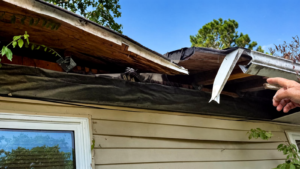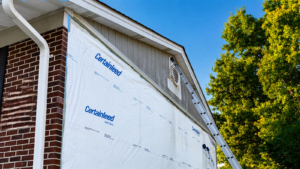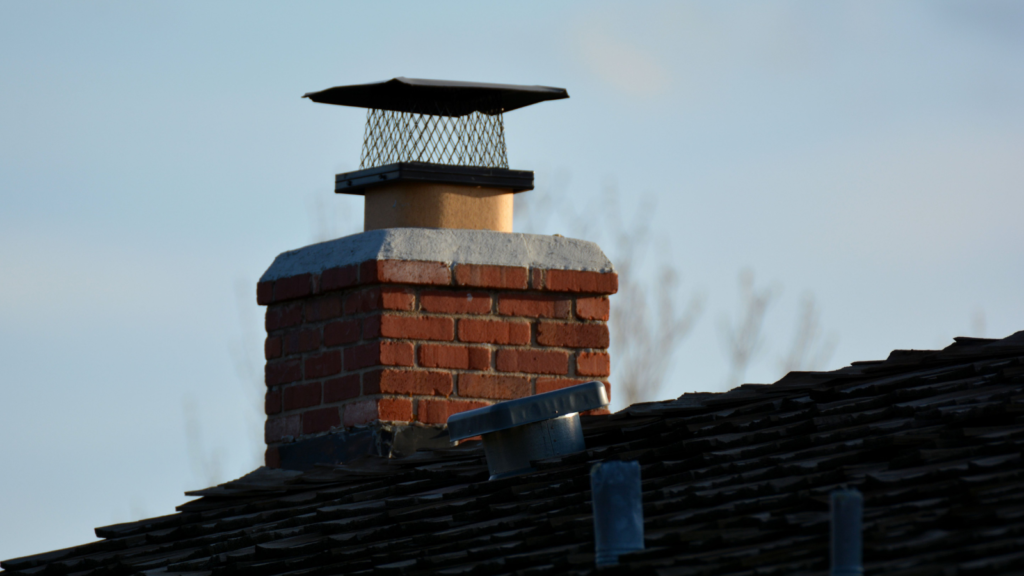
Drips and slips, cracks and gaps, sometimes a roof leak starts right around the chimney cap. But if you notice water stains near your fireplace or chimney after a Missouri rainstorm, does that automatically mean your roof is failing? Not necessarily. A chimney cap roof leak can develop when the cap is damaged, improperly installed, missing, or when nearby flashing and masonry begin to deteriorate. The tricky part is that several chimney components can produce similar symptoms, which makes finding the true source of the water especially important.
For homeowners in Washington, Wildwood, Frontenac, Town & Country, Chesterfield, Eureka, Augusta, Union, and Pacific, chimney-related leaks deserve attention sooner rather than later. Missouri homes experience heavy rain, wind, hail, snow, freezing temperatures, summer heat, and repeated freeze-thaw cycles. All of that exposure can gradually weaken the materials surrounding a chimney.
First, What Exactly Does a Chimney Cap Do?
The chimney cap sits at the top of the chimney and acts as a protective cover over the flue opening. Depending on its design, it can help prevent rain, snow, leaves, twigs, and animals from entering the chimney.
A properly installed cap also helps limit the amount of water entering the chimney system from above.
That is important because chimneys are highly exposed. Unlike siding or walls, the top of a chimney receives direct rainfall with very little protection.
When the cap becomes loose, rusted, cracked, undersized, or damaged by severe weather, water may reach areas that were supposed to remain protected. In some situations, what appears to be a roof leak is actually a chimney cap roof leak originating above the roofline.
However, the cap is only one possible source.
Can a Chimney Cap Really Cause a Roof Leak?
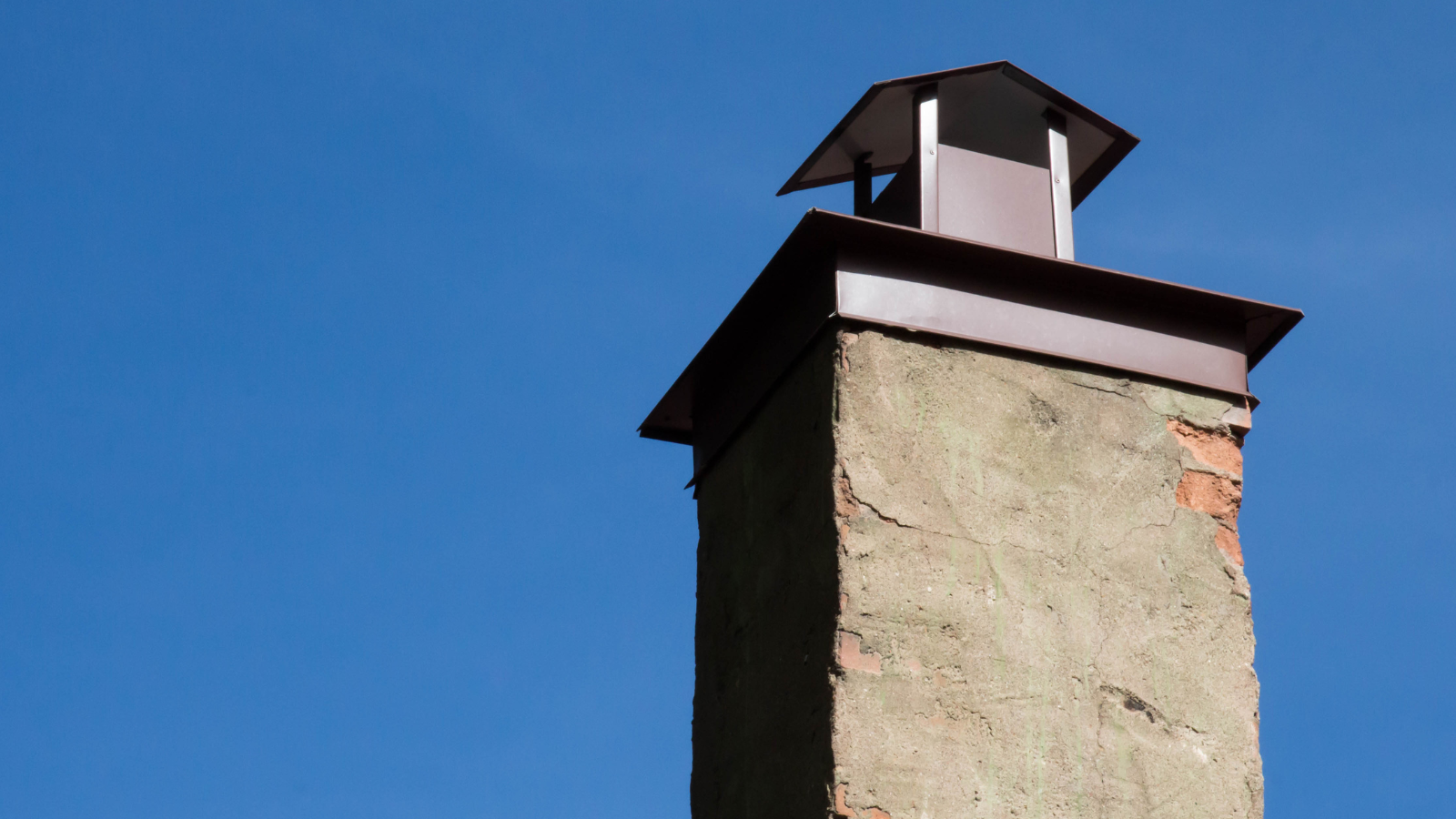
Yes, but the exact path of the water matters.
A damaged chimney cap can allow rainwater into the chimney. Water may then travel downward before appearing around the fireplace, chimney chase, ceiling, attic, or nearby wall.
The confusing part is that a chimney leak and roof leak can look almost identical from inside the house.
Water does not always drip straight down from where it enters. It can follow rafters, framing, masonry, roof decking, or other building materials before becoming visible.
That means a stain five feet away from your chimney does not necessarily tell you where the leak began.
Before repairing anything, an experienced roofing professional should inspect the entire area and determine whether you are dealing with a chimney cap roof leak, deteriorated flashing, damaged shingles, masonry problems, or another moisture entry point.
1. The Chimney Cap Is Missing
Some chimneys have no cap at all.
Without a cap, rain and snow can enter directly through the flue. Over time, repeated moisture exposure may damage chimney components and contribute to water appearing inside the home.
Homeowners sometimes do not realize their chimney cap is missing because the top of the chimney is difficult to see from the ground.
Strong winds and severe storms may also loosen or remove an existing cap.
If you recently experienced high winds around Washington or the surrounding Missouri communities and later noticed moisture near the chimney, checking the cap should be part of the inspection.
2. The Cap Is Cracked, Rusted, or Damaged
Chimney caps spend their entire service life exposed to the weather.
Rain, snow, sunlight, wind, temperature changes, and ice eventually take a toll.
Metal caps may corrode or loosen. Masonry components can crack. Fasteners can fail. Seals around certain assemblies can deteriorate.
Once deterioration creates an opening, water has an opportunity to enter.
A chimney cap roof leak caused by deterioration may start small. You might notice only a faint ceiling stain after especially heavy rainfall.
That is exactly why it should not be ignored.
Small leaks have a habit of becoming larger problems when another storm arrives.
3. The Chimney Cap Was Installed Incorrectly
Even a relatively new chimney cap can leak if it was not installed correctly.
A cap must be appropriately sized, securely attached, and compatible with the chimney system. Poor installation may leave gaps where wind-driven rain can enter.
Missouri storms make those weaknesses particularly important. Rain does not always fall straight down. Strong winds can push water sideways and underneath vulnerable components.
An installation problem may therefore remain unnoticed during light rain but become obvious during a severe thunderstorm.
If the leaking occurs only during certain weather conditions, that pattern can provide useful clues during an inspection.
Chimney Cap or Flashing? Know the Difference
This is where many homeowners become confused.
The chimney cap is at the top of the chimney.
Chimney flashing is installed where the chimney meets the roof.
Flashing is designed to direct water away from the joint between two different surfaces. Because the chimney interrupts the roof plane, that transition must be carefully protected.
If flashing becomes loose, corroded, damaged, or improperly installed, rain can enter the gap between the chimney and roofing system.
The resulting water stain may look almost identical to a chimney cap roof leak.
That is why simply replacing the cap without inspecting the flashing may not solve the problem.
Why Chimney Flashing Is Such a Common Leak Area
Think about how rain moves across your roof.
Water flows down the roof slope until it encounters an obstacle. A chimney is one of the largest roof penetrations on many homes.
Proper flashing redirects that water around the chimney.
If there is even a small opening, water may find it.
Common chimney flashing concerns include loose metal, deteriorated sealant, corrosion, improper overlap, storm damage, and previous repairs that have reached the end of their useful life.
In some cases, homeowners repeatedly apply caulk around a chimney hoping to stop the leak. Sealant may provide temporary relief in certain situations, but it is not a substitute for correctly installed flashing when flashing itself is the problem.
Could the Chimney Crown Be the Real Problem?
Yes.
The chimney crown is another component that is frequently confused with the cap.
The crown generally covers the upper masonry portion of the chimney and helps direct water away from the structure. When cracks develop in the crown, moisture can penetrate the masonry.
Small cracks may expand as water enters and temperatures drop.
This is particularly relevant in Missouri because freeze-thaw cycles can worsen existing masonry deterioration. Water enters a crack, freezes, expands, and can gradually make the opening larger.
A professional inspection for a suspected chimney cap roof leak should therefore look beyond the cap itself and consider the chimney crown and masonry condition.
Damaged Mortar Can Let Water Into the Chimney System
Brick chimneys are durable, but mortar does not last forever.
Years of weather exposure can cause mortar joints to crack, crumble, or deteriorate. When that happens, water may enter through the masonry rather than through the roofing system.
Homeowners may see interior staining and understandably assume they have a roof leak.
The actual problem could be several feet above the roof.
This is one reason diagnosing chimney leaks requires careful inspection rather than guesswork.
How to Tell Where the Water Might Be Coming From
The symptoms can overlap, but certain patterns may provide clues.
| What You Notice | Possible Source | Why It Matters |
| Water inside the fireplace or flue | Missing or damaged chimney cap | Rain may be entering from the top |
| Staining near the roof and chimney intersection | Flashing problem | Water may be entering where the chimney meets the roof |
| Damp or deteriorating masonry | Crown or mortar damage | Water may be penetrating the chimney structure |
| Leak appears mainly during wind-driven rain | Cap, flashing, or siding transition | Wind may push water into a vulnerable opening |
| Ceiling stain near the chimney | Several possible sources | Water may travel before becoming visible |
| Damaged shingles around chimney | Roofing or storm damage | Surrounding roof materials may also require repair |
| Recurring leak after previous caulking | Underlying defect may remain | The previous repair may have addressed only the symptom |
The important takeaway is simple: where you see water is not always where water entered.
Signs of a Chimney-Related Roof Leak
A leaking chimney does not always create a dramatic puddle.
Sometimes the first warning is subtle.
You may notice brown or yellow ceiling stains near the chimney, peeling paint, damp drywall, a musty odor, moisture inside the fireplace, white staining on masonry, deteriorating mortar, or water marks in the attic.
If these symptoms become worse after heavy rain, it is worth investigating.
A suspected chimney cap roof leak should be inspected before repeated moisture exposure damages surrounding materials.
Why You Should Not Ignore a Small Ceiling Stain
A small stain may represent much more water than you can see.
Before moisture becomes visible on your finished ceiling, it may have already passed through roofing components, decking, framing, insulation, or drywall.
Continued moisture intrusion can contribute to wood deterioration, damaged insulation, interior staining, and conditions that support mold growth.
The goal is to find the source while the affected area is still manageable.
Waiting for the stain to become larger rarely makes the eventual repair easier.
Missouri Storms Can Turn Small Chimney Problems Into Bigger Ones
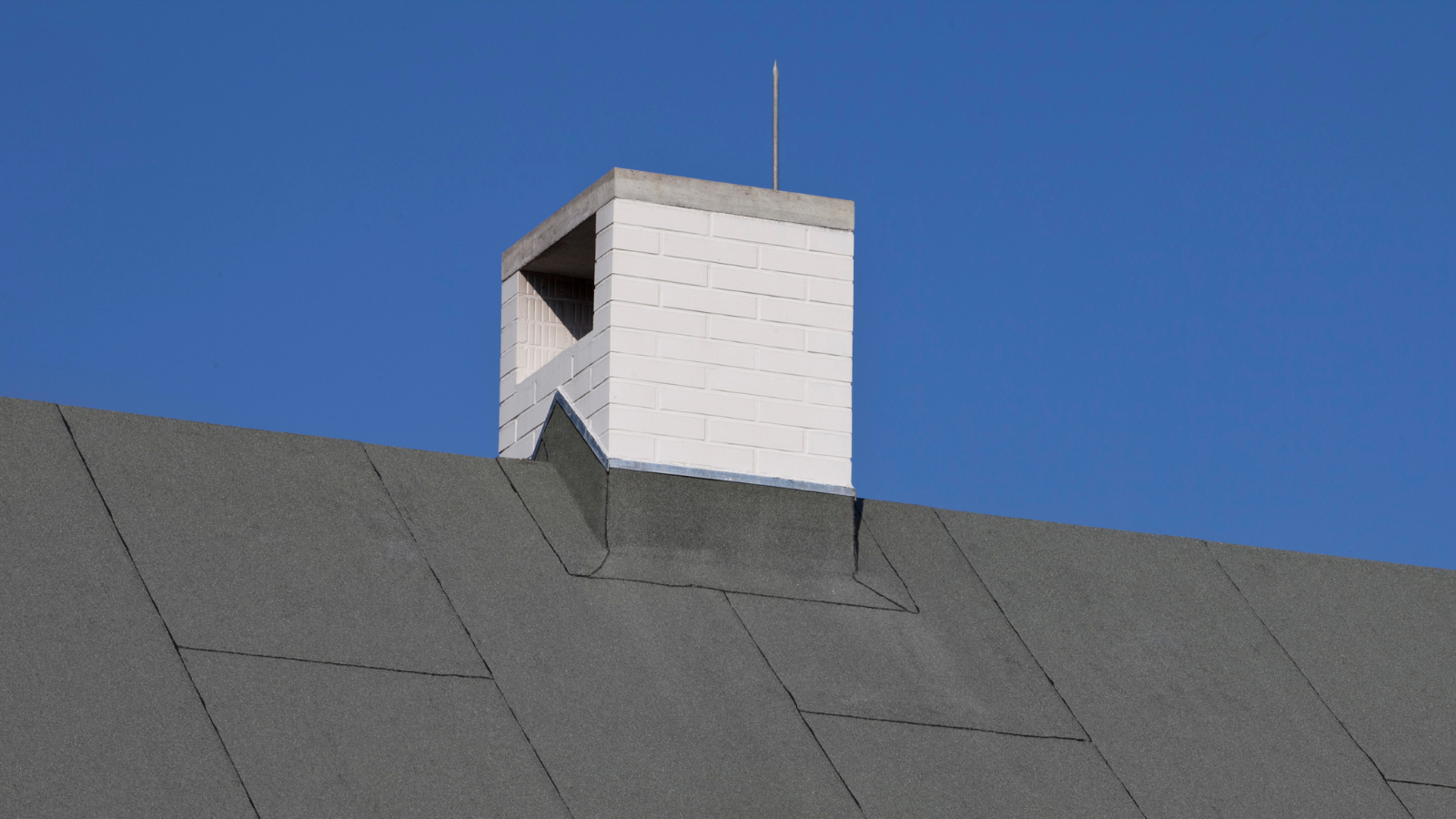
Homes throughout Washington, Wildwood, Frontenac, Town & Country, Chesterfield, Eureka, Augusta, Union, and Pacific experience weather that can expose weaknesses around chimneys.
High winds can loosen components.
Hail can damage surrounding shingles or metal.
Heavy rainfall tests flashing and drainage.
Winter moisture can enter cracks and freeze.
Summer heat can contribute to expansion, contraction, and sealant deterioration.
A chimney cap roof leak may therefore develop gradually rather than after one dramatic event.
That is why it can be useful to have the chimney and surrounding roof inspected after significant storms, particularly if you notice a new stain or moisture problem.
What Should a Professional Inspection Include?
A good chimney-area roof inspection should not focus on one component simply because that is where the homeowner suspects the problem started.
The contractor should evaluate the surrounding system.
That may include the chimney cap, visible crown condition, accessible masonry, roof flashing, counter flashing, shingles surrounding the chimney, sealants, roof valleys near the chimney, gutters, roof decking, and accessible attic areas.
The inspection should answer a straightforward question:
Where is the water getting in?
Only after identifying the likely source should repair recommendations be made.
What If the Chimney Cap Is Fine?
Then the inspection moves to the next likely source.
If the cap is secure and functioning properly, attention may shift toward flashing, shingles, roof penetrations, masonry, or nearby roof transitions.
This is why homeowners should be cautious about assuming that every leak around a chimney has the same solution.
Replacing a perfectly good cap will not fix damaged step flashing.
Adding more sealant will not repair deteriorated masonry.
Replacing shingles will not stop rain entering through an uncovered flue.
Correct diagnosis comes first.
Can Damaged Shingles Around the Chimney Cause Similar Leaks?
Absolutely.
The shingles immediately surrounding a chimney experience the same aging and weather exposure as the rest of your roof. They may also be more vulnerable because of cuts and transitions required around the chimney structure.
Lifted shingles, cracked shingles, exposed fasteners, or storm damage can allow water beneath the roofing surface.
If those problems occur close to the chimney, the interior symptoms may look like a chimney cap roof leak even though the cap has nothing to do with it.
An up-close roof inspection can help separate these possibilities.
What About Water Behind the Chimney?
Chimney placement matters.
On certain roof designs, water flows toward the uphill side of the chimney. If the chimney is wide, that area must be designed to divert water effectively.
Some roofing systems use a cricket or saddle behind the chimney to help direct water around it rather than allowing water and debris to collect.
If drainage is poor, leaves and debris may accumulate behind the chimney, holding moisture against vulnerable areas.
During an inspection, the contractor should consider not only whether components are damaged but also whether water is draining properly around the entire chimney.
Repair or Replace: What Does a Chimney Leak Usually Need?
There is no single answer.
A minor problem may require a localized repair. A damaged cap may need replacement. Failed flashing may need to be repaired or replaced. Deteriorated shingles may require targeted roofing work.
More extensive deterioration could require a broader solution.
The age and condition of the overall roof also matter.
If the surrounding roofing system is still healthy, repairing the affected chimney area may make sense. If the roof is already approaching the end of its service life and has widespread deterioration, the homeowner may want to discuss longer-term options.
A trustworthy contractor should explain what is damaged and why a particular repair is recommended.
Why Repeated Caulking Is Not Always the Answer
Caulk has legitimate roofing uses, but it is not a cure for every chimney leak.
When homeowners discover water, one of the easiest reactions is to apply sealant anywhere that looks suspicious.
The problem is that water may be entering somewhere else entirely.
Repeated caulking can also make future diagnosis more difficult if it covers symptoms without correcting the underlying installation or material problem.
If you have already sealed the chimney several times and water keeps returning, it is time to investigate the entire roof-to-chimney connection.
Should You Climb Onto the Roof and Check the Chimney Yourself?
You can safely look for obvious concerns from the ground, but climbing onto a roof is another matter.
Roof surfaces can be steep, slippery, damaged, or unstable. Chimneys also tend to sit near complicated roof transitions where footing can be difficult.
Homeowners can watch for visible signs such as a tilted or missing cap, damaged shingles, staining, or obvious masonry deterioration from a safe location.
Leave the up-close evaluation to trained professionals with the appropriate equipment.
Finding a chimney cap roof leak is not worth risking a serious fall.
How to Help Prevent Chimney and Roof Leaks
Prevention begins with paying attention before there is water inside the house.
Have your roofing system inspected periodically and after significant storms. Keep gutters clear so water drains efficiently. Watch for masonry deterioration, loose components, and changes around the chimney. Address damaged shingles and flashing promptly rather than waiting for an active leak.
If you are buying an older home, ask about the roof and chimney’s repair history.
You do not need to become a roofing expert. You simply need to recognize when something has changed and know when professional evaluation makes sense.
Why Local Experience Matters in Washington, MO
Roofing systems respond to the climate they live in.
A contractor working regularly throughout Washington and surrounding Missouri communities understands the combination of storms, seasonal temperature swings, wind, hail, humidity, and winter conditions local homes experience.
Homes in Frontenac and Town & Country may have large, complex rooflines with multiple masonry features. Properties in Wildwood or Augusta may experience greater tree and debris exposure. Homes throughout Chesterfield, Eureka, Union, Pacific, and Washington each have their own age, roof design, materials, and maintenance history.
That means a chimney cap roof leak should be evaluated based on the actual property rather than treated with a one-size-fits-all repair.
When Should You Call RC Roofing?
Do not wait for water to start dripping into your living room.
Consider scheduling an inspection if you notice staining around the chimney, moisture in the attic, deteriorated flashing, a missing or crooked chimney cap, damaged shingles, masonry deterioration, or unexplained water after heavy rain.
You should also consider an inspection after severe wind or hail, especially when the roof and chimney have not been evaluated recently.
Early inspection gives you options.
Emergency water damage gives you problems.
The Leak Near Your Chimney May Be Telling You More Than You Think
A chimney is one of the most complicated intersections on many roofing systems. The cap, crown, masonry, flashing, shingles, sealants, drainage, and roof decking all need to work together to keep moisture outside.
When one component fails, water can travel far enough to make diagnosing the source difficult.
So, can a chimney cap cause a roof leak?
Yes. But a chimney cap roof leak is only one possibility. The real culprit could also be deteriorated flashing, cracked masonry, damaged shingles, poor drainage, or another vulnerable area around the chimney.
That is why inspection matters more than assumption.
If you have spotted a ceiling stain, noticed moisture near your fireplace, or simply are not sure whether your chimney and roof are ready for the next Missouri storm, have the area professionally inspected.
A little drip can be an important tip. Find the source early, protect the roof, and keep unwanted water where it belongs: outside your home.