Flat roofs hide their flaws well, they don’t easily tell — until a leak starts spreading and business starts to swell with headaches you didn’t budget for. So when’s the last time someone actually got up there and checked yours?
If you own or manage a commercial property anywhere between Washington and the surrounding communities, that question probably hits a little close to home. Flat roofs are notorious for looking perfectly fine from a parking lot, a loading dock, or even a second-story window — right up until the moment water starts staining a ceiling tile or pooling near an HVAC unit. That’s exactly why a proper commercial roof Missouri inspection needs to go a lot deeper than a quick visual glance. It needs to be a structured, detailed process that catches problems while they’re still cheap to fix.
Why Flat Roofs Are a Different Animal
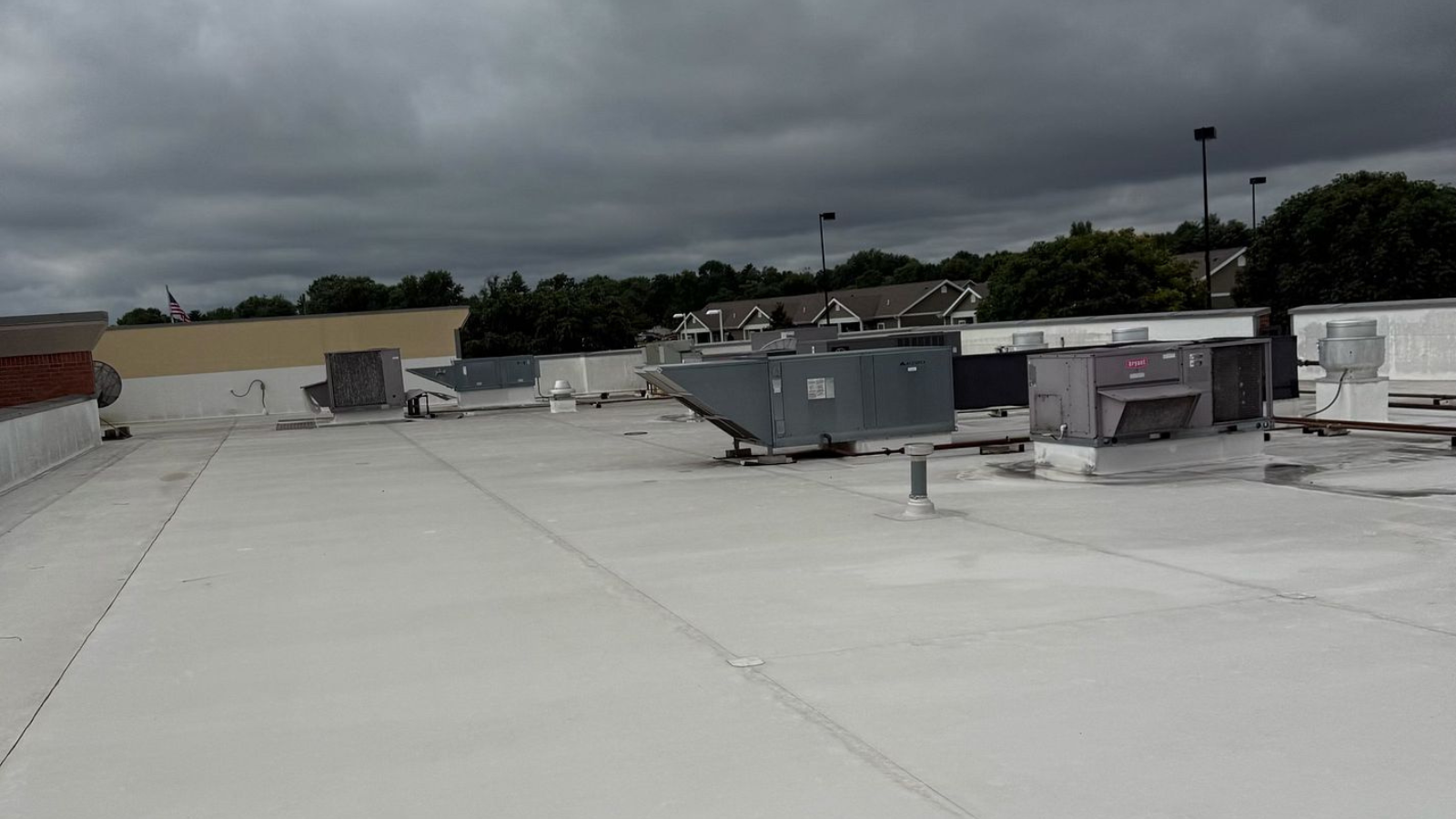
Sloped residential roofs are designed to shed water quickly. Flat and low-slope commercial roofs, on the other hand, are built to hold and slowly drain water across a much larger, more complex surface. That design difference is exactly why a commercial roof Missouri inspection has to cover far more ground than a standard residential roof check.
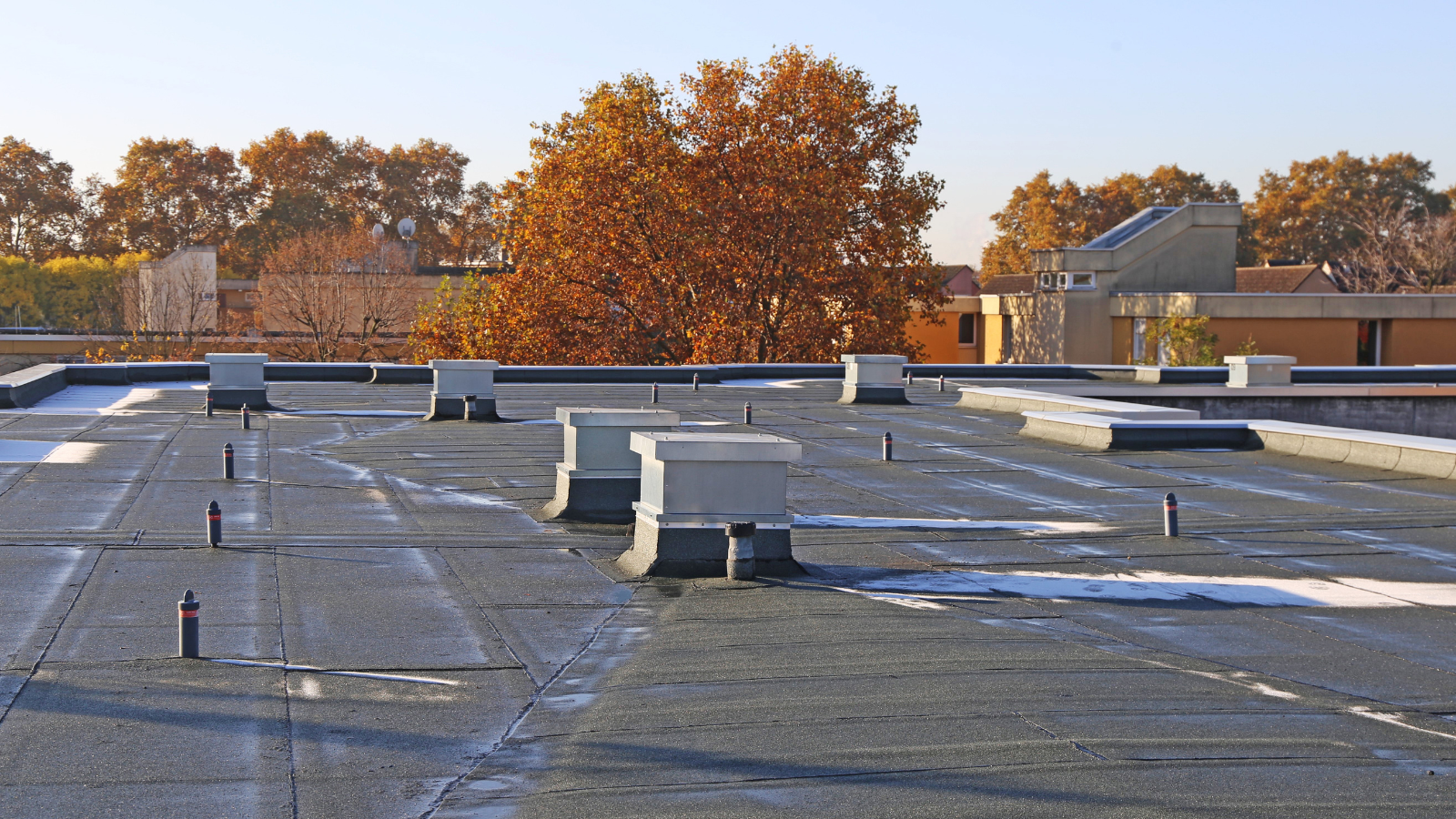
There’s more surface area exposed to sun, rain, and temperature swings. There are more penetrations — vents, drains, HVAC units, skylights — each one a potential entry point for water. And because the roof is flat, standing water doesn’t just run off; it sits, and sitting water is one of the fastest ways to shorten the life of any commercial roofing system.
This is why a commercial roof Missouri property owners rely on needs a completely different inspection approach than what you’d use on a house down the street.
The Core Areas Every Commercial Roof Inspection Should Cover
A real inspection isn’t a walk-around with a clipboard and a five-minute glance upward. Here’s what our team actually checks when we perform a commercial roof Missouri inspection for a business owner.
1. Membrane Condition
Most flat commercial roofs use a membrane system — TPO, EPDM, or modified bitumen being the most common in this region. We check for cracking, blistering, punctures, and shrinkage. Membrane seams are a particular focus point, since a lifted or separated seam is one of the most common sources of leaks on any commercial roofing system.
2. Drainage and Ponding Water
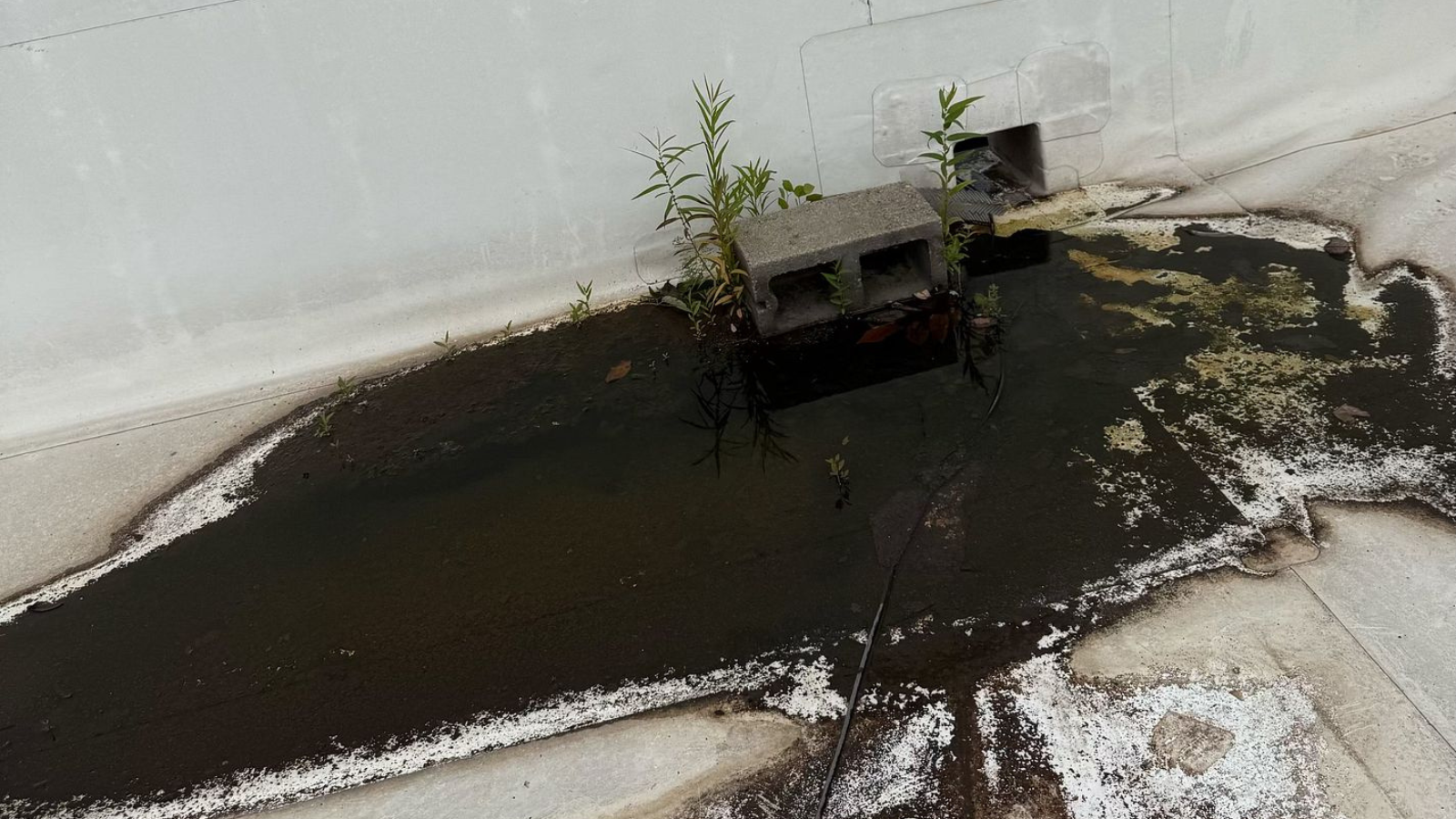
This is arguably the single most important part of any commercial roof Missouri inspection. Flat roofs are supposed to have a slight slope that guides water toward drains or scuppers. Over time, that slope can shift due to structural settling, and drains can clog with debris. Standing water that doesn’t clear within 48 hours after a storm is a red flag — it accelerates membrane breakdown and adds unnecessary structural weight.
3. Flashing and Roof Penetrations
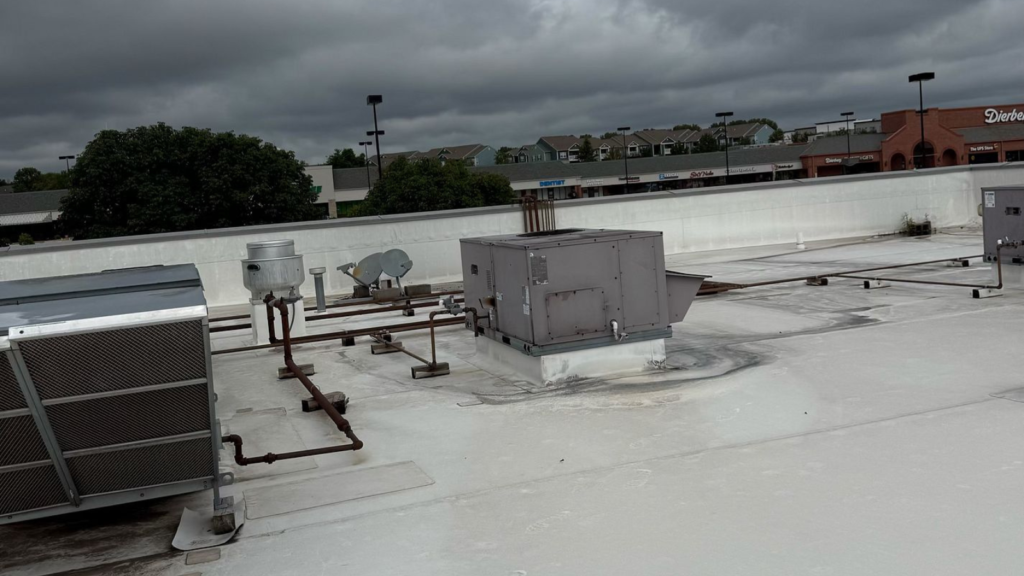
Every vent, pipe, HVAC curb, and skylight is a spot where the roofing membrane has to be sealed against something else, and that’s exactly where failures tend to start. We inspect flashing around every single penetration point, checking for gaps, cracked sealant, and rust on metal components.
4. Roof Edges and Parapet Walls
Wind uplift is a real concern for flat commercial roofs, especially with Missouri’s strong spring storm systems. We check the roof edge metal, coping caps, and parapet wall flashing for signs of lifting or separation, since these areas are often where wind damage starts.
5. Insulation and Structural Deck
Wet insulation underneath the membrane doesn’t just reduce energy efficiency — it can lead to sagging, deck rot, and eventually structural failure if left unaddressed. Part of a thorough commercial roof Missouri inspection includes checking for soft spots or areas that feel spongy underfoot, which often indicate trapped moisture below the surface.
6. HVAC and Rooftop Equipment
Rooftop units are heavy, they vibrate, and they’re serviced regularly by technicians walking across the roof surface. We check the condition of the roofing material immediately surrounding this equipment, along with the curb flashing, since this is a high-traffic area that sees more wear than the rest of the roof.
7. Interior Signs of Roof Failure
A complete commercial roof Missouri inspection doesn’t stop at the rooftop. We also recommend checking the interior ceiling for water stains, discoloration, or musty odors, especially near HVAC penetrations and roof drains — these are often the first visible clues of a leak that hasn’t been caught from above yet.
Why This Matters More for Commercial Properties
For a homeowner, a roof leak is a stressful inconvenience. For a business owner, it can mean inventory damage, equipment loss, liability concerns, and in some cases, temporary closure. That’s a completely different level of risk, and it’s exactly why a commercial roof Missouri inspection needs to be treated with the same seriousness as any other core piece of business infrastructure — right alongside HVAC servicing or fire safety checks.
We’ve worked with property owners across Chesterfield and Town & Country who manage multi-tenant buildings, where a single roof leak doesn’t just affect one business — it can disrupt every tenant under that roof and create real liability questions about who’s responsible for the damage. In situations like that, having a documented, professional flat roof inspection on record isn’t just good maintenance. It’s protection.
Missouri’s Climate Puts Commercial Roofs to the Test
Anyone who’s run a business in this part of the state knows the weather doesn’t do anything in moderation. Summers bring intense UV exposure and heat that breaks down membrane materials faster than milder climates. Winters bring freeze-thaw cycles that stress seams and flashing. And spring storm season brings high winds and hail that can compromise even well-installed roofing systems.
This kind of climate variation is exactly why a commercial roof Missouri inspection shouldn’t be a once-and-done event. We generally recommend inspections at least twice a year — once in spring after winter weather has had its chance to cause damage, and once in fall before winter sets in — along with an additional check after any major storm event.
Business owners in Wildwood and Eureka, where we frequently respond to storm-related roofing concerns, already understand this rhythm well. A commercial building that gets checked consistently rarely ends up with the kind of surprise emergency repair that shuts down operations for days.
What Happens If You Skip Regular Inspections
Let’s talk about what actually happens when commercial roof inspections get pushed off year after year, because this is where the real cost adds up.
A small membrane puncture that would’ve cost a few hundred dollars to patch can, left unnoticed, allow water to seep into the insulation layer below. That trapped moisture spreads laterally, often far beyond the original puncture point, silently soaking a much larger section of the roof deck. By the time a leak actually shows up on the ceiling inside the building, the damage has usually already spread well beyond what’s visible from below.
At that point, you’re no longer looking at a simple patch repair. You’re looking at replacing sections of insulation, possibly structural decking, interior ceiling tiles, and in more serious cases, dealing with mold remediation. A commercial roof Missouri inspection performed regularly is what keeps small, cheap problems from ever reaching that stage.
There’s also the insurance angle to consider. If a major storm causes damage and there’s no inspection history on file, insurers may question whether that damage happened during the storm or built up gradually from neglect. A consistent inspection record protects you here too, giving you documented proof of your roof’s condition over time.
Local Considerations Across the Region
Every commercial property we inspect has its own set of factors that shape what we look for, based on age, construction type, and location.
In Union and Pacific, we often work with older commercial buildings where the original roofing system may be nearing the end of its expected lifespan, making a detailed commercial roof Missouri inspection critical for planning ahead rather than reacting to a failure. In Frontenac and Town & Country, newer commercial developments tend to have more complex rooftop HVAC layouts, which means more penetration points to check carefully. Augusta’s smaller commercial buildings often deal with heavier tree coverage, leading to debris accumulation on the roof surface and clogged drains that need regular clearing.
No matter which of these communities your business calls home, the underlying principle stays the same — a thorough commercial roof Missouri inspection catches what a rooftop glance simply can’t.
What Sets a Proper Inspection Apart From a Quick Look
Not every roofing company approaches commercial inspections the same way, and this is worth understanding before you hire anyone for the job. A rushed inspection might involve someone walking the perimeter, glancing at obvious problem areas, and calling it done. A genuine commercial roof Missouri inspection involves a full walk of the entire roof surface, moisture testing where needed, detailed photo documentation, and a written report that actually explains what was found and why it matters.
At RC Roofing, we walk every section of the roof, not just the areas that are easy to access. We check drains individually, test flashing points by hand, and document everything with photos so you have a clear record — not just our word for it. When we’re done, you get a straightforward report explaining exactly what condition your roof is in, what needs attention now, and what can be monitored over time.
Signs You Shouldn’t Wait for Your Next Scheduled Inspection
While a regular schedule is ideal, certain signs mean you should call for an inspection sooner rather than later:
- Visible ponding water that hasn’t cleared within two days of a rainstorm
- Ceiling stains or discoloration anywhere inside the building
- A musty smell in areas near roof drains or HVAC units
- Visible cracking, blistering, or lifted seams on the roof membrane
- A noticeable rise in energy bills, which can indicate wet or failing insulation
- Debris accumulation blocking drains or scuppers
If any of these apply to your building, it’s worth scheduling a commercial roof Missouri inspection before the next storm rolls through rather than after.
Planning Ahead: Inspection as a Budgeting Tool
One thing many property owners don’t realize is that a good commercial roof inspection isn’t just about catching problems — it’s also a planning tool. A detailed report gives you a realistic picture of how much life is left in your current roofing system, which makes it far easier to budget for future repairs or a full replacement instead of getting blindsided by a sudden failure.
This is especially valuable for property managers overseeing multiple commercial buildings across different towns. Instead of reacting to emergencies one at a time, a consistent commercial roof Missouri inspection schedule across your entire portfolio lets you plan capital expenses well in advance, prioritize the buildings that need attention soonest, and avoid the kind of surprise repair costs that throw off an annual budget.
Choosing the Right Team for the Job
Commercial roofing systems are a different world from residential roofing, and not every roofing contractor has the specific experience to inspect them properly. Flat roof membranes, drainage design, and rooftop equipment all require a different set of expertise than sloped shingle roofs.
When you’re evaluating who to trust with your commercial roof Missouri inspection, look for a contractor who specializes specifically in commercial and flat roofing systems, provides detailed written reports with photo documentation, and gives you honest recommendations rather than pushing unnecessary work. That last part matters more than people realize — an inspection is only useful if you can trust that what you’re being told is accurate.
Protecting Your Business Starts on the Roof
We proudly serve commercial property owners and managers throughout Washington, Wildwood, Frontenac, Town & Country, Chesterfield, Eureka, Augusta, Union, and Pacific, and we’ve seen firsthand how much of a difference a proactive approach makes. A commercial roof Missouri businesses can depend on isn’t the one that simply looks fine from the parking lot — it’s the one that’s been checked, documented, and maintained by people who know exactly what to look for.