Wind may howl and shingles may creep, but a damaged edge lets water seep. So when’s the last time you actually looked at the outer edge of your roof, instead of just the middle where the shingles seem fine?
It’s a spot most homeowners across Washington, MO never think to check, mostly because it’s easy to overlook. Your eyes naturally go to the center of the roof, where the biggest surface area sits and any missing shingles would be obvious. But the edges — the drip edge, the fascia, the rake boards along the sides — are where some of the most common and most overlooked problems actually start. Recognizing roof edge damage Washington MO homes deal with early on can be the difference between a simple, inexpensive fix and a much bigger repair involving rot, leaks, and structural issues down the line.
Why the Roof Edge Takes More Abuse Than You’d Think
The edge of your roof isn’t just a border — it’s a functional component doing serious work. It directs water off the roof surface and away from your fascia and siding, and it’s also the first line of defense against wind uplift during storms. Because it sits at the perimeter, it’s exposed to more direct wind pressure than any other part of the roof, which makes it one of the most vulnerable areas during Missouri’s frequent storm systems.
This constant exposure is exactly why roof edge damage Washington MO homeowners experience tends to develop faster here than in calmer climates. High winds catch the edge first, working shingles and metal flashing loose before problems ever reach the center of the roof. Once that happens, water has a direct path underneath the roofing system, and what started as a small edge issue can spread into much bigger, costlier damage.
What Actually Counts as Roof Edge Damage
When we talk about roof edge damage Washington MO homes commonly experience, we’re really talking about several different components that all work together at the perimeter of your roof. Understanding each one helps you know exactly what to look for.
Drip Edge Damage
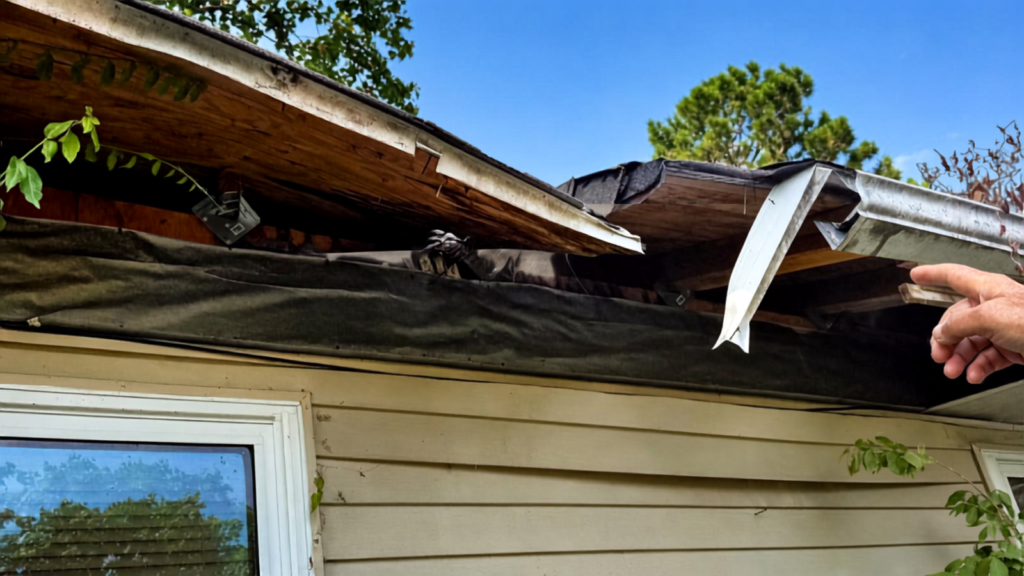
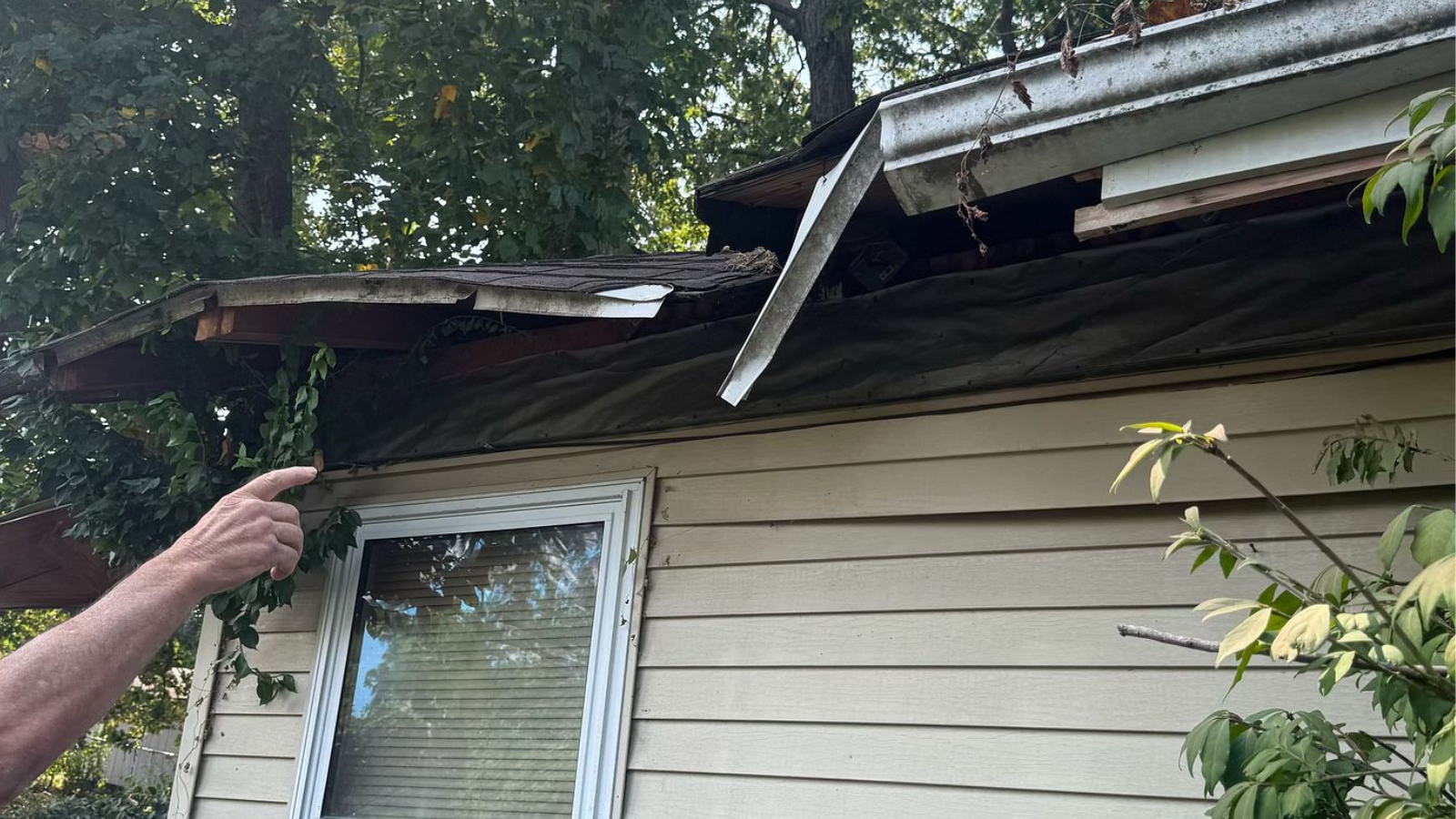
The drip edge is a thin metal strip installed along the roof’s perimeter that directs water away from the fascia and into the gutters. When it’s bent, rusted, or pulled loose, water can run behind it instead of over it, leading to fascia rot and water intrusion at the roof deck. This is one of the most common forms of roof edge damage Washington MO storms tend to cause, since it’s directly exposed to wind and impact.
Fascia Board Deterioration
The fascia is the vertical board running along the edge of your roofline, typically where gutters are mounted. Once water gets behind a damaged drip edge, the fascia is usually the first thing to suffer, softening and rotting over time. Because it’s tucked slightly out of view, this kind of roof edge damage Washington MO homeowners deal with often goes unnoticed until a gutter starts sagging or pulling away from the house entirely.
Lifted or Missing Shingles Along the Perimeter
Shingles along the roof’s edge are more exposed to wind uplift than shingles in the middle of the roof. Over time, repeated wind exposure can loosen adhesive seals and lift shingle edges, eventually leading to cracking or complete loss during a stronger storm. This is often the most visually obvious sign of roof edge damage Washington MO residents notice, especially after a windy spring storm system passes through.
Rake Edge Issues
On gable roofs, the rake edge runs along the sloped sides rather than the horizontal eaves. This area is particularly vulnerable to wind because it catches gusts at an angle the rest of the roof doesn’t experience the same way. Damage here often shows up as lifted shingles or separated flashing, another common form of roof edge damage Washington MO homes with steeper rooflines tend to face.
Gutter Separation
While not technically part of the roof itself, gutters mounted along a damaged fascia or drip edge often start pulling away from the house. This creates a domino effect — the very system meant to protect your home from water damage instead starts contributing to it, all stemming from roof edge damage Washington MO homeowners hadn’t yet noticed.
How to Actually Check for Roof Edge Damage
You don’t need to climb onto your roof to start spotting warning signs. Here’s what we recommend homeowners look for from the ground, along with what we specifically check during a professional inspection.
From the Ground:
- Look along the roofline for any shingles that appear lifted, curled, or missing near the edges specifically
- Check your gutters for sagging, pulling away from the fascia, or visible gaps
- Look for streaking or staining on the fascia board, which often indicates water running behind the drip edge
- After a storm, check your yard for any metal drip edge pieces or shingle fragments that may have blown off
During a Professional Inspection:
- We check the drip edge along the entire perimeter for bending, rust, or separation from the roof deck
- We inspect fascia boards by hand for soft spots, indicating trapped moisture or early rot
- We examine shingle adhesion specifically along the edges and rake lines, where wind stress is highest
- We check gutter attachment points to see if fasteners have loosened due to underlying fascia damage
Catching roof edge damage Washington MO weather causes early through this kind of careful check is almost always cheaper and simpler than waiting until the damage becomes visible from the street.
Why Missouri Weather Makes This Worse
If you’ve spent time in this part of the state, you already know the weather doesn’t do anything gently. Spring and summer bring storm systems with sustained winds strong enough to lift poorly secured shingles, especially along vulnerable roof edges. Winter brings ice that can build up along the eaves, working its way behind a compromised drip edge and freezing in place, expanding the damage further with every freeze-thaw cycle.
This kind of seasonal extremes is exactly why roof edge damage Washington MO homes experience often develops faster and more severely than it might in a milder climate. A small issue that might sit dormant for years elsewhere can turn into a serious leak here within a single storm season, simply because the edge takes the brunt of everything Missouri’s weather delivers.
What We See Across Different Communities
Every home we inspect across this region has its own specific vulnerabilities when it comes to roof edge condition. In Wildwood and Eureka, we frequently respond to roof edge damage Washington MO storms have caused after significant wind events, often finding lifted shingles and bent drip edge sections along the most exposed sides of the roof.
In Chesterfield and Town & Country, larger homes with more complex rooflines mean more total linear footage of roof edge, which translates to more potential points of vulnerability if the original installation wasn’t done with enough attention to detail. In Frontenac, older homes sometimes have original drip edge material that’s simply reached the end of its functional lifespan, even if the rest of the roof looks reasonably well maintained.
Out toward Union and Pacific, we often find fascia damage that’s gone unnoticed for a while, since these boards are somewhat hidden behind gutters and easy to overlook during a casual glance. And in Augusta, properties with more tree coverage tend to experience debris impact along roof edges during storms, another contributing factor to roof edge damage Washington MO homes with wooded lots deal with more frequently than open, exposed properties.
No matter which of these towns you call home, the underlying lesson holds true across the board. The roof edge deserves just as much attention as the main roof surface, if not more, given how much stress it absorbs during every storm season.
Why Small Edge Damage Doesn’t Stay Small
Here’s the part that catches a lot of homeowners off guard. Roof edge damage Washington MO homes experience rarely stays contained to just the edge. Once water finds its way behind a damaged drip edge, it doesn’t stop there — it works its way toward the roof deck, the fascia, and sometimes even the soffit and attic space underneath.
We’ve seen small drip edge issues that went unnoticed for a season turn into rotted fascia boards, damaged soffit panels, and in more serious cases, water staining on interior ceilings near the roofline. What started as a relatively minor and inexpensive repair became a much larger project simply because nobody caught the initial roof edge damage Washington MO weather had already started before it had a chance to spread.
The Cost Difference Between Catching It Early and Waiting
Let’s talk numbers, because this is usually what convinces homeowners to actually schedule an inspection rather than waiting until something looks obviously wrong. Repairing a section of damaged drip edge or replacing a few compromised fascia boards is typically a straightforward, affordable repair. Left unaddressed for a year or two, that same issue can lead to full fascia replacement, soffit repair, gutter reinstallation, and in worse cases, interior repairs from water that eventually made its way inside.
Catching roof edge damage Washington MO homes are prone to before it spreads isn’t just about avoiding inconvenience — it’s about protecting your budget from a repair that grows significantly more expensive the longer it goes unnoticed.
What to Do If You Spot Roof Edge Damage
If you’ve noticed any of the warning signs we’ve covered — lifted shingles along the edge, sagging gutters, staining on your fascia — the smartest next step is getting a professional set of eyes on it before the next storm rolls through. Roof edge damage Washington MO conditions create doesn’t tend to improve on its own, and waiting through another storm season typically means dealing with a larger repair than if it had been addressed right away.
A professional inspection will confirm exactly what’s happening, how far the damage has spread, and what repair approach makes the most sense for your specific situation — whether that’s a targeted drip edge replacement, fascia repair, or in some cases, a broader look at the surrounding roofing system if the damage has progressed further than expected.
Questions to Ask When You Call a Roofing Contractor
If you suspect roof edge damage and you’re reaching out to a roofing company, a few good questions can help you understand exactly what you’re dealing with:
- Is the damage limited to the drip edge, or has it affected the fascia and roof deck as well?
- What caused this damage — wind, age, or an installation issue from the original roofing job?
- Can this be repaired as a standalone fix, or does it point to a larger roofing issue?
- How urgent is this repair, especially with the next storm season approaching?
- What’s being done to prevent this same issue from happening again after the repair?
A contractor who takes roof edge damage Washington MO homeowners bring to them seriously will walk you through clear, specific answers rather than rushing straight to a bigger sales pitch.
Preventing Roof Edge Damage Before It Starts
While some amount of wear is unavoidable given Missouri’s weather patterns, there are steps that meaningfully reduce the risk of roof edge damage developing in the first place. Proper drip edge installation during your original roofing job matters enormously — a drip edge that’s correctly fastened and properly overlapped resists wind uplift far better than one installed quickly or incorrectly.
Regular gutter cleaning also plays a bigger role than most homeowners realize. Clogged gutters force water to back up against the fascia and roof edge instead of draining away properly, accelerating the exact kind of damage we’ve been discussing. And scheduling a roof inspection at least twice a year gives you the chance to catch roof edge damage Washington MO weather has started before it has the chance to spread into a larger, more expensive problem.
What Homeowners Can Expect From RC Roofing
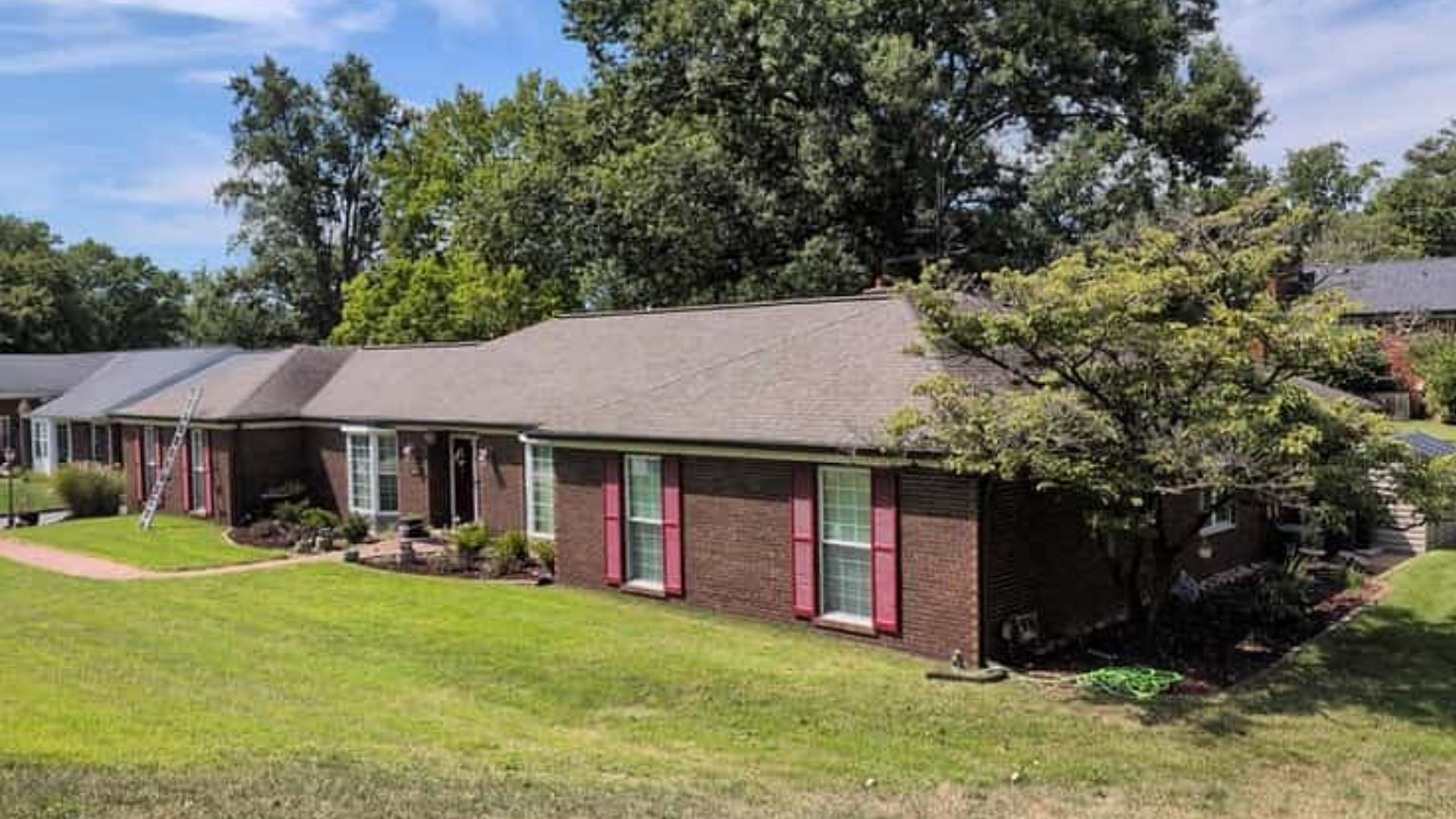
We proudly serve homeowners throughout Washington, Wildwood, Frontenac, Town & Country, Chesterfield, Eureka, Augusta, Union, and Pacific, and roof edge inspection is a standard part of every roofing check we perform, not an afterthought tacked onto the main roof surface review. Our team checks drip edge condition, fascia integrity, and shingle adhesion along every perimeter and rake line, documenting anything we find with clear photos and honest recommendations.
If we find roof edge damage Washington MO weather or age has caused, we’ll explain exactly what’s happening, how far it’s progressed, and what repair options make sense for your specific home and budget — no unnecessary upsells, just a straightforward path forward.
Don’t Let the Edge Be the Blind Spot
Your roof’s edge might not be the first place you think to check, but it’s often exactly where problems start long before they become obvious from the ground. If it’s been a while since anyone’s taken a close look at your roofline’s perimeter, now’s a smart time to change that.