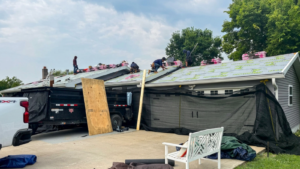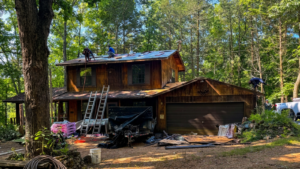
Have you ever stood in your living room in Washington, Missouri, listening to the rhythmic thwack of hail against your shingles, wondering if your attic is currently transforming into a swimming pool? When the clouds finally part and the sirens stop, the sight of a battered roof can feel overwhelming. Should you climb up there with a blue plastic sheet, or is it time to call in the heavy artillery for a permanent fix? Deciding between tarp vs repair roof damage is more than just a matter of convenience—it is a critical choice that dictates the safety of your family and the longevity of your home.
This guide is designed to help homeowners in the St. Louis and Franklin County areas navigate the high-stakes decision of tarp vs repair roof damage with confidence, ensuring that your property remains a sanctuary rather than a hazard.
The Immediate Aftermath: The Golden Hour of Roof Protection
When a storm rolls through Frontenac or Town & Country, the damage isn’t always as obvious as a fallen oak tree. Sometimes, it’s the silent killers—the lifted shingles and bruised granules—that do the most damage over time. However, when the damage is obvious, the debate of tarp vs repair roof damage begins immediately.
Why Tarping is Your First Line of Defense
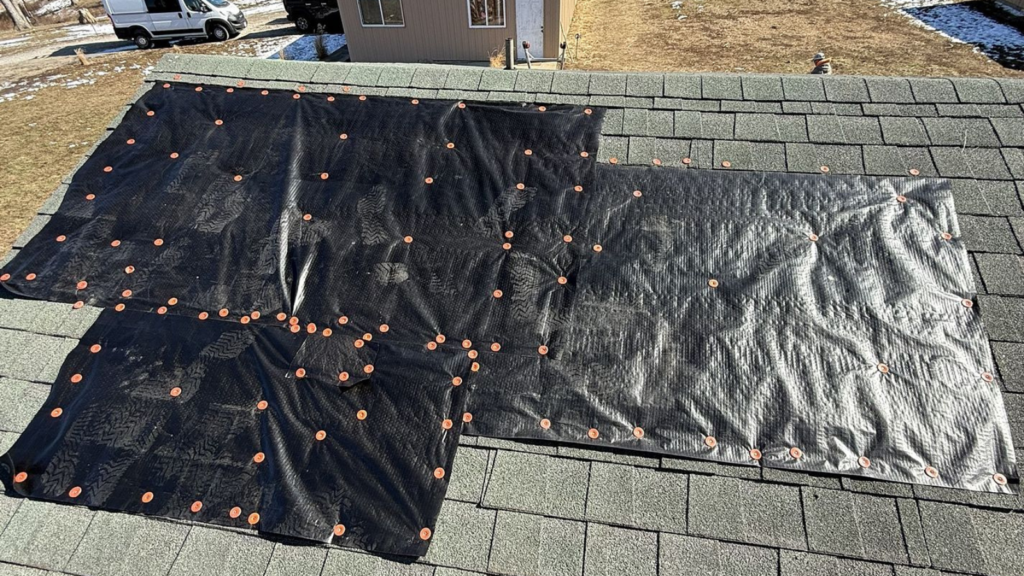
Tarping is often misunderstood. Some homeowners see it as a sign of defeat or a cheap fix. In reality, a professional tarp job is a sophisticated emergency stabilization technique. If you have an active leak or a gaping hole from a branch in Eureka, tarping is the only way to stop the bleed.
- Water Mitigation: The primary goal is to prevent secondary damage. A single leak can lead to mold in your insulation, rotted ceiling joists, and ruined drywall.
- Insurance Compliance: Most insurance policies in Missouri require homeowners to take reasonable steps to prevent further damage. If you leave a hole open to the elements, the insurance company might deny coverage for the subsequent water damage.
- Buying Time: Quality contractors in Pacific and Augusta get booked quickly after a major storm. Choosing the tarp side of the tarp vs repair roof damage equation gives you the breathing room to find a reputable roofer like RC Roofing rather than settling for a storm chaser who just happens to be knocking on doors.
When to Choose Tarping Over Immediate Repair
There are specific scenarios where jumping straight to a permanent repair is actually a mistake. Understanding these can save you thousands of dollars and a massive headache with your insurance provider.
1. Ongoing Weather Patterns
If the forecast shows another line of storms heading toward Union or Washington, a permanent repair might be compromised before the materials even have time to seal. In high-wind scenarios, fresh shingles haven’t had the heat-set time required to bond. Tarping is the safer bet until a clear 48-hour window appears.
2. Awaiting the Insurance Adjuster
This is the most common reason we recommend the tarp in the tarp vs repair roof damage dilemma. If you repair the damage before an adjuster sees it, you risk your claim being undervalued or denied. A tarp protects the home while preserving the evidence of the storm’s impact.
3. Structural Uncertainty
If a tree has landed on your home in Wildwood, the damage likely goes deeper than shingles. You may have cracked rafters or a compromised ridge beam. Tarping provides a weather seal while a structural engineer or a master roofer assesses whether the repair part of tarp vs repair roof damage actually needs to be a partial replacement.
When to Skip the Tarp and Move to Permanent Repair
While tarping is a hero in an emergency, it is never a permanent solution. In fact, leaving a tarp on too long can cause its own set of problems, such as sweating (condensation) that leads to attic mold. You should move directly to repair roof damage when:
- The Damage is Localized: If you’ve only lost three or four shingles in a high-wind event in Chesterfield, and the underlayment is still intact, a quick patch is often more cost-effective than a large-scale tarping.
- The Weather is Clear: If we are entering a stretch of Missouri’s famous dry autumn or late summer days, there’s no reason to wait. Permanent repairs can be executed immediately.
- Safety is Guaranteed: If the roof deck is solid and the damage doesn’t require structural intervention, moving straight to the repair phase of tarp vs repair roof damage is the most efficient path back to normalcy.
Navigating the Cost: Tarp vs Repair Roof Damage
Missouri homeowners are often concerned about the financial implications. Does paying for a tarp mean you’re wasting money that could go toward the repair?
| Service Type | Estimated Cost Range (Missouri Average) | Best For… |
| Emergency Tarping | $450 – $1,500 | Large holes, active leaks, awaiting insurance. |
| Minor Patch/Repair | $300 – $800 | Isolated shingle loss, minor flashing leaks. |
| Major Storm Repair | $1,500 – $5,000+ | Large sections of hail damage or wind uplift. |
At RC Roofing, we work closely with your insurance. In many cases, the cost of emergency tarping is covered as part of the loss mitigation clause of your policy. This means the debate of tarp vs repair roof damage isn’t about saving money today—it’s about saving your home’s value tomorrow.
The Local Missouri Perspective: Why Washington and Surrounding Areas Face Unique Risks
Our service areas, from the historic streets of Augusta to the developing neighborhoods of Pacific, face a unique meteorological corridor. We don’t just get rain; we get vertical microbursts and sustained straight-line winds.
In Wildwood and Eureka, the heavy tree canopy means storm damage almost always involves fallen timber. In these cases, the tarp vs repair roof damage decision is usually made for you: you must tarp because the structural repairs required are too extensive for a one-day patch.
In Frontenac and Town & Country, where many homes feature premium materials like slate or high-end architectural shingles, the repair side of tarp vs repair roof damage requires specialized craftsmanship. You cannot simply patch a slate roof with asphalt; you need a temporary tarp to protect the home while the matching materials are sourced.
The Hidden Dangers of DIY Tarping
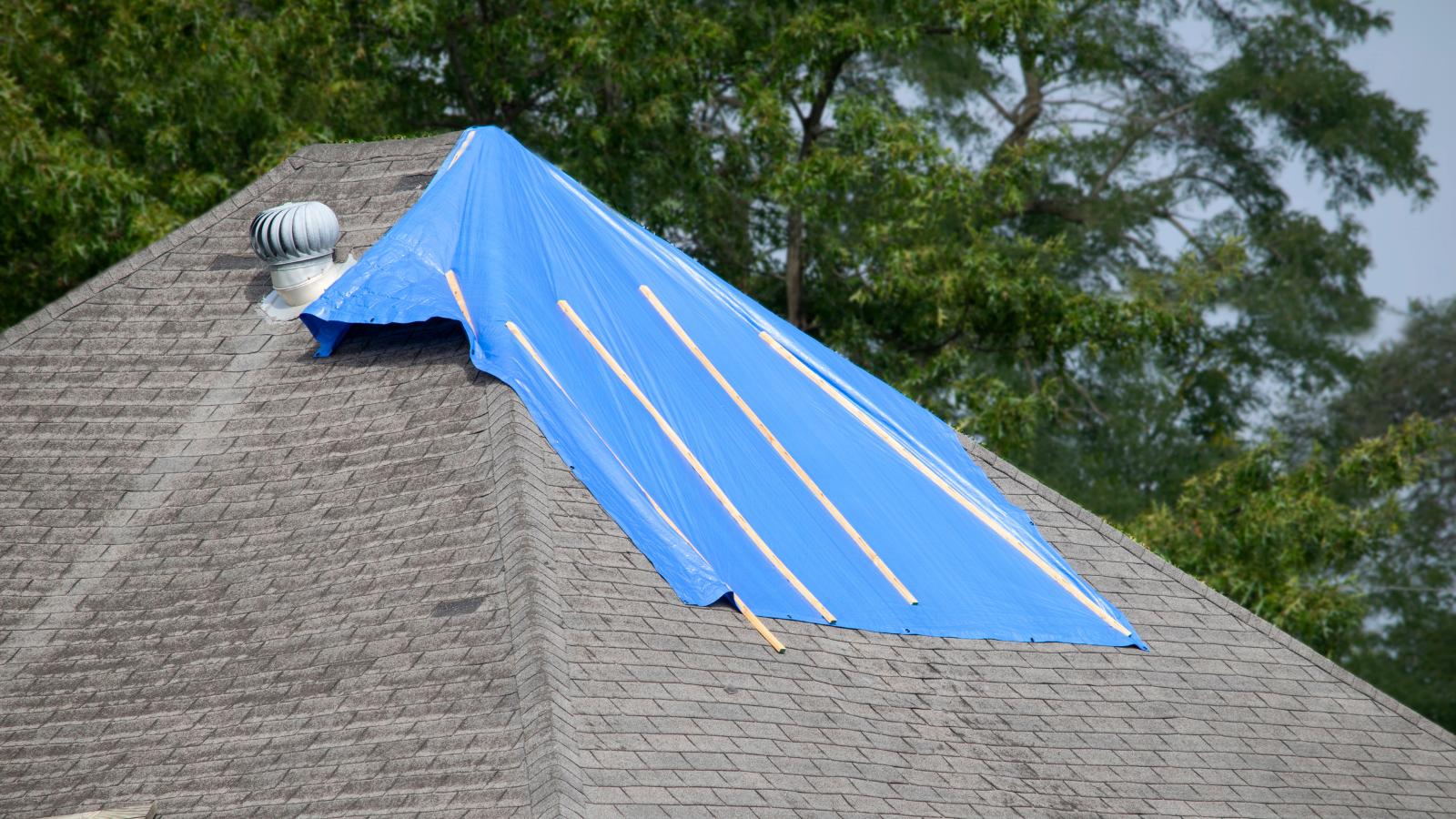
We understand the Missouri can-do spirit. When a storm hits Union or Pacific, the first instinct is to grab a ladder. However, when considering tarp vs repair roof damage, the DIY route for tarping is incredibly dangerous.
- Slippery Surfaces: A wet roof is a skating rink.
- Improper Fastening: Many homeowners nail tarps directly into the shingles, creating hundreds of new leak points. Professionals use lumber strips to weigh down and seal the edges without damaging the remaining good shingles.
- Wind Uplift: An improperly secured tarp acts like a sail. In the next gust of wind, it can actually pull more shingles off your roof.
When you weigh tarp vs repair roof damage, remember that professional installation ensures the tarp actually does its job until the permanent repair can begin.
Why Time is of the Essence for Missouri Residents
Waiting to address a leak in a climate like ours is a recipe for disaster. The high humidity in Missouri means that once water enters your attic, mold can begin to grow in as little as 24 to 48 hours. By choosing to tarp vs repair roof damage immediately, you are effectively stopping the clock on biological growth.
Whether you are in the residential suburbs of Chesterfield or the more rural stretches of Augusta, the goal is the same: maintain the integrity of the thermal envelope. A roof that is left compromised doesn’t just leak water; it leaks energy. Your HVAC system will work double time to combat the Missouri heat or cold seeping through the gaps, leading to spiked utility bills alongside your repair costs.
How RC Roofing Simplifies the Process
Whether you are in Chesterfield or Washington, our process for handling tarp vs repair roof damage is streamlined to reduce your stress:
- Rapid Assessment: We arrive and determine if the roof needs an immediate tarp or if we can move straight to a patch.
- Documentation: We take high-resolution photos of the damage before the tarp goes on. This is vital for your insurance claim.
- Expert Installation: If a tarp is needed, we secure it using industry-standard methods that prevent further shingle damage.
- Long-term Planning: We provide a detailed estimate for the permanent repair or replacement, helping you navigate the tarp vs repair roof damage transition seamlessly.
Final Thoughts
The choice between tarp vs repair roof damage doesn’t have to be a gamble. If your roof is open to the sky or the weather is volatile, tarp it. If the damage is minor and the sun is out, repair it.
Don’t let a Missouri storm turn your home into a disaster zone. Whether you’re in Union, Pacific, or the heart of St. Louis County, RC Roofing is your partner in storm recovery. We understand the nuances of tarp vs repair roof damage and will always give you an honest, professional recommendation.
Is your roof ready for the next Missouri storm? Contact RC Roofing in Washington, MO today for a professional inspection and let us help you decide the best path for your home’s protection through the expert lens of tarp vs repair roof damage.